- | 2:00 pm
This robotic butler is part Boston Dynamics, part Pixar
A humanoid butler from startup Tuesday Labs was designed to make character its most important feature.
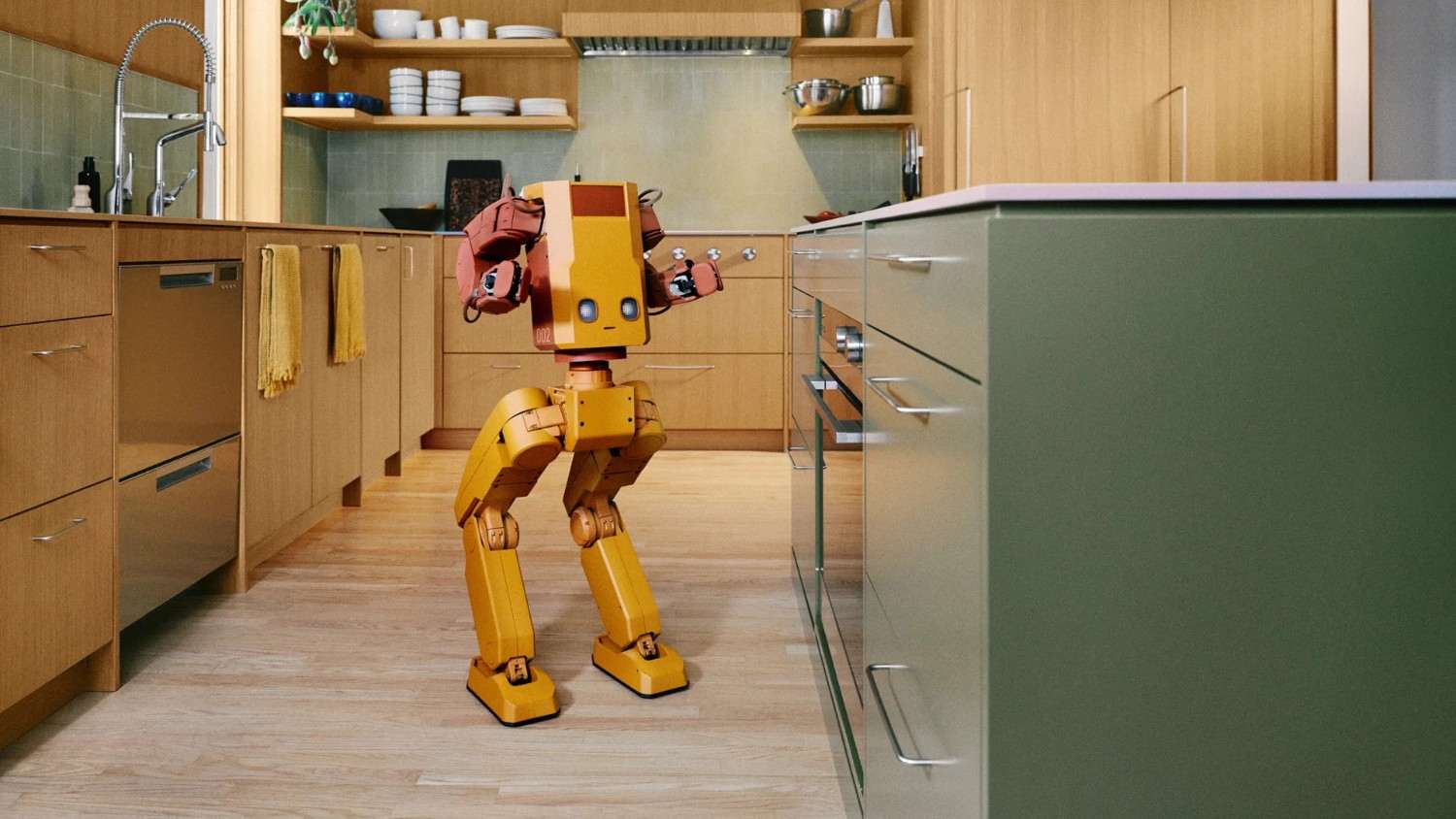


Some humanoid robots can do flips. Others can work in factories. A new humanoid robot called Voxel just wants to clean your home.
“He is a gentleman-in-training. He is obsessed with elegance,” says Rosalind Shinkle, whose company Tuesday Labs has been developing Voxel for the past three years. Rather than emphasizing what Voxel can do or how it will move, Shinkle is most interested in how the robot will act.
“We’re really focused on building a robot that has a consistent character. We believe that to be a robot that people want to live with and want to use every day, your robot has to have both character and capability together,” says Shinkle, a former robotics engineer at Boston Dynamics. “We’re as inspired by Pixar’s creation of character as we are by Boston Dynamics’ creation of robots.”
[Image: Courtesy Tuesday Labs]
Shinkle herself brings some of the Boston Dynamics influence, with experience working on manipulation algorithms for the pioneering robot company. To inject a bit of Pixar DNA, Shinkle hired Pixar animators to join Tuesday Labs. One former Pixar animator created 3D animations of Voxel, which are being used to train the robot’s movement. Another worked at Pixar for more than a decade and has come on board to develop Voxel’s character.
Modeled after a butler, Voxel was designed to focus intently on tidying the home, with a few quirks that are meant to show its subservience. “He’s a little obsessive,” Shinkle says. “He gets stuck in tasks sometimes because he wants it to be just right. He’s a little anxious sometimes, too. He’s afraid of water and the outdoors and sharp things.”
These character traits are more than just cute tics. Shinkle says they are essential to making people feel comfortable having a new kind of technology in their home everyday. “We have to be able to trust our robots,” she argues. “To actually use a robot, you have to believe that you can predict how it will respond to a novel situation. And to do that, the robot has to have a consistent, well-defined, clearly communicated character.”
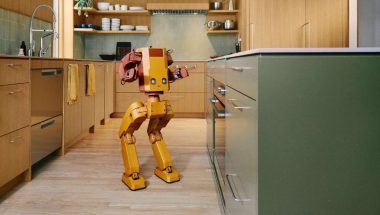
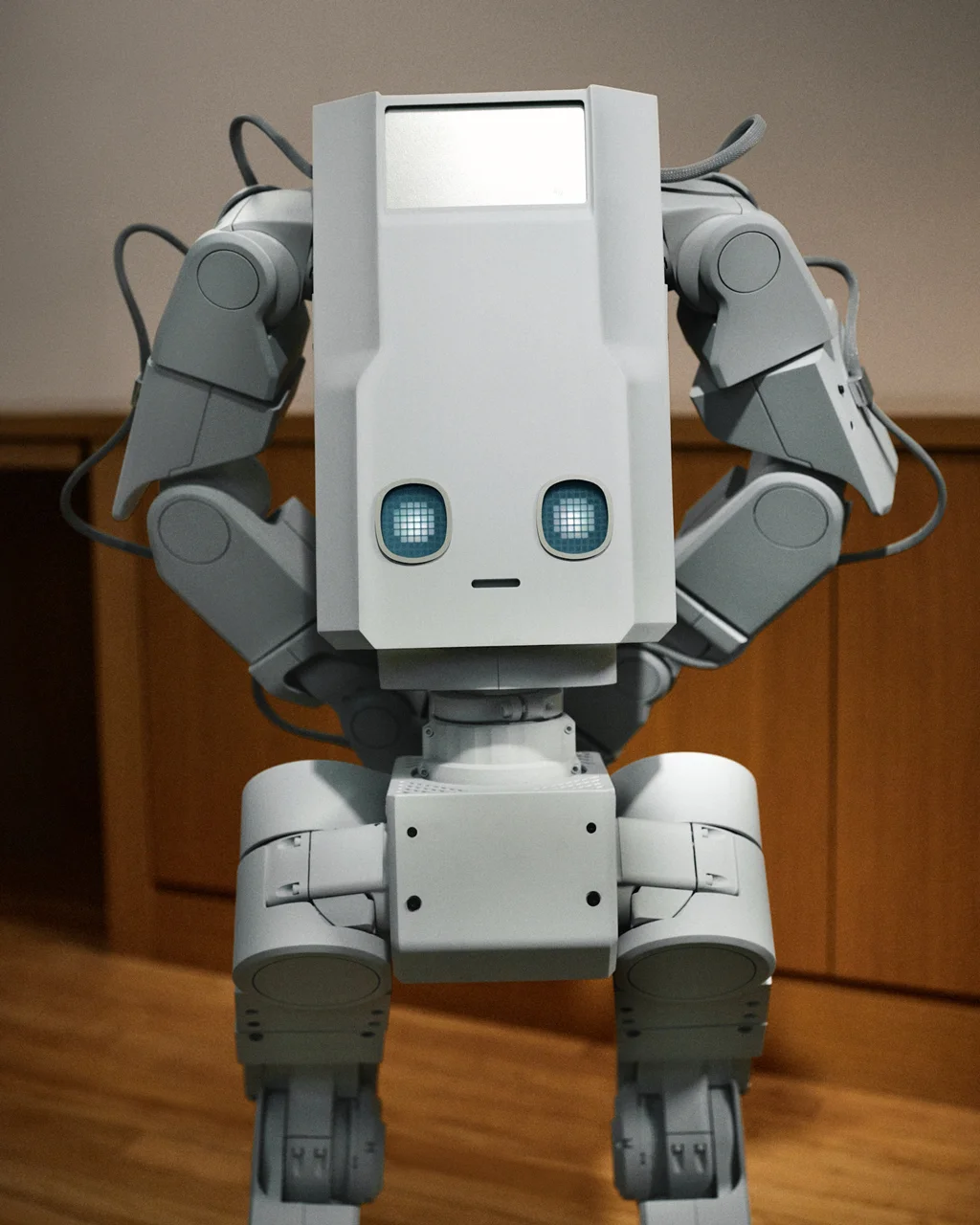
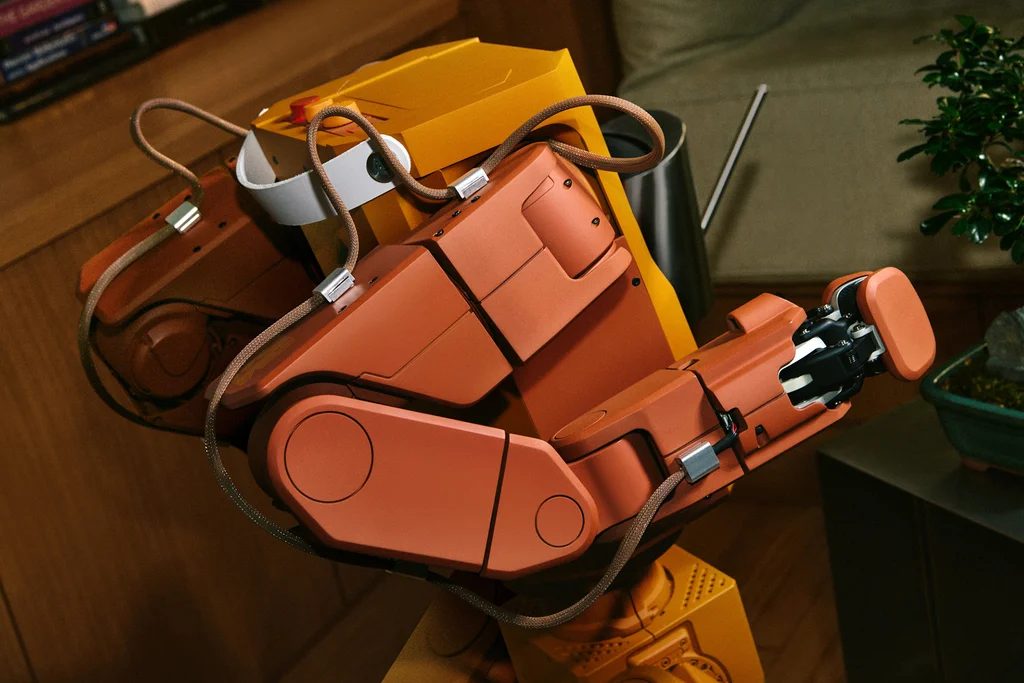
That also plays into how Voxel looks. With no head, 8-bit eyes in its belly, and pastel metal legs that bend backwards, Voxel is a humanoid robot that actively tries not to be humanistic. “We wanted to use his eyes and his body to express most of the emotion,” Shinkle says.
[Image: Courtesy Tuesday Labs]
Much of Voxel’s development has focused on the distinct way the robot moves, which Shinkle says is one of the most important things she learned while at Boston Dynamics. “I came to understand what makes a robot magical, and it’s not what most people are focused on. It’s not about perfectly recreating biomimetic eyes. It’s more about these moments of in between, recovering from a fall or hesitating before you make a decision that makes the robot feel really magical,” she says. “And that’s what we wanted to pursue.”
Tuesday Labs started designing that motion by animating it. A 3D model of the robot was brought into animation software and animated to move in what Shinkle calls a “character-consistent” way. “Then our models train on top of that, and we reproduce that motion with awareness of gravity and floor tilt and unexpected shoves or trips on the robot in the real world,” she says. “That’s how we sort of bring that character to life.”
Rather than engineering the robot to walk as stably as possible, the team is matching its locomotion to the gait of the animation. In videos taken by Tuesday Labs, prototypes of Voxel can be seen gently toddling across a room, swaying at its hips, and mimicking the dance of a teleoperator. In another video, Voxel leans toward a plant it has just watered and examines the soil before wiggling its arms in delight.
In some ways, Voxel won’t be a lonely character in the robot world. Disney Imagineering recently turned a character from the Frozen films into a robot that roams around Disneyland Paris, and a theme park in China has hundreds of costumed humanoids walking its grounds, doing everything from playing table tennis to guiding visitors to their hotels.
But as a robot designed to function in the home, Voxel provides less of a show. Shinkle says the robot will be laser focused on butler-like activities, primarily what she calls a “home reset,” tidying the daily messes that occur in a home and restoring it to its “base state.” Other tasks will include fetching or finding objects on demand and tending to repeated tasks like plant watering. “We’ll start here, but eventually we see him doing every task in your house for you. Laundry, dishes, all of the above,” Shinkle says. “The vision is that you get to just be in your home and your home cares for you back.”
With a 2028 production timeline, much of this skill set is still under development. “The home is a supercomplicated environment,” Shinkle says. The company is using advancements in technology to help the robot parse the complexity of the home and its many objects, from missing keys to a toppled stack of magazines to a bathroom’s dusty corner. Voxel will learn what goes where by constantly scanning and learning from its environment as it moves about. “It’s similar to your Roomba, with machine learning and AI added into it,” she says.
Shinkle says Voxel will be a luxury product, with an estimated price of $20,000. But the bigger hurdle than the cost is ensuring people will be comfortable with this kind of robot living with them and their families. Shinkle believes character design is the way to smooth that transition. After the comfort level is there, the robot can get to work.
“We built the robot that we wanted to use,” Shinkle says. “I’m messy. And I’m a roboticist. So this is how I’m solving that problem.”

Featured Videos
Today's Top Stories:
More Top Stories:



FROM OUR PARTNERS