- | 8:00 am
OpenAI turns 10 today. Where will it be in another decade?
A shock announcement at an academic conference led to one of the most important companies on the planet. But what’s next?
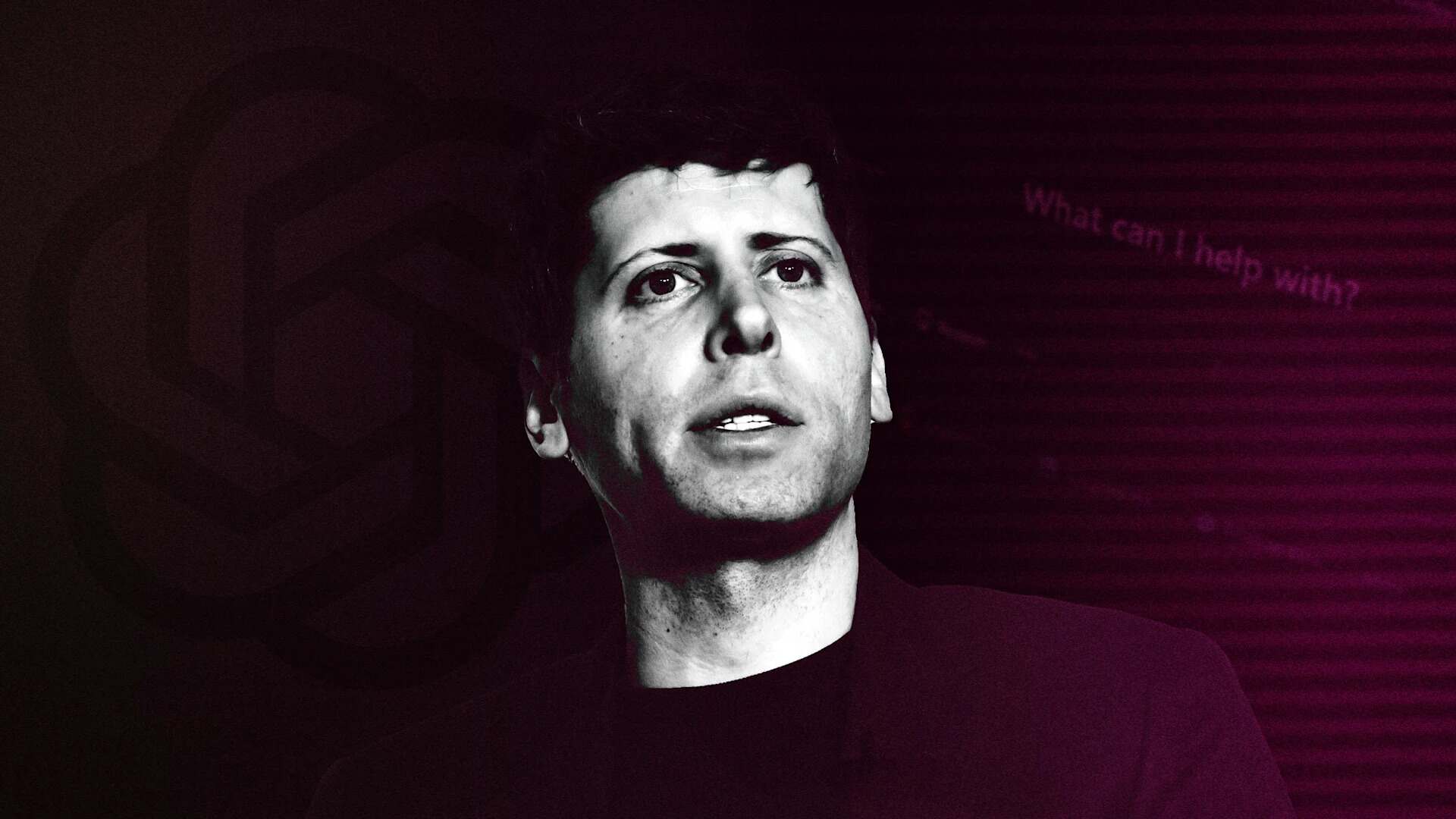


On December 11, 2015, OpenAI arrived on the scene with a bang. Announced on the penultimate day of the Conference on Neural Information Processing Systems, an academic confab held in Montreal’s Palais des Congrès by Elon Musk, Sam Altman, and others, the organization had been in the planning stages for months (an infamous July 2015 meeting at the Rosewood Sand Hill Hotel brought on board many of OpenAI’s key early staffers).
But when it went public with an announcement and blog post, the community reacted with surprise. “This is just absolutely wonderful news, and I really feel like we are watching history in the making,” wrote Sebastien Bubeck, then a researcher at Microsoft, and since October 2024, an OpenAI employee. The company was well-funded and professed to have clear goals: “to advance digital intelligence in the way that is most likely to benefit humanity as a whole, unconstrained by a need to generate financial return.”
Bubeck had little idea how prescient his words were. Even the wildest predictions of its founders on that day in 2015 likely couldn’t have imagined how much ChatGPT would change the world—and OpenAI’s fortunes. But now that it’s a decade old, the main question its investors, its employees, and all of us relying on its success to keep the stock market healthy are asking is: Where will it be in another 10-years’ time?
“Ten years ago, OpenAI started with a fairly legitimate scientific question and had a social conscious focus,” says Catherine Flick, an AI ethicist at the University of Staffordshire. Flick points out that its founding form was a “complicated nonprofit organization” that was always going to be difficult to address—and caused plenty of consternation, including the2023 ousting of its CEO, Altman.
But that founding ideal has changed significantly, she says. “Now we have a for-profit company that has completely shared any responsibility for social benefit and has basically embraced that growth at all costs kind of mantra,” says Flick. The reason? OpenAI is at the vanguard of the generative AI revolution, and there’s money to be made.
One key area that is likely to change OpenAI is the advent of superintelligence, a contested idea that the AI systems the company and its competitors are developing will at some point surpass human capabilities in every aspect. Those working closest to the AI models in frontier labs seem convinced of the idea that this will happen—but outsiders question whether that’s simply a case of being too close to the Kool-Aid, rather than superior knowledge as a result of seeing behind the scenes.
Nevertheless, those at the top of the company are thinking about the future impact of AI a decade out. Earlier this year, OpenAI CEO Altman predicted that by 2035, college graduates “if they still go to college at all, could very well be leaving on a mission to explore the solar system on a spaceship in some completely new, exciting, super well-paid, super interesting job.”
Steven Adler is a fellow at the Roots of Progress Institute who spent nearly four years between 2020 and 2024 at OpenAI, working in its safety research team. “OpenAI says that with today’s level of understanding, obviously nobody should deploy superintelligence—but also that their top priority is to build this,” Adler says. “It’s a concerning combination of beliefs,” he adds.
Adler hopes Open AI’s plans for the future can remain independent and impartial from its for-profit interests—something they are required to do “Having overlapping membership of the for-profit and not-for-profit boards is a natural conflict,” he believes. But more fundamentally, that will be challenging in part because of the competition that the company faces from other AI labs working at the frontier of the technology. “We all need to find ways to stop the AI industry’s race dynamics—which OpenAI has long warned about—from driving us off a cliff.”
There’s still some who think it could drive off that cliff. “In 10-years, time, I fully expect OpenAI to have either completely imploded with all of its assets, sold off to some sort of private equity firm or similar, or have been snatched up by some other company and acquired in some way,” Flick says.
OpenAI’s success will determine the AI industry’s future, as well as that of the broader economy. “Given its centrality to AI, OpenAI’s success or failure and the rate of its process ultimately has major ramifications on the broader consumer internet and AI hyperscaler spaces,” Ross Sandler, managing director and senior internet research analyst at Barclays, wrote in a recent research note.
At present,OpenAI is sitting pretty, reckons Sandler, standing around six to 12 months ahead of its competitors in most areas—though the biggest firms like Google are starting to catch up with the release of its latest models like Gemini 3. Barclays estimates that by 2030, its revenue could be $200 billion, up from an estimated $13 billion this year, with around 44% of that coming from ChatGPT.
Sandler also points out that OpenAI needs only convert a low single-digit proportion of its users in order to meet its revenue targets at present. That puts it well below other subscription apps, including Tinder, Spotify, and Duolingo.
On one hand, Barclays’ research suggests that OpenAI is sitting pretty in its position at present. “ We’ve found over the years that once habits are established, it’s hard for followers to dislodge the leader in a space,” wrote Sandler. Yet Sandler also says that Google is the potentially huge spoiler in the midst for the next decade. For now, OpenAI is sitting pretty.