
- | 9:00 am
GCC’s final countdown: Is this the last window to build wealth?
The next five years may decide who builds lasting wealth in the GCC, as AI and digital transformation reshape investing.
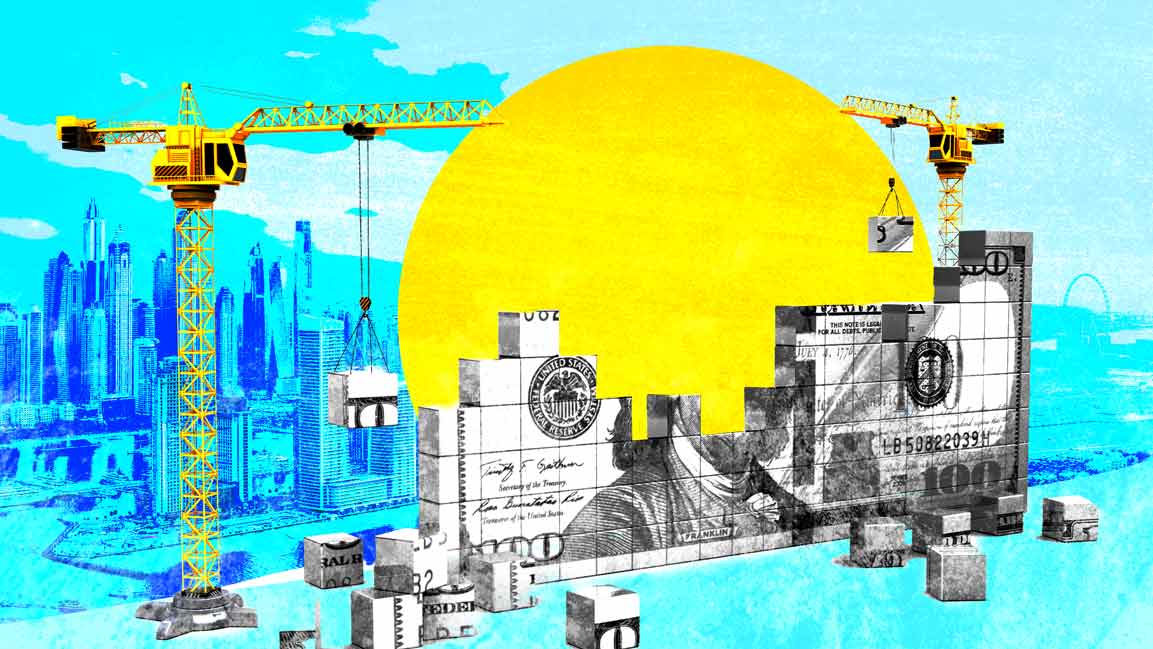


A rare convergence of technology, capital, and demographics is transforming the way people accumulate wealth. Between 2025 and 2030, experts predict that the GCC’s economies will offer the last real opportunity for individuals to accumulate significant wealth before AI, automation, and institutional capital dominate the markets.
“The 2025–2030 window is unique because we’re watching three forces converge at the same time: unprecedented economic growth, technological acceleration, and massive demographic shifts,” says Rami Tabbara, Co-Founder and Co-CEO of Stake. “The UAE and Saudi Arabia are deploying capital at a scale the world has rarely seen — building new cities, industries, and digital infrastructure. That creates opportunities that didn’t exist ten or even five years ago.”
Both nations are directing their sovereign wealth into a new kind of diversification — not just in oil or infrastructure, but in technology, creative industries, and innovation. They’re building future economies that can sustain generational wealth. However, as AI and automation accelerate, the market is changing faster.
“Over the next five years, individuals either position themselves as owners or risk being priced out entirely,” says Tabbara, adding that institutional capital and automated investment engines will dominate markets. “This is the last window where retail investors can benefit from early access and rapid market expansion in the Gulf before the landscape becomes fully institutionalized.”
AI AND THE NEW ARCHITECTURE OF INVESTING
AI is already shaping how wealth is created. Algorithms now analyze markets in seconds, identify patterns, forecast risks, and execute trades with precision and accuracy.
AI’s integration into financial systems has democratized access, allowing everyday investors to act on insights that were once exclusive to hedge funds or institutional desks. Yet the same systems introduce new risks.
Tarek Fadlallah, CEO of Nomura Asset Management Middle East, says AI is both an unprecedented opportunity and a potential stress test for investors’ understanding of risk.
“AI is an incredible opportunity for investors with profound implications for humanity,” he says. “But who will be the winners? Many early investors in the dotcom boom didn’t do so well. Yet people are still profiting from the internet that was invented 30 years ago.”
His point is clear: every technological revolution produces both fortunes and failures. AI will be no exception.
“AI and increasingly complex trading techniques do not change the basic principle that investors should maintain a diversified portfolio and focus on long-term returns,” Fadlallah adds.
Vipul Kapur, Head of Private Banking at Mashreq, adds that this convergence of innovation could mark the start of a new market era. “Global markets are entering a new growth cycle driven by financial innovation, AI, and technological advancement,” he says. “The convergence of these themes with tokenization and blockchain is enabling next-generation companies and redefining long-term wealth creation. The next five years will build on this momentum by monetizing these innovations, leading the next cycle of growth in markets.”
Technology can accelerate advantage, but it cannot replace patience or discipline.
TOKENIZATION AND THE DEMOCRATIZATION OF OWNERSHIP
If AI is transforming how people invest, tokenization is redefining what they can invest in. By converting real-world assets into digital tokens, tokenization allows fractional ownership of high-value investments such as real estate or art. This innovation makes wealth creation far more inclusive.
“You no longer need to buy a building — you can buy a fraction of one,” says Tabbara. “You no longer need a fund — you can join a digital marketplace. The creator economy is redefining income generation”
He adds: “Young people across the region don’t need legacy infrastructure to build brands, audiences, and monetizable businesses. These trends collectively create an environment where a 20-year-old can build wealth faster today than a 40-year-old could two decades ago.”
Platforms like Stake are leading this shift. Its partnership with Property Finder allows users to invest in income-generating properties for as little as $136.15.
“It transforms real estate from something you look at to something you own,” Tabbara says. “And every investor, whether they invest AED 500 or AED 500,000, gets the same level of institutional rigor.”
BUILDING THE GULF’S WEALTH INFRASTRUCTURE
Unlike other regions, the Gulf’s governments are not passively observing financial innovation. They are actively building the frameworks that make it possible.
In the UAE, sandbox regulations, open banking frameworks, and initiatives such as the DIFC Innovation Hub and ADGM’s digital asset guidelines are creating fertile ground for fintech. Meanwhile, Saudi Arabia has implemented reforms in capital markets, introduced financial literacy programs, and incentivized the adoption of technology.
“Both the UAE and Saudi Arabia are intentionally designing ecosystems that support participation and lower barriers to entry,” says Tabbara.
He further explains that in the UAE for example, initiatives around digital economy acceleration, sandbox regulations, DIFC and ADGM frameworks, and open banking are creating safe environments for fintech innovation.
For Saudi Arabia, Vision 2030 has accelerated capital markets reform, financial literacy programs, and technology adoption. Government-backed platforms and regulators are actively enabling new models of alternative investment, crowd investing , and asset tokenization.
“This is one of the few regions globally where regulation is moving faster than innovation,” Tabbara says.
The result is a rare synergy between government and market — one that lowers entry barriers for first-time investors while maintaining robust oversight. This alignment between policy, innovation, and participation is turning the Gulf into a laboratory for inclusive wealth creation.
FINTECH’S LEAPFROG EFFECT
Over the past decade, the Gulf has bypassed legacy systems that limited access to financial services. “Because traditional financial penetration was relatively low a decade ago, the region adopted mobile-first, digital-first solutions at scale. Fintech platforms today reach users who may never have interacted with traditional banks or investment firms,” says Tabbara.
Today, fintech applications reach users across more than 170 countries, with many of them investing for the first time. Digital onboarding, automated KYC, and low minimum thresholds have turned mobile phones into wealth-building tools.
This accessibility is reshaping who invests — and how. Young professionals, freelancers, and women entrepreneurs are entering financial markets with the same ease they shop or create content.
THE SHRINKING WINDOW
The next five years will determine the future distribution of wealth more than any previous decade. Those who move early — learning to leverage technology, diversify across tokenized assets, and focus on real-world value — will benefit from the compounding advantage of time.
After 2030, as AI systems and institutional funds consolidate their control, access will become increasingly narrow. Retail investors may find fewer entry points as automation and scale dominate.
“The compounding advantage over the next five years will define outcomes over the next 20. Individuals who take advantage of this window, even at small ticket sizes, will be meaningfully ahead,” says Tabbara.
Yet, with opportunity comes risk. The same technologies driving democratization could amplify exposure. AI systems can misread data, crypto assets remain volatile, and liquidity in tokenized markets is still maturing. “AI will create volatility across labor markets,” Tabbara says, “but real estate and income-generating assets will remain foundational to long-term wealth.”
The wealth landscape ahead will reward discipline as much as innovation. Access, knowledge, and digital fluency are the new currencies. AI-driven investing, tokenization, and inclusive regulations have opened doors — but timing is everything. The tools are ready, the frameworks are set, and markets are expanding. For ambitious investors, the window to build is open — but closing fast.