- | 10:00 am
The ecosystem shaping Dubai’s next generation of tech companies
The district turning ambition into products, platforms, and success


Eight hours. That is the practical boundary of Dubai that touches the majority of the world’s population. For technology companies, that distance influences recruitment, product testing, and the pace at which platforms grow. Today, being close to markets is only part of the equation. The real differentiator lies in the quality of the operating environment and the network of support that surrounds companies.
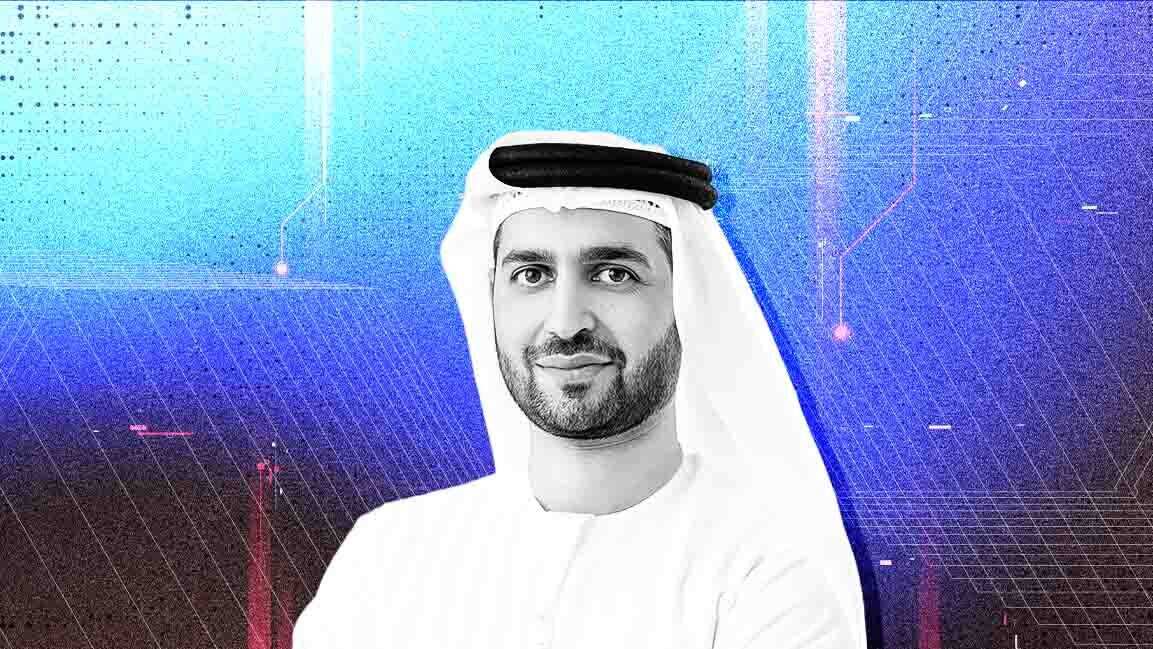
Dubai Internet City has evolved into such a space, moving beyond a cluster of offices to a district where companies can build, test, and scale products for global markets. Ammar Al Malik, Executive Vice President of Commercial at TECOM Group and Managing Director of Dubai Internet City, highlights how the district has matured into a launch point for firms looking to combine ambition with infrastructure, talent, and access to a connected, innovation-driven ecosystem.
EXPANDING THE KNOWLEDGE ECONOMY
Dubai Internet City, one of TECOM Group’s 10 business districts, was launched more than two decades ago to capitalize on the growing potential of emerging technologies and strengthen the UAE’s knowledge economy. Looking ahead, the district aims to deepen its role as “one of the primary engines delivering on the UAE’s Digital Economy Strategy and Dubai’s Economic Agenda ‘D33’.” Al Malik says the focus is on “nurturing an environment that encourages high-value talent attraction, intellectual property creation, innovation, and technology that delivers impact globally from Dubai.”
The district continues to attract global technology leaders while scaling start-ups through in5, TECOM Group’s incubator. Al Malik adds, “We are committed to delivering long-term economic value anchored firmly in the excellence and ambition of Dubai’s tech sector.” To strengthen its role in the digital economy, TECOM Group recently launched Phase 4 of Innovation Hub, addressing the rising demand for Grade-A office spaces from multinational companies in future-focused sectors. The AED 615 million (approximately $167.5 million) development, with a gross leasable area of 263,000 square feet, “reaffirms our district’s position as the region’s leading technology hub,” he says.
Dubai Internet City has grown beyond the traditional concept of a free zone to become a connected innovation platform. Today, the district hosts 4,000 companies, ranging from global tech leaders and Fortune 500 firms to start-ups, including Google, Meta, Microsoft, Nvidia, Oracle, and Visa, alongside more than 31,000 professionals.
The ecosystem is reinforced by talent flowing from TECOM Group’s Education Cluster, which combines Dubai Knowledge Park and Dubai International Academic City. Al Malik highlights that this cluster, home to over 33,500 students, includes globally recognized institutions such as the University of Wollongong, the Indian Institute of Management Ahmedabad, and the University of Birmingham Dubai. He notes that the ecosystem also supports “research and science-driven innovation” through Dubai Science Park. At the same time, collaborative spaces such as D/Quarters in Dubai Internet City, Dubai Media City, and Dubai Science Park provide hubs for cross-sector partnerships.
Start-ups entering the ecosystem benefit from in5, TECOM Group’s incubator, which helps founders build leadership skills and scale their ventures across technology, media, design, and science sectors. Al Malik cites success stories, including Tabby, the buy-now-pay-later platform, and the regional music streaming service, Anghami. As the home of in5 Tech, Dubai Internet City’s ecosystem “enhances collaboration between education, innovation, and commercialization, enabling faster product development with global reach,” he says, positioning the district as a launchpad for companies creating products for markets around the world.
START-UPS BUILDING LOCALLY
The city’s role is shifting from being a regional headquarters hub to a centre where companies build products and expand engineering teams. “Yes, and it is now clearly embedded in how companies operate here,” says Al Malik. Dubai Internet City is witnessing steady growth in engineering, product, and research functions, extending far beyond traditional management roles.
Global technology firms are leading this transition. Oracle recently opened its AI-powered Customer Experience Centre in the district, featuring the reimagined Zayed Innovation Hub, which offers over 200 AI-infused Oracle Cloud solutions. Al Malik highlights that the centre demonstrates “the company’s commitment to supporting Dubai’s AI leadership ambitions through increased UAE cloud capacity and GPU infrastructure.” Similarly, Forcepoint has expanded its Middle East presence in Dubai Internet City, enhancing the regional cybersecurity ecosystem with AI-native data security solutions that align with Dubai’s vision of becoming a global innovation hub. Even Hisense operates a state-of-the-art R&D centre in the district, tailoring products to regional needs, from climate considerations to cultural preferences.
Start-ups are increasingly choosing to develop core platforms in Dubai rather than relocating elsewhere. In5 has supported more than 1,100 start-ups, collectively raising AED 9 billion (approximately $2.45 billion) in funding since its inception. Notable recent successes include Halo AI’s AED 22 million (approximately $5.99 million) seed round and Wittify AI’s AED 5.5 million (approximately $1.49 million) funding round. According to Al Malik, these developments “anchor Dubai Internet City as the destination of choice to nurture intellectual property, leadership capability, and long-term value creation,” reinforcing Dubai’s role as a global hub for building the next generation of companies.
The district is also positioning itself as a launchpad for emerging sectors, including gaming, Web3, and green technology. Companies benefit from regulatory clarity, world-class infrastructure, and streamlined access to corporate partners, providing an environment where both start-ups and global enterprises can scale efficiently.
“The ecosystem is built to support emerging technologies by combining a pro-business framework with access to talent and markets,” says Al Malik. Initiatives such as the Golden Visa programme help attract and retain top-tier talent, while the district’s links across TECOM Group amplify collaboration and resource sharing. By offering infrastructure, operational support, and ecosystem synergies for early-stage ventures, Dubai Internet City enables innovators to focus on developing products and services that can compete on a global stage.
This approach has established the district as a dynamic hub for technological investment, enabling companies to focus on developing solutions rather than navigating complex operational challenges.
ECONOMIC IMPACT
Dubai Internet City continues to play a central role in supporting the UAE’s AI Strategy 2031 and Dubai’s Digital Economy Strategy, cultivating an ecosystem where global talent and forward-looking businesses drive digital adoption across multiple sectors. “For more than 25 years, the district has enabled innovation that reaches far beyond Dubai, supporting adoption of advanced technologies and building long-term economic value,” says Al Malik.
Over the past 15 years, the district has contributed AED 100 billion (approximately $27.2 billion) to Dubai’s economy and now accounts for 65 percent of the emirate’s technology sector GDP. By bringing together leaders in AI, cloud computing, cybersecurity, and big data, Dubai Internet City accelerates digital maturity across strategic sectors. These companies not only attract and train AI talent but also introduce world-class research capabilities and solutions that enhance local technology deployment.
Cross-border collaboration and strategic partnerships further strengthen the UAE’s position as a global AI hub while supporting a competitive ICT sector that underpins both national strategies.
For global founders and tech leaders, the district presents a combination of scale, stability, and opportunity. “Through our connected ecosystem, founders can access talent, research, capital, and real markets at every stage of growth,” says Al Malik. Early-stage ventures benefit from in5, the start-up incubator that helps turn ideas into scalable businesses. Alignment with the UAE’s Digital Economy Strategy and Dubai Economic Agenda ‘D33’ ensures sustained demand and a supportive environment. For companies seeking to develop technology with a global reach and measurable impact, Dubai Internet City provides a platform to launch, scale, and thrive.