
- | 10:00 am
Why real estate is finally becoming a data-driven industry
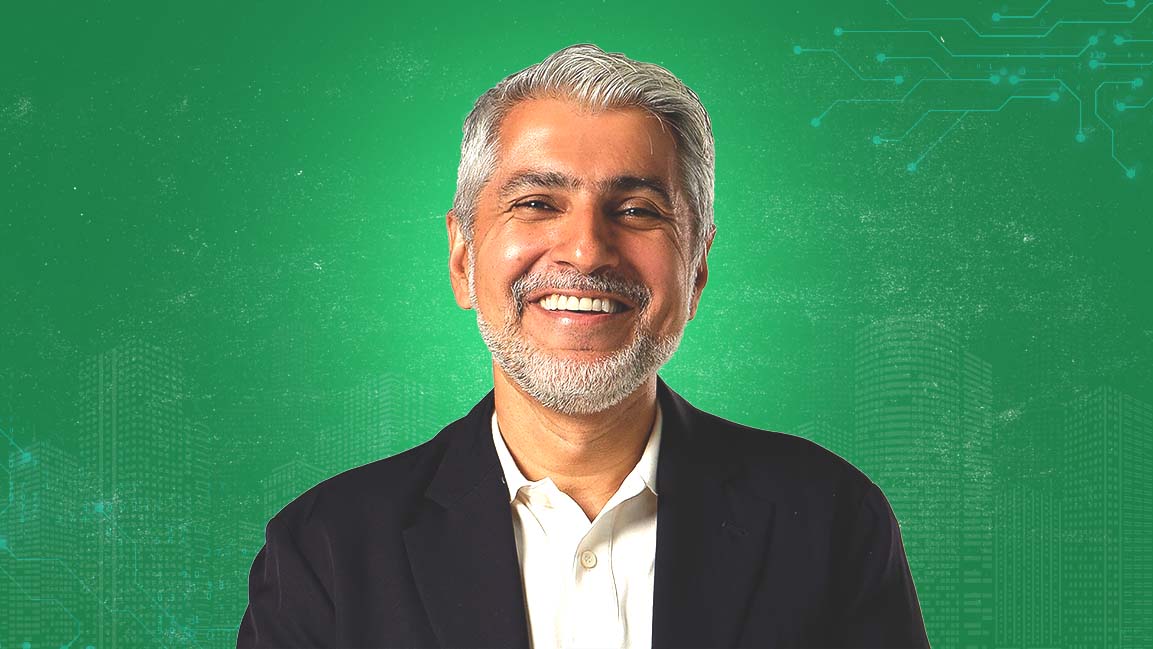
Haider Ali Khan, CEO of Bayut and dubizzle discusses how AI is transforming real estate


For decades, the real estate industry has leaned heavily on brokers’ intuition, buyers’ emotions, and sellers’ optimism to make business decisions. Data existed, but it was often fragmented or incomplete, making it difficult to analyze trends, forecast market shifts, and optimize operations. F
Haider Ali Khan wants to change that by encoding it into the DNA of UAE real estate. As CEO of Bayut and dubizzle, Khan is leading one of the Middle East’s most ambitious tech transformations: turning property portals into decision engines powered by AI, machine learning, and something the industry has historically struggled with—trust.
“We build technology to serve humanity,” Khan says.
It’s a simple philosophy for someone running over 65 proprietary AI models, generating half a million predictions per minute across platforms at the center of one of the region’s most sought-after markets—at a time when homes are more than just assets.
And that’s exactly why Khan believes real estate is overdue for technological reckoning.
FROM LEDGERS TO LEARNING MACHINES
PropTech, Khan argues, is one of the last major industries to undergo true modernization.
“Two hundred years ago, real estate ran on ledgers,” he says. “Then those ledgers became digital. But the thinking stayed the same.”
Even today, much of global real estate tech is little more than a digitized classifieds section—listings, filters, photos, and phone numbers. Useful, yes. Intelligent? Hardly.
Bayut and dubizzle chose a different path. Instead of asking how to show more listings, Khan asked, “How can we help people make better decisions?”
This shift—from exposure to intelligence—changed everything.
Long before AI became a boardroom buzzword, the company had invested heavily in data infrastructure, including transaction histories, pricing trends, user behavior, broker performance, and market velocity.
Once-disconnected signals were unified into systems that learn in real time.
“Collecting data isn’t enough,” Khan says. “If you can’t extract insight from it, it’s useless.”
SHOULD TECH MAKE THE INVISIBLE VISIBLE?
Khan believes users don’t need to see the tech.
He likens it to a smartphone. Few people understand the neural networks, sensors, and silicon that make it work. They care about outcomes: speed, clarity, confidence.
“That’s an abstraction,” he explains. “Tech lets us move higher up the stack. We hide complexity so people can focus on decisions.”
On Bayut, this philosophy manifests as search intelligence that goes beyond filters. Instead of forcing users to click endlessly through dropdown menus, the platform allows for conversations. Users’ needs become inputs, and context becomes currency.
A buyer doesn’t search for a two-bedroom apartment—they signal intent.
AI listens, learns, and responds.
The goal isn’t personalization for its own sake, but relevance without intrusion.
“There’s a fine line between helpful and annoying,” Khan says. “The only way to find it is by understanding behavior deeply, and in real time.”
TRUST IS THE PRODUCT
In an industry built on opinions, Khan believes in a data-first approach.
“Everybody has an opinion,” he says. “Data speaks the truth.”
That conviction led to TruEstimate™, Bayut’s AI-powered valuation tool designed to answer the question buyers and sellers have always struggled with: what is this property really worth?
“In most industries, price discovery is easy,” Khan says. “In real estate, it’s not.”
TruEstimate™ analyzes historical transactions, current asking prices, appreciation and depreciation patterns, and supply-demand dynamics, delivering valuations with approximately 95% accuracy.
“We measure inaccuracy,” Khan says. “We’re at about a 5% error rate.”
Last October alone, 60% of all secondary market transactions in Dubai involved properties where a TruEstimate™ report had been viewed before the deal closed.
“If you just inflate the value, people might like it,” Khan says. “But they won’t trust it. Fair value builds confidence.”
WHY BROKERS STILL MATTER
For all the data and intelligence layered into the platform, Khan is clear: technology does not replace brokers. It reveals the best ones.
“A great broker is a consultant,” he says. “And consultants need tools.”
To make his point, Khan shares a personal story from well before his real estate career—one that shaped his view of expertise.
Trained as an engineer, he once worked on video chips, the components inside televisions. Years later, while living in the US, he walked into a Best Buy to buy a TV. He understood the mechanics better than most customers: how chips functioned, how signals were processed, and how displays were constructed.
However, that knowledge didn’t help him make a choice.
“I didn’t know how any of it translated into what I’d actually see on screen,” he says.
The decision shifted not because of more technical detail, but because of interpretation. A sales consultant explained which models handled contrast better, where blacks appeared deeper, and how colors performed under different lighting conditions.
“He didn’t explain the guts of the TV,” Khan says. “He explained what it would look like when I turned it on.”
That, Khan believes, is the true role of a broker.
“They don’t just know the internals of the market,” he says. “They know how it feels to live there, how a price makes sense in context, how to guide someone to the right decision.”
Bayut’s role, then, is not to disintermediate brokers, but to elevate them.
GAMIFYING EXCELLENCE, ELEVATING THE INDUSTRY
Brokers, long seen as intermediaries, play a central role in Khan’s ecosystem. However, not all brokers are equal, and Bayut has decided to make this visible.
TruBroker™ is a program inspired by gaming mechanics rather than traditional certifications. Brokers earn points for behaviors that signal quality, including responsiveness, accuracy, and professionalism. As rankings rise, brokers enjoy greater exposure, and Bayut captures a highly competitive marketplace.
“The only way to beat the best broker,” Khan says, “is to become better.”
It’s a powerful feedback loop, one that nudges the industry upward without the need for mandates or enforcement. Technology doesn’t replace brokers. It reveals the best ones.
With the acquisition of Property Monitor, Bayut doubled down, equipping brokers with enterprise-grade intelligence to match their advisory role.
“A great broker is a consultant,” Khan says. “Our job is to give them the tools to be experts.”
FROM LISTINGS TO A LIVING SYSTEM
Bayut’s evolution mirrors the broader shift in how people interact with technology.
First came listings. Then photos. Then data. Now, decisions.
The platform has introduced conversational AI, real estate “stories,” and social-style engagement that reflects how younger generations consume information. Property is no longer static content. It’s dynamic, contextual, and increasingly social.
“We look at how people actually behave,” Khan says. “Social selling isn’t just a trend, it’s the reality we live in.”
The result is a living system in which consumers, brokers, and sellers interact with intelligence layered throughout the journey, not just at the point of search but across negotiation, valuation, and trust-building.
A SYSTEM, NOT A BET ON THE FUTURE
Ask Khan where Bayut is headed next, and he doesn’t offer a grand reveal. He says, “Transformation doesn’t happen overnight. It happens by solving real problems, one by one.”
That restraint is intentional. While much of the industry debates whether AI will replace businesses or simply decorate them, Khan is focused on a more practical question: Does the technology actually get used?
“If we build something amazing and nobody uses it, it doesn’t solve anything,” he says. He further explains that technology earns its value by minimizing friction—enhancing buyer confidence, informing sellers, and bolstering broker credibility. “Solve problems. Earn trust. Repeat.”
He continues: “We don’t pretend to have it all figured out. The best place to be is at the front of change, not reacting to it, but learning from it.”
In an industry where decisions shape lives, not just balance sheets, Bayut’s bet is simple: technology’s most human role isn’t replacing judgment—it’s strengthening it.
In real estate, that may be the most disruptive idea of all.