- | 11:00 am
Key stories and signals from the World Governments Summit 2026
From global economic shifts to AI governance and industrial policy, a curated look at the announcements and ideas shaping the future of government.
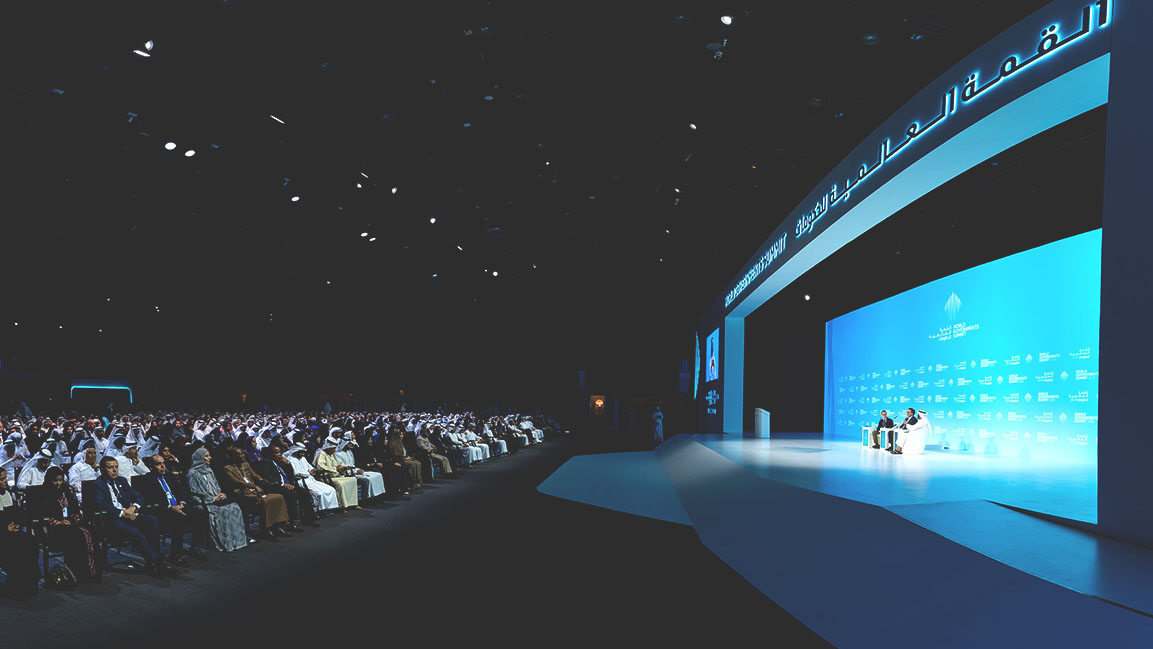


The World Governments Summit 2026 arrived at a moment when the assumptions shaping economies, power, and technology are no longer holding true. Hosted in Dubai under the theme Shaping the Governments of the Future, the summit reflected a clear shift in how states are thinking about resilience, not as stability, but as the ability to adapt, execute, and maintain trust under pressure.
Over three days, the most consequential announcements pointed in the same direction. Governments are moving away from vision-led policymaking toward system-building, creating platforms, frameworks, and institutions designed to translate ambition into long-term capability.
A GLOBAL ECONOMY UNDER PRESSURE, BUT HOLDING
Opening the summit’s macro discussion, Kristalina Georgieva, Managing Director of the International Monetary Fund, said the global economy has proven more resilient than expected despite geopolitical shocks and persistent uncertainty.
“What we see is a world that is more diverse, more multipolar, and more resilient as a result,” Georgieva said.
She pointed to improving growth prospects in several regions, including the Gulf, driven by private-sector momentum, easing trade pressures, and productivity gains linked to artificial intelligence. Countries that invested early in human capital and institutional reform, she noted, are now better positioned to absorb disruption.
That long-term view was reinforced by Ray Dalio, founder of Bridgewater Associates, who outlined five structural forces reshaping global markets and governments: debt cycles, internal political divisions, geopolitical realignment, climate and health shocks, and technological transformation.
“We are witnessing the breakdown of long-standing monetary, political, and geopolitical systems,” Dalio said, warning that such periods historically reshape capital flows, reserve strategies, and global power balances.
Against that backdrop, he described the UAE and the wider Gulf as unusually resilient, citing leadership continuity, social cohesion, and long-term planning as stabilizing advantages in an increasingly polarized world.
TECHNOLOGY AS A SOVEREIGN ASSET
One of the summit’s clearest signals was the reframing of technology as a pillar of national sovereignty. In a high-level session featuring global technology leaders, speakers argued that control over digital infrastructure now sits alongside defense and finance as a core strategic concern.
Arvind Krishna, Chairman and CEO of IBM, described technology as fundamental to modern state power.
“Technology today stands on equal footing with defense and finance, describing it as a force multiplier’ capable of accelerating economic development and strengthening national resilience,” he said.
Panelists stressed that sovereignty does not mean technological isolation. Instead, it is about governance, ensuring that critical systems, data, and networks remain secure, resilient, and operable within globally interdependent ecosystems. As AI models scale and cloud infrastructure becomes more concentrated, governments that fail to define sovereignty in operational terms risk losing strategic autonomy.
FROM AI AMBITION TO AI READINESS
While artificial intelligence dominated the summit agenda, the most meaningful interventions focused on execution rather than hype. In partnership with Bain & Company, the World Governments Summit launched an AI Readiness Tool to help governments assess their ability to deploy AI responsibly and at scale.
The platform evaluates maturity across strategy, data and technology, talent, governance, and operating models. Its launch reflects a growing recognition that while many governments are experimenting with AI, few have the institutional foundations required to scale it. The tool provides diagnostics and tailored roadmaps, reframing AI adoption as a capability-building challenge rather than a technology rollout.
A similar message came from Deloitte, the summit’s Knowledge Partner. Deloitte’s research emphasized that future-ready governments will be built through integrated systems, including resilient infrastructure, AI-driven trade models, smart cities, and AI-powered health ecosystems, rather than isolated digital initiatives.
SCIENCE, CREATIVITY, AND THE LIMITS OF MACHINES
As governments accelerate AI adoption, the summit also made space for a necessary counterbalance. Nobel Prize-winning scientists cautioned against overstating the role of machines in discovery, arguing that creativity, curiosity, and intuition remain uniquely human.
Serge Haroche, Nobel Laureate in Physics, drew a clear distinction between automation and originality.
“Genuine creativity stems from human passion, ambition, and emotion, neurochemical processes that machines can’t reproduce,” he said.
Speakers stressed that curiosity-driven basic research remains the foundation of transformative breakthroughs and that sustained government funding is essential. That message was reinforced by the launch of the OPENSCI Initiative, which introduces new infrastructure for science funding and attribution using AI and blockchain. The platform is designed to ensure transparent recognition of scientific contributions and provide long-term, milestone-based support as discoveries move toward real-world application.
CITIES AND CLEAN ENERGY AS EXPORTABLE MODELS
Urban resilience and sustainability featured prominently, with an emphasis on practical implementation. Dubai Municipality signed a strategic agreement with Shenzhen’s Urban Planning and Design Institute to collaborate on smart city development, low-carbon urbanism, and AI-enabled planning tools.
The partnership reflects Dubai’s ambition to benchmark itself against global innovation hubs while exporting its own governance and city-planning expertise.
Energy transition was also framed as a diplomatic and development asset. Dubai Electricity and Water Authority shared its experience developing large-scale solar projects with the Seychelles’ Minister of Environment, highlighting the Mohammed bin Rashid Al Maktoum Solar Park as a model for clean-energy deployment at scale.
DEVELOPMENT FINANCE AS STRATEGY
The summit highlighted how development finance is being used as a long-term tool for stability and resilience. The Abu Dhabi Fund for Development signed an AED32 million ($8.7 million) agreement to finance a social housing project in the Seychelles, delivering 80 housing units for low-income families.
In a separate agreement, ADFD signed a $102.3 million (AED 376 million) loan with Tajikistan to finance the Rogun Hydroelectric Power Station. The project strengthens energy security and water resilience across Central Asia, enabling large-scale water storage for power generation, irrigation, and drinking supply.
“This agreement with our partners in the Government of the Republic of Tajikistan reaffirms ADFD’s strategic role in supporting global prosperity and advancing sustainable development,” said Mohammed Saif Al Suwaidi, Director-General of ADFD.
He added: “It further reflects our ongoing commitment to delivering on the strategic pillars set by the launch of the Abu Dhabi Global Water Platform and embodies our forward-looking development vision in supporting water-related challenges as a central priority on the international agenda and as a cornerstone for a more sustainable future.”
CULTURE, IDENTITY, AND TRUST
One of the summit’s quieter but more consequential themes was the role of culture and identity in governance. The Mohammed Bin Rashid School of Government, in partnership with UNESCO, launched the Arab Cities Culture and Creative Industries Index, positioning creative economies as measurable drivers of growth, diversification, and resilience.
This thinking extended into governance through a report issued with Strategy& Middle East, which framed national identity as a strategic asset underpinning trust, cohesion, and competitiveness, particularly in an era of rapid technological and social change.
GOVERNANCE AS A LIVING SYSTEM
Taken together, the World Governments Summit 2026 marked a clear evolution in tone. The most important announcements were not about individual technologies or headline policies, but about systems, including AI-readiness frameworks, science-funding infrastructure, urban-planning models, and development-finance mechanisms.
The message was consistent. Governments that endure will be those that treat governance as a living system, capable of adapting without losing trust, integrating technology without surrendering control, and growing without fragmenting the societies they serve.

Featured Videos
Today's Top Stories:
More Top Stories:



FROM OUR PARTNERS