
- | 9:00 am
Why Middle East businesses are accelerating the shift to transparent supply chains
Businesses are prioritizing supply chain visibility, transparency, real-time monitoring, and closer coordination to build resilience.
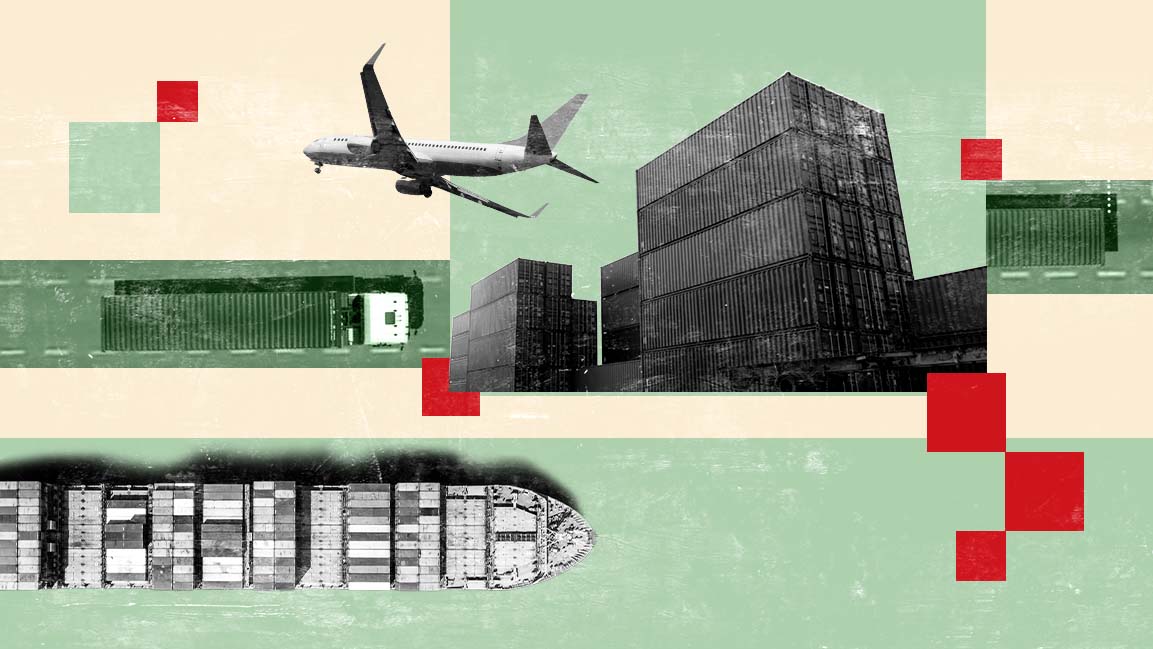


In the weeks following regional disruptions, pressures across global supply chains have begun to ease, with transport and input costs stabilizing this month. The moderation has provided short-term relief for companies facing rising expenses and potential disruptions to delivery schedules.
However, volatility, rather than ongoing disruption, is now shaping supply chain risk. Even short periods of instability can affect sourcing, production, and distribution, which impacts lead times, inventory planning, and cash flow.
For many organizations, the immediate impact was felt through delays, cost fluctuations, and uncertainty around the availability of critical inputs. Sectors reliant on materials originating in the Gulf were forced to reassess sourcing strategies and contingency plans, even as worst-case scenarios were avoided.
Even as things improve, improving supply chain visibility remains urgent. Recent events show how quickly things can change, and without sufficient transparency across suppliers, routes, and inventories, companies end up reacting rather than preparing for disruptions.
To respond, businesses are focusing on real-time monitoring, using a wider range of sources, and working more closely together to become stronger and more resilient.
SUPPLY CHAIN VISIBILITY
Irina Albanese, VP, Global Head of Innovation Centers and Head of Innovation MEA at DHL, notes that supply chain visibility has shifted from a “nice to have” reporting layer to a capability that directly shapes customer experience and commercial outcomes.
“When organizations can see inventory, capacity, and movement in near real time, they can detect issues earlier, protect service levels, and make better choices across cost, speed, service, and sustainability.”
She adds that visibility alone is not sufficient; its real value emerges when it is translated into coordinated action. “Based on this, you can reprioritize orders, allocate employees, adjust automation flows, or reroute when conditions change.”
Similarly, Skander Kastalli, Partner, Supply Chain Advisory at KPMG Middle East, says visibility has evolved from an operational dashboard to a strategic differentiator in a volatile landscape shaped by geopolitical tensions, disease outbreaks, cyberattacks, and climate-related disruptions.
“Now companies that can see their supply chains end-to-end can make faster, better decisions than competitors operating in the dark. Visibility enables proactive management, more accurate demand forecasting, and improved customer trust through reliable delivery commitments.”
Ebraam Elias, Supply Chain Engineer at Innovo Group, adds that visibility has moved beyond tracking inventory and shipments to enabling predictive planning, risk mitigation, and cross-functional alignment.
“Visibility today supports predictive planning, risk mitigation, and cross-functional alignment, enabling organizations to anticipate disruptions, maintain continuity, improve service levels, and optimize costs. Ultimately, companies that embed visibility into their decision-making culture outperform those that treat it as a purely operational tool.”
MITIGATING INSTABILITY
Geopolitical tensions are reshaping how companies approach risk, with disruption increasingly treated as a constant rather than an exception, says Albanese. As a result, resilience, flexibility, and rapid adaptability are being built into logistics networks through clearer playbooks, stronger scenario planning, and the ability to reconfigure routes and modes quickly.
She points out that technology is at the heart of this change, even though the need for agility is not new. “We saw it during COVID –, the pace and expectation to adapt fast are getting higher. Another learning from our own data is that even in times of conflict, trade and trade flows continue. Global trade covers greater distances on average than ever before.”
Viktor Sartakov-Korzhov, CEO and founder of SMEY’s, says ongoing instability is accelerating a shift from cost-optimized supply chains to resilience-driven models, as companies reassess the risks of concentrated sourcing.
“This is pushing industries to rethink sourcing strategies and invest in alternative production methods that are less exposed to regional instability. Fermentation-based production, for example, enables localized manufacturing independent of traditional agricultural constraints, offering a way to disassociate supply from geopolitical volatility.”
REGIONAL READINESS
The GCC has made significant progress in logistics infrastructure, including smart ports, digital trade platforms, and customs digitization, supported by substantial national investment. However, Kastalli says integration remains a key challenge.
“True real-time visibility still faces friction at the integration layer, especially when multiple partners operate on different systems or data standards,” Kastalli explains. “The next leap forward will depend not just on infrastructure spend, but on ecosystem-wide data interoperability and collaboration between shippers, carriers, and regulators.”
Albanese highlights that national-level initiatives are reshaping logistics performance by bringing digital systems closer to physical operations. “The cloud platforms on which our customers run their ERP, order management, and visibility tools now sit physically close to the goods themselves,” she notes, enabling lower latency and more real-time operations.
The combination of infrastructure investment and a strong appetite for piloting new technologies is accelerating innovation in the region, helping solutions move more quickly from concept to deployment. IoT and cloud technologies are becoming central to logistics operations, enabling the conversion of large volumes of data into actionable insights.
“That is the difference between a digital warehouse and a connected one,” she says, describing systems capable of triggering real-time actions such as rerouting shipments or managing cold-chain risks.
Meanwhile, real-time data is shifting supply chains from reactive to proactive management, says Elias. “Instead of reacting to disruptions after they occur, organizations can now simulate multiple scenarios and activate contingency plans in advance.”
He notes that access to live data on inventory, suppliers, transport, and demand enables faster decision-making, dynamic rerouting, inventory rebalancing, and improved service levels, while reducing delays and waste.
Similarly, Ahmed Attawia, Supply Chain Manager at Procter & Gamble, says real-time data is critical to building responsive and proactive supply chains. “A delay in data availability multiplies in magnitude the further up the supply chain it goes,” he notes, warning that late reactions to demand shifts or shipping disruptions can significantly impact operations.
He adds that real-time insights enable faster, more informed decisions on resource allocation, from manpower to warehouse capacity. “Realtime data also enables managers to take decisions based on the market status,” he says, highlighting its role in strengthening competitiveness and ensuring timely delivery to customers.
THE NEXT PHASE
The next stage of supply chain resilience is shifting from visibility to predictive and prescriptive action, says Albanese. “We detect change early, test response options, and execute adjustments quickly and safely,” she explains, adding that this requires fully integrated operations linking warehouses, transport, inventory, and customer service through real-time data and clear governance.
AI is now a key part of supply chains, not just an extra feature. Along with automation and analytics, it helps teams handle complex tasks, manage daily work, and make decisions faster. Digital twins let organizations test scenarios, identify problems, and try changes before making them real, all to build supply chains that are strong, sustainable, and people-focused, adds Albanese.
The focus is also shifting from visibility to “adaptive and regenerative supply systems,” says Sartakov-Korzhov, in which resilience is built through flexibility and diversification rather than through monitoring alone.
He highlights fermentation-based production as a way to reduce reliance on constrained agricultural inputs, expand the available raw materials, and enable on-demand, biology-driven manufacturing. Development cycles for alternative ingredients have fallen from years to months, enabling faster responses to volatility and supporting a shift toward more localized production models that are less exposed to trade and climate disruption.
End-to-end visibility is now the baseline, but the goal is real-time, predictive decision-making, says Kastalli. “The next phase of supply chain maturity is combining visibility with predictive intelligence and autonomous decision-making,” Kastalli adds, highlighting the role of AI, digital twins and control towers that not only detect issues but recommend actions.
Resilience will increasingly depend on how quickly organizations can align people, processes, and partners to act in a coordinated way during disruption, turning agility into a competitive advantage.
Attawia adds that government investment in infrastructure, combined with growing adoption of digital and AI technologies, is positioning the Middle East for significant progress in supply chains. “Companies that invest in these areas and focus on digital adoption and touchless supply are positioned to be market leaders in the Middle East in the near future,” he notes.