
- | 9:00 am
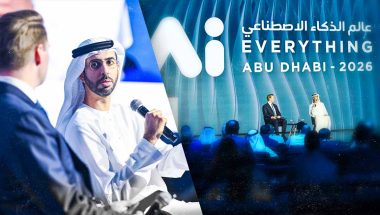
Issam Kazim on why crisis is Dubai’s best brand builder
With perceptions changing quickly, Issam Kazim explores what it means to succeed under pressure.


For decades, Dubai’s global appeal rested on tax-free salaries, ease of doing business, first-class infrastructure, and an intangible promise—stability in an uncertain region.
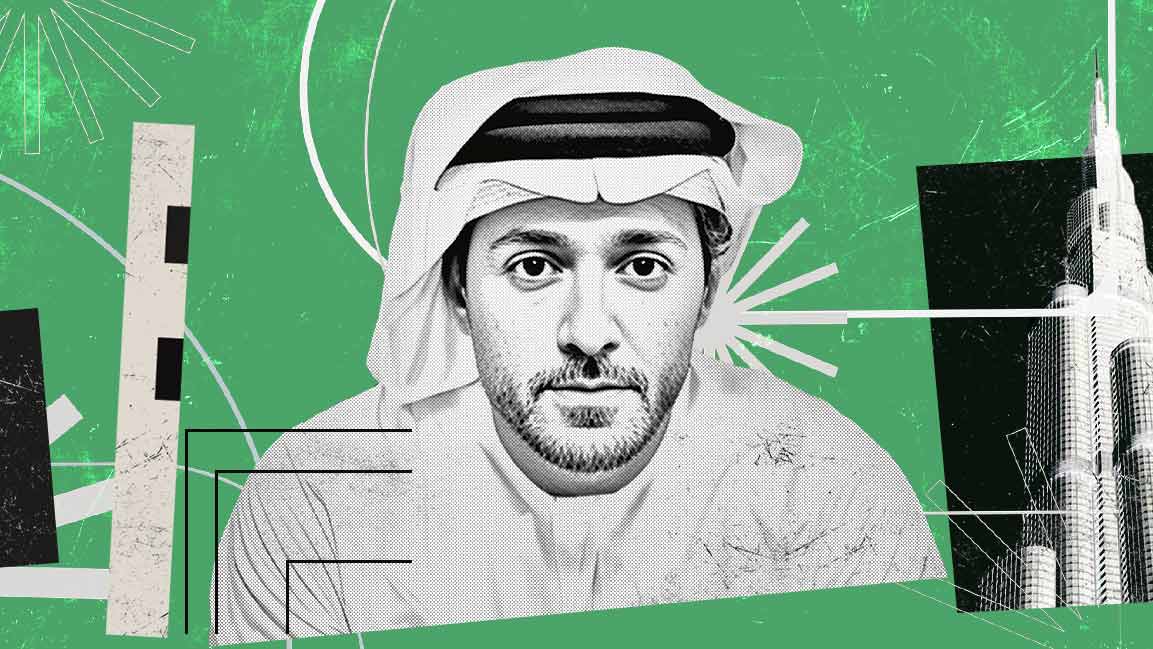
It was a narrative refined over time and championed by figures like HE Issam Kazim, CEO of Dubai Corporation for Tourism and Commerce Marketing, who helped position the city not just as a destination but as a place people could rely on to escape the volatility of the region.
But that sense of certainty is now being tested.
The recent US–Iran tensions have exposed that geopolitical friction is no longer distant; it is actively shaping how people see the region and make decisions.
But in the UAE, despite disruptions, airports have reopened in phases, airlines have rerouted rather than retreated, and tourism has recalibrated its local scope.
Dubai, the region’s most visible hub, sits at the center of this recalibration. It is showing resilience as the world is watching.
FROM SAFE HAVEN TO OPERATIONAL PROOF POINT
“The narrative has moved from positioning to proof,” says Kazim. “Dubai [is] being defined as a destination that performs under pressure. What was once a perception is now continuously validated through real-time implementation.”
That shift is not semantic—it is structural.
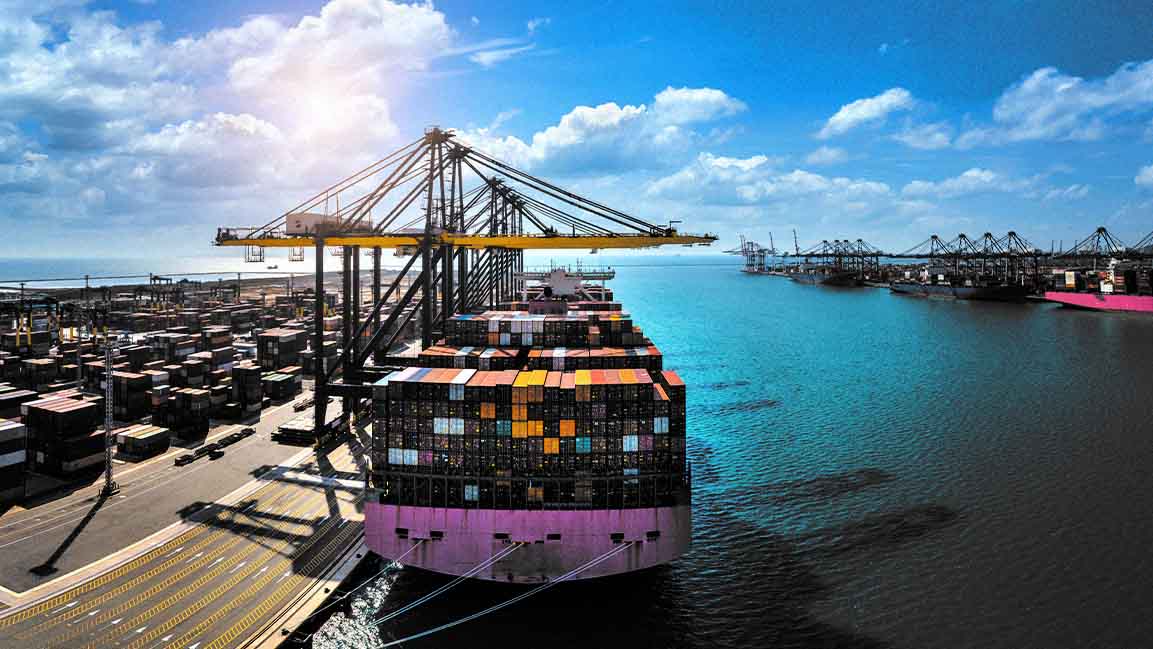
A recent report shows how quickly the operating environment changed when regional escalation intensified in early 2026. Airspace restrictions across parts of the Gulf forced airlines, including Emirates and flydubai, to reroute flights across alternative corridors, particularly over Saudi and Egyptian airspace, rather than suspend operations entirely.
At the same time, UAE airports, including Dubai International, continued processing millions of passengers even during periods of heightened disruption, with contingency routing keeping connectivity intact rather than paused.
Dubai has shown its ability to keep things running smoothly even amid disruptions.
CONTINUITY AS A DESIGNED SYSTEM
What has become visible is managed continuity.
“Under the direction of decisive leadership, Dubai focused on maintaining continuity across key services,” Kazim explains. “Daily life continued, with hotels, attractions, retail, and public transport continuing to function, and flight operations, led by Emirates and flydubai, steadily resuming.”
That continuity reflects a governance model built around public–private coordination and rapid cross-sector alignment, which typically operate independently in other global cities.
Recent UAE measures illustrate this clearly.
In April 2026, Dubai introduced an AED 1 billion tourism and hospitality support package, including deferrals on hotel-related fees and tourism charges, aimed at stabilizing liquidity across the sector amid regional disruption.
Rather than waiting for demand to recover organically, the intervention was designed to simultaneously maintain operational confidence across hotels, airlines, and service operators.
In parallel, aviation authorities and carriers coordinated real-time passenger communication and rerouting protocols to maintain flow —an approach that prioritized continuity over containment.
THE PERCEPTION PROBLEM
While Dubai’s infrastructure has shown it can handle stress, its biggest challenge now is the speed at which information spreads.
Today, news and opinions can change in minutes, while real changes on the ground take hours or days.
“Confidence is sustained through agility, transparency, and tangible action,” Kazim says. “Travelers ultimately want the truth on the ground, not speculation.”
This has pushed Dubai’s tourism ecosystem into a more active communications posture, in which official advisories, airline updates, and digital channels now serve as real-time stabilizers rather than retrospective explanations.
When regional tensions escalated, airlines such as Emirates publicly stated that operations remained stable, even as parts of regional airspace were intermittently affected.
The real challenge became the difference between how smoothly things were running and how outsiders saw the situation. To address that, Dubai’s response combined communication with financial signaling.
The AED 1 billion support package served as a confidence-building measure. It was meant to show that Dubai’s tourism sector would stay strong, even under outside pressure.
A SYSTEM ALREADY STRESS-TESTED BY CRISIS CYCLES
Dubai’s current approach isn’t new. It follows a pattern set during earlier global crises, especially the COVID-19 pandemic, when the city reopened tourism and aviation faster than many others by coordinating regulatory, health, and commercial systems together.
Kazim situates the current moment within that longer arc: “COVID-19 demonstrated our ability to pivot quickly,” he reflects. “But that agility didn’t emerge overnight. Our ability to take swift action is built into our governance model and our public-private coordination.”
What’s different this time is that many challenges are happening at once.
Unlike a singular crisis event, today’s geopolitical tension has affected multiple layers at once: aviation routing, tourism sentiment, logistics flows, and global media narratives. Yet core economic indicators remain intact, with Dubai’s GDP continuing to grow and tourism remaining one of its strongest structural contributors to non-oil growth.
TOURISM AS INFRASTRUCTURE OF CONFIDENCE
Tourism in Dubai is no longer seen as a byproduct of stability. It is part of the mechanism that produces it.
“Tourism is a central pillar and strategic enabler of our broader national agenda,” Kazim says.
Recent data underscores this scale: millions of annual international visitors continue to pass through Dubai even amid regional tensions, reinforcing its role as a global interchange rather than a destination dependent on static conditions.
Within the framework of the Dubai Economic Agenda (D33), tourism is an integrator—linking aviation, retail, real estate, and investment flows into a single interconnected system.
That integration is precisely what allows the city to absorb volatility without sectoral collapse.
WHEN NARRATIVE AND REALITY DIVERGE
Even though Dubai continues to run smoothly, stories about the city can become distorted as news spreads quickly around the world.
“Every major city faces moments when the narrative runs ahead of the facts,” Kazim acknowledges. “In early 2026, some reporting did not capture the fact that Dubai was operational… and that the Dubai World Cup proceeded as planned.”
These moments reveal a key fact about modern cities: reputation is always changing.
“You bridge the gap by owning the narrative through direct, transparent, real-time communication,” Kazim says. “The gap between perception and reality closes when facts speak louder than speculation.”
What is important is that the city is still safe. It is functional under stress, visible under scrutiny, and adapts under pressure.
“What keeps Dubai ahead is its ability to respond with clarity and consistency in an uncertain environment,” Kazim says.
This approach marks a new stage in Dubai’s growth. The city has a system that keeps working, no matter what’s happening around it. And this may be Dubai’s most valuable strength.