
- | 11:30 am
How LEGO turned Messi, Ronaldo, Mbappé, and Vini Jr. into mini cultural artefacts
Football has its icons. Now they have their monument
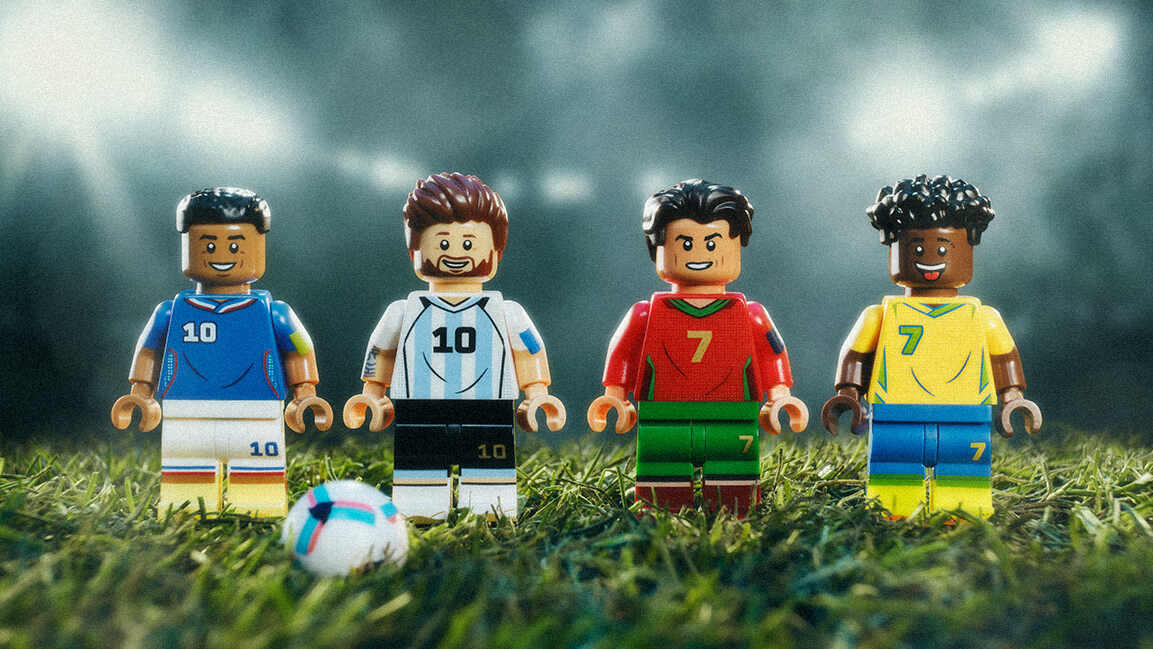


Messi’s movement, Ronaldo’s power, Mbappé’s speed, Vini Jr.’s flair. Football is built on moments of motion, and LEGO’s latest challenge was to capture exactly that in a special Editions set. Ahead of the 2026 FIFA World Cup, the LEGO Group tasked a group of designers to transform Lionel Messi, Cristiano Ronaldo, Kylian Mbappé, and Vinícius Júnior into carefully choreographed, buildable design icons that sit somewhere between toy, collectible, and cultural artefact.
This new football line-up was never meant to be static.
Each set was approached not as a simple buildable, but as a miniature study in motion, identity, and fandom, where the player’s personality is as much a part of the design as the bricks themselves.
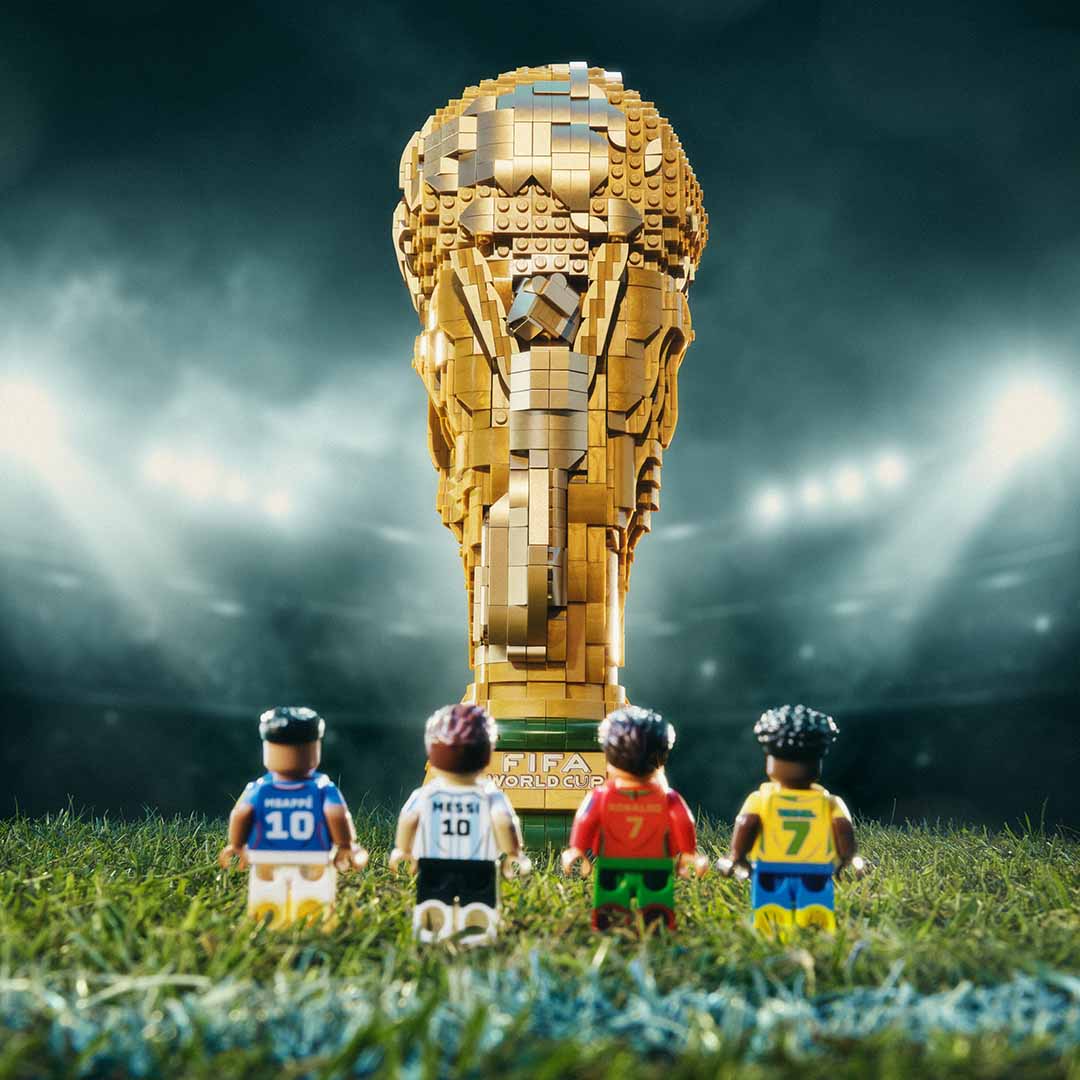
The special FIFA World Cup Lego Edition. Courtesy: LEGO
For LEGO designer Beatrice Amoretti, the challenge was less about recreating famous athletes and more about distilling what makes each player instantly recognizable at minifigure scale.
The design process involved months of research, going well beyond watching match footage. The team immersed itself in celebrations, signature gestures, and the broader mythology that has built up around each player over the years. Numerous concepts were explored before the team landed on what became the defining approach: frozen moments that capture each athlete in their most recognizable form, a philosophy they came to call “football highlights.”
EVERY DETAIL COUNTS
Ronaldo’s set, for instance, centers on his famous bicycle kick, a pose so physically extreme that the resulting minifigure appears suspended midair, requiring significant structural experimentation to pull off. Vinícius Júnior’s vignette leans into speed, using trailing brick effects to conjure the illusion of explosive acceleration.
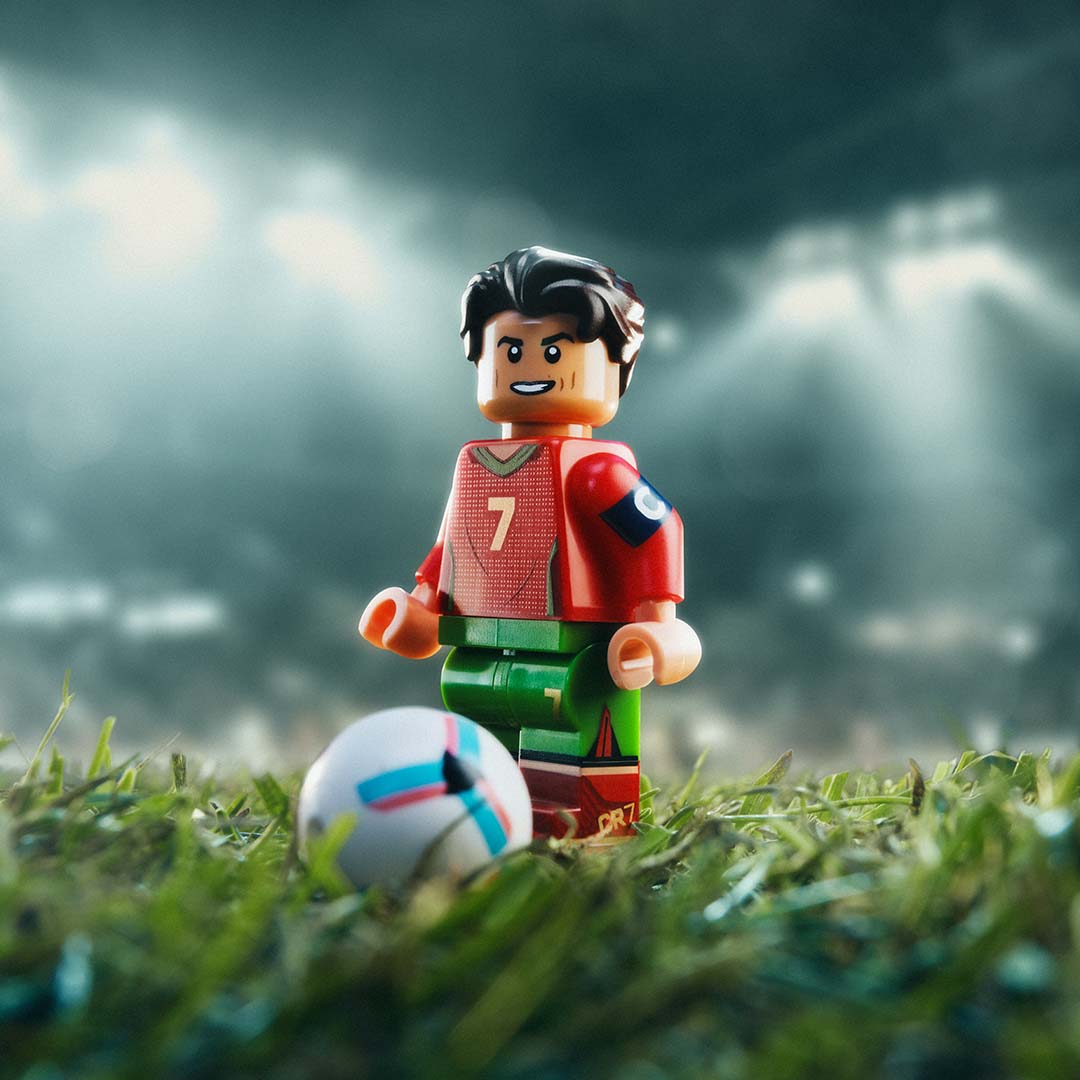
Cristiano Ronaldo’s buildable minifigure comes with two changeable heads. Courtesy: LEGO
The project marks a notable departure for Amoretti, whose earlier work on LEGO Friends focused on inventing entirely original characters and worlds.
Here, the constraints were tighter and arguably more complex. The designers weren’t building personalities from scratch; they were translating globally recognized identities into a tiny visual language made of plastic geometry.
Every detail had to survive extreme simplification. “These are global icons,” she says. “Every detail needed to feel right, but it also had to work at a very small scale.”
That process involved identifying the visual shorthand that fans instinctively associate with each player: a facial expression, a hairstyle, a pose, even the silhouette of movement. Ronaldo ultimately became the only minifigure in the collection with a dual-sided facial expression, including his unmistakable “Siuuu” reaction face, which his team loved when LEGO previewed the concept, Amoretti says.
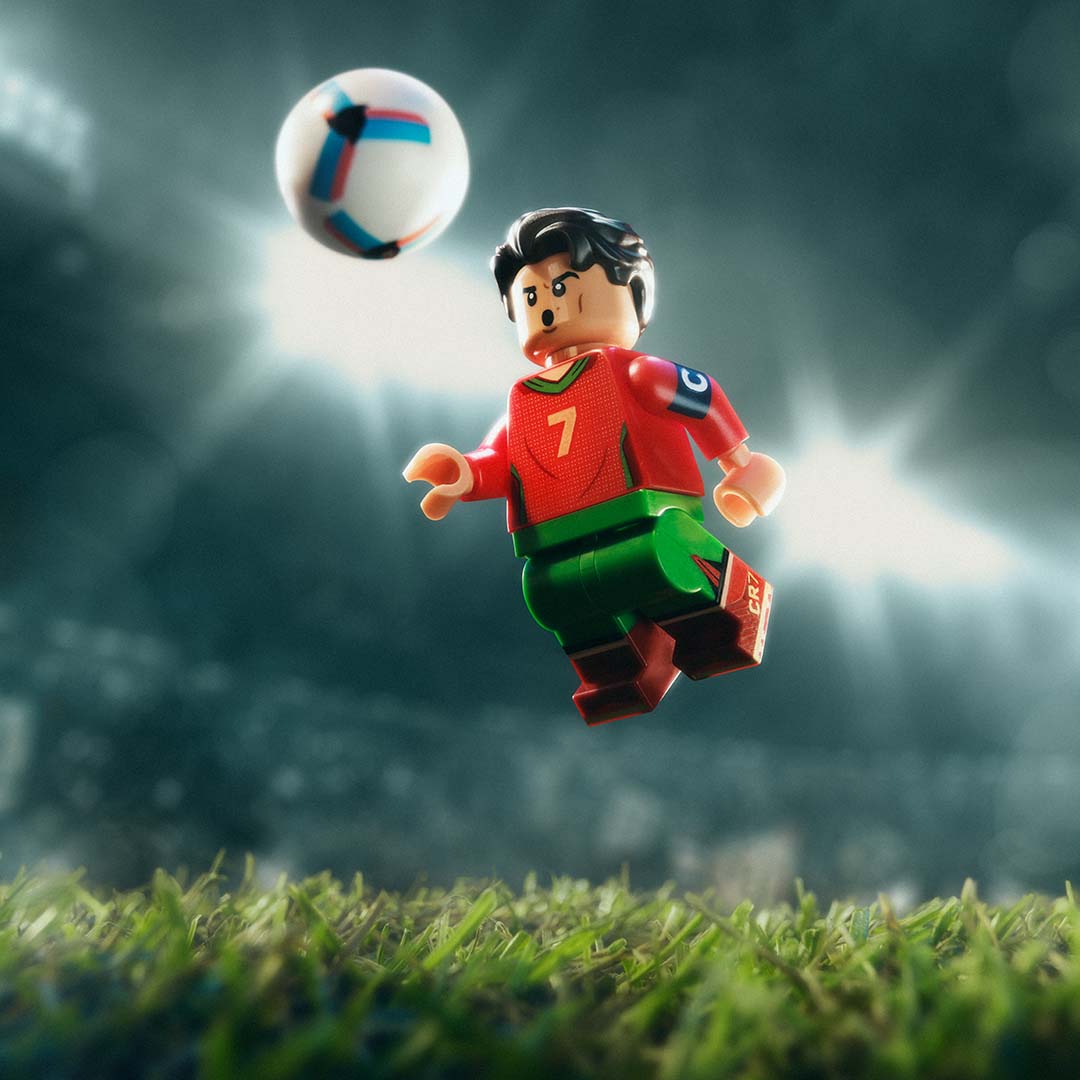
Ronaldo’s unmistakable expression. Courtesy: LEGO
The collaboration itself became unusually iterative for a licensed product. Despite demanding schedules, the players and their teams stayed involved throughout development, weighing in on everything from hairstyles to expressions.
BEYOND TOYS
Beyond likeness, the collection reveals how LEGO increasingly approaches design as narrative architecture.
“The sets are hidden with subtle Easter eggs intended to reward football obsessives: references to former clubs, symbolic color palettes, trophy counts, and miniature details hidden throughout the builds,” says Amoretti. The deeper a fan’s football knowledge, the more references they uncover.
For Amoretti, that hidden storytelling matters as much as the finished object itself. “The more of a fan you are, the more things you’ll discover,” she says, describing the builds as intentionally packed with small moments of recognition.
That philosophy reflects a broader shift happening inside contemporary toy design, where products are no longer merely playthings but fandom ecosystems. LEGO’s football sets are engineered as social objects, designed to be shown off, discussed, and dissected in conversations among friends.
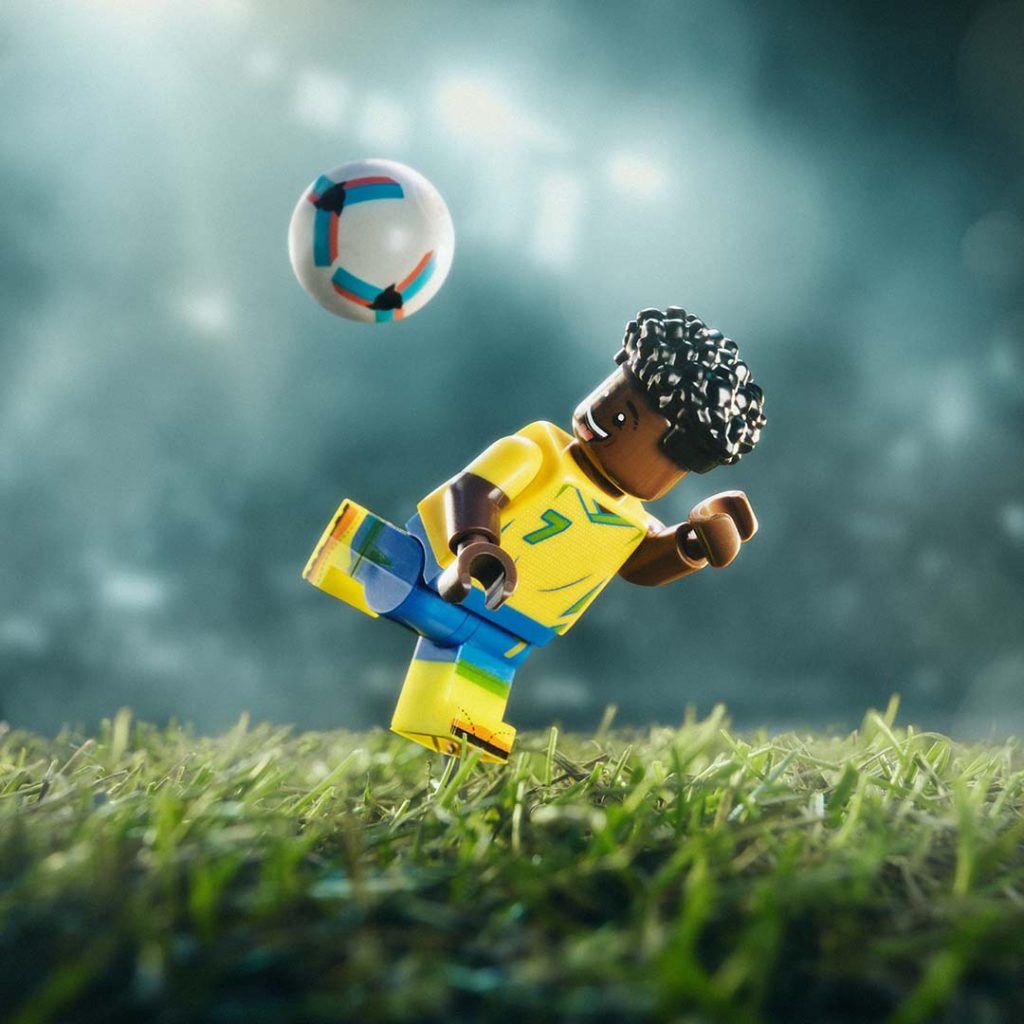
Vini Jr. in action. Courtesy: LEGO
The set is primarily designed for children, Amoretti notes, but football offered a rare crossover opportunity. Kids may be the core audience, yet the emotional pull of players like Messi and Ronaldo spans generations.
That tension between playability and display influenced the final direction. Earlier concepts reportedly explored more dynamic or mechanized movement systems, but the team eventually prioritized instantly recognizable poses over motion features. The result feels closer to collectible portraiture than traditional sports merchandise.
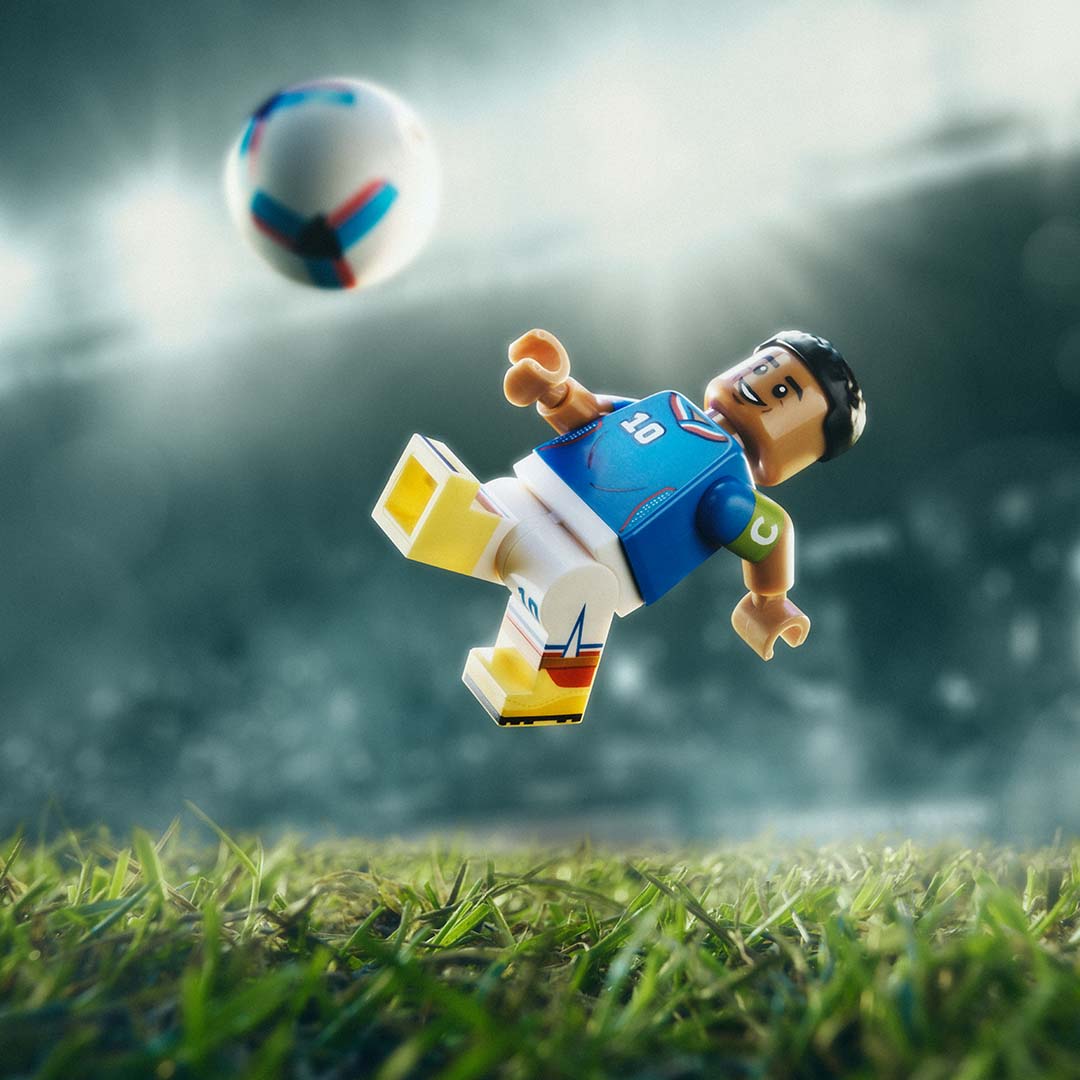
Kylian Mbappé in action. Courtesy: LEGO
In many ways, the collection mirrors football culture itself: emotional, performative, highly visual, and deeply tied to identity.
For Amoretti, the experience also became unexpectedly educational. Growing up Italian, football had always existed in the background of her life. But designing these sets required a far deeper immersion into the sport’s visual culture and emotional language.
By the end of the process, she wasn’t simply designing football icons. She was designing recognition itself, compressing some of the world’s most famous athletes into a handful of minifigures, retaining the energy that made them global symbols in the first place.

Featured Videos
Today's Top Stories:
More Top Stories:




FROM OUR PARTNERS