
- | 10:00 am
Sobha Group Chairman Ravi Menon: Dubai’s next cycle will separate builders from beneficiaries
On cycles, craftsmanship, and why the developers who endure are rarely the ones who benefit most from good timing


Dubai’s property market has had a remarkable run, and it has also experienced significant cycles. What many industry leaders see as different this time is that the growth appears to be underpinned by structural shifts rather than short-term speculation.
The buyer profile reflects that change. Demand is increasingly driven by relocated families, entrepreneurs who have established their businesses in the emirate, and long-term residents making decisions with a multi-year horizon. Strong transaction volumes and sustained demand have reinforced confidence in that narrative.
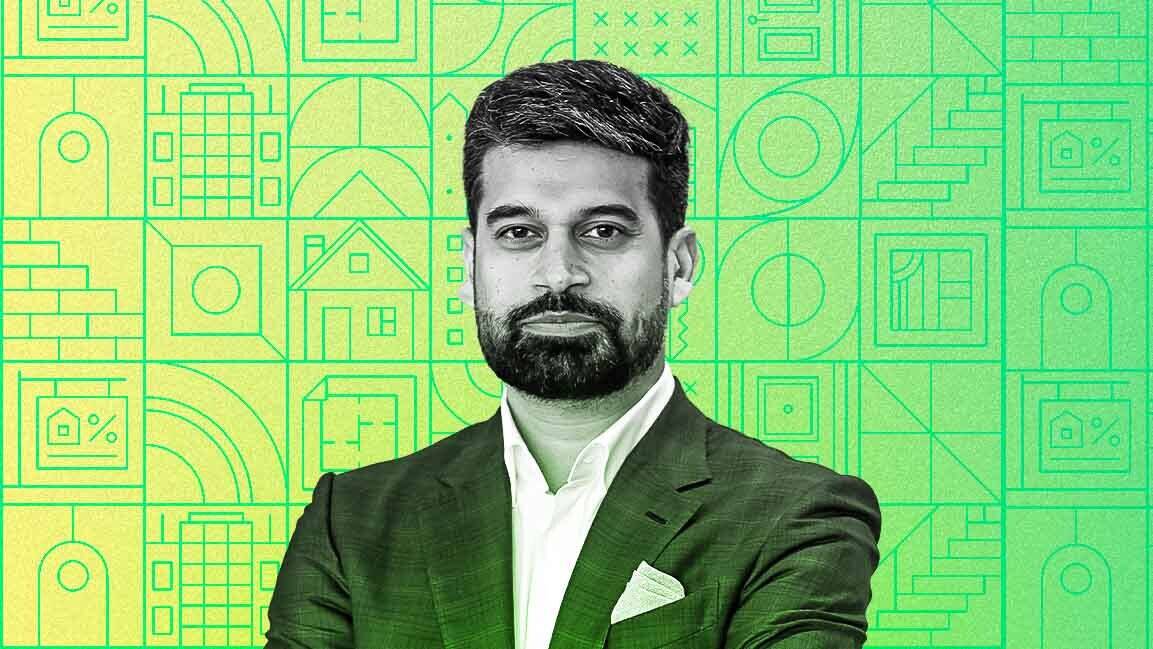
Ravi Menon, Chairman of Sobha Group, believes the answer lies not in reading the cycle but in outlasting it, and that quality, discipline, and delivery are what separate the developers who endure from those who simply benefited from good timing.
BUILDING FOR BELONGING
Having grown up around Sobha, Menon says he learned early that real estate is about far more than land, buildings, or market cycles. The most important lesson came from watching his father build the company around a simple principle: “Excellence cannot be outsourced.”
That philosophy, he explains, became the foundation of Sobha’s backward integration model, which emphasizes control over every stage of development, from design and materials to construction and final delivery. While business school can teach finance, strategy, and market dynamics, Menon believes some of the industry’s most important lessons can only be learned firsthand. “Business school can teach you finance, strategy, and market behavior, but it cannot teach you the discipline of craftsmanship or the patience required to protect quality at every stage,” he says.
Growing up, he saw homes treated not as products to be sold, but as promises to be fulfilled. That experience shaped his belief that physical structures alone do not define a developer’s success. “What you build physically only matters if it is supported by integrity, precision, and complete accountability.”
That focus on quality has also informed Menon’s view of how luxury has evolved in the Gulf over the past two decades. He believes the region’s buyers have always been discerning, but their expectations have become far more nuanced.
“In the past, luxury was often associated with scale, visibility, and statement design,” he says. Today, buyers are placing greater value on craftsmanship, privacy, wellness, sustainability, service, and long-term value.
According to Menon, today’s purchasers look beyond first impressions. They want to understand how a home is built, how it functions day to day, and whether it will retain its value over time. He argues that Sobha has helped shape this evolution through its emphasis on precision, backward integration, and end-to-end quality control.
The shift is also being reinforced by the UAE’s growing appeal as a place to live and invest. “More buyers want luxury within the UAE because they see the country as a stable, secure, and globally connected place to build a life,” he says.
THE EXECUTION ADVANTAGE
While Dubai’s property market has enjoyed a strong run, Menon cautions that every upcycle brings its own risks. “Every strong market cycle creates confidence, but it can also create complacency,” he says.
Rather than focusing on how long the current momentum can last, Sobha’s approach is centered on preserving the fundamentals that underpin long-term value. Menon points to location, design, construction quality, timely delivery, pricing discipline, and customer trust as the factors that matter most when market conditions inevitably change.
The company’s international buyer base has also expanded significantly. Selling to customers from more than 145 countries reflects the global appeal of Dubai’s real estate market, but it also raises the bar for developers. Buyers arrive with different expectations, preferences, and standards, requiring greater consistency in execution.
For Menon, Sobha’s backward integration model is key to maintaining that consistency. “It gives us greater control over quality, timelines, and execution, allowing us to create long-term value regardless of market conditions,” he says. While cycles may come and go, he argues that “credibility, discipline, and delivery must remain constant.”
The same philosophy, he believes, applies to sustainability. As environmental commitments become increasingly central to the real estate sector, Menon argues that sustainability loses credibility when it is treated as a branding exercise rather than an operational discipline.
In his view, accountability begins by embedding sustainability throughout the development process, from financing and design to construction, operations, and long-term asset performance.
The company’s recent green sukuk issuance, he adds, comes with a responsibility to translate its environmental commitments into measurable on-the-ground outcomes.
At Sobha, that includes a focus on energy efficiency, responsible material sourcing, waste management, water conservation, and the long-term performance of completed assets. Menon says the company’s backward integration model provides greater visibility and control across the value chain, reducing reliance on external claims and helping ensure sustainability targets are reflected in execution.
“Sustainability cannot sit outside delivery discipline,” he says. “It has to be built into how we design, procure, construct, operate, and measure value over time.”
He cites Sobha One, the first development outside Singapore to receive the Green Mark Platinum Super Low Energy certification, as an example of that approach. Ultimately, he believes sustainability must be “measured, governed, and embedded into how we create long-term value.”
DESIGNING FOR A LIVING
For Menon, the launch of Flaer represents more than an expansion into furniture. He describes it as the next step in Sobha’s evolution from a real estate developer into a broader lifestyle brand.
“Flaer is a natural extension of Sobha’s journey through Sobha Furniture,” he says. The move builds on capabilities the company has developed over decades in manufacturing, craftsmanship, and quality control through its backward integration model.
Through Sobha Furniture, the company has established advanced manufacturing operations in the UAE, supported by a Milan-based design studio and an integrated approach spanning design, production, and execution. Flaer brings that expertise directly to consumers, extending Sobha’s reach beyond the homes it develops.
The decision to launch the brand in Milan was also deliberate. “Launching it in Milan, on a global design stage, reflects our ambition to create a brand with international relevance,” Menon says.
The initiative signals a broader shift in how Sobha sees its role in the market. Rather than focusing solely on delivering residential projects, the company is increasingly looking to influence the wider living experience. As Menon puts it, Flaer marks “a shift from delivering homes to shaping the complete experience of how people live.”
That ambition extends beyond the brand itself. Menon sees the relationship between Milan and the UAE as complementary rather than competing, with each playing a distinct role in Flaer’s growth story.
The goal, he says, is not simply to combine European design with Middle Eastern manufacturing, but to prove that the region can build a globally competitive design and production ecosystem of its own. “Milan gives Flaer access to one of the world’s most important design cultures, but the UAE gives us something equally powerful: ambition, infrastructure, speed, talent, and the industrial capability to turn design into scalable excellence.”
At the heart of the strategy is a belief that local manufacturing should be driven by quality and competitiveness rather than localization alone.
Menon argues that the objective is to create products in the UAE that can compete with the best international brands, supported by advanced manufacturing capabilities, precision engineering, and rigorous quality control.
Through Sobha Furniture, the company has brought together international creative direction and in-house production expertise, creating, as Menon describes, an integrated model from design to delivery. “Our objective is not to manufacture locally for the sake of localization,” he says. “It is to create products from the UAE that can stand confidently on the global stage.”
For him, Flaer is ultimately a statement about the UAE’s growing industrial and creative capabilities. The ambition is to build a brand with global appeal while demonstrating that premium furniture designed with international sensibilities and made in the Emirates can earn recognition well beyond the region.
THE MEANING OF HOME
Menon credits the Gulf’s rapid urban transformation as one of the region’s defining achievements. Cities such as Dubai, he notes, have compressed decades of development into a relatively short period, creating infrastructure and economic opportunities at an extraordinary pace.
Yet he believes the next chapter of growth requires a broader definition of success. “The next phase of development cannot be measured only by height, scale, or speed of delivery,” he says. Instead, cities will increasingly be judged by how well they serve the people who live in them.
In rapidly growing urban environments, Menon argues, there is a risk of losing elements that are harder to quantify, including a sense of community, identity, wellness, and rootedness. These qualities, he says, are essential to creating places that remain relevant and desirable over time. As a result, he believes future developments must place greater emphasis on long-term liveability, sustainability, walkability, green spaces, and social connection. “What can be lost in rapid growth is human scale,” he says.
That philosophy also informs Sobha’s approach to development. Rather than focusing solely on buildings, Menon says the company aims to create environments that evolve with their residents and continue to add value over the long term. “We are not only building structures; we are shaping environments that must function, mature, and remain meaningful for generations.”
Ultimately, that idea of creating places people want to live in is rooted in a deeply personal understanding of what home means.
“Home is defined by a sense of belonging,” he says. For him, it has little to do with size, location, or even luxury, and far more to do with privacy, comfort, and peace of mind.
His perspective has been shaped by decades in real estate, where he has seen people purchase property for a range of reasons, from investment and security to lifestyle and legacy. Yet he believes the idea of home ultimately extends beyond any financial consideration.
“A true home is emotional,” Menon says. “It is where families grow, where memories are formed, and where people feel most themselves.”
That belief also shapes his view of the role of the developers. While the industry is often measured by projects completed and units sold, Menon argues that the responsibility goes much further. Creating a home means creating the conditions for belonging, stability, and everyday life to flourish.