- | 10:00 am
How Al Ghurair is scaling legacy businesses for a digital and diversified UAE
Strategic investment, rigorous planning, and a focus on long-term value guide growth


The UAE economy is entering a phase of disciplined expansion. Growth expectations are firm, public capital is reshaping competitiveness, and Dubai alone has committed AED 302 billion to future development plans. More than 70,000 companies have been created in recent months, supported by an influx of young global talent.
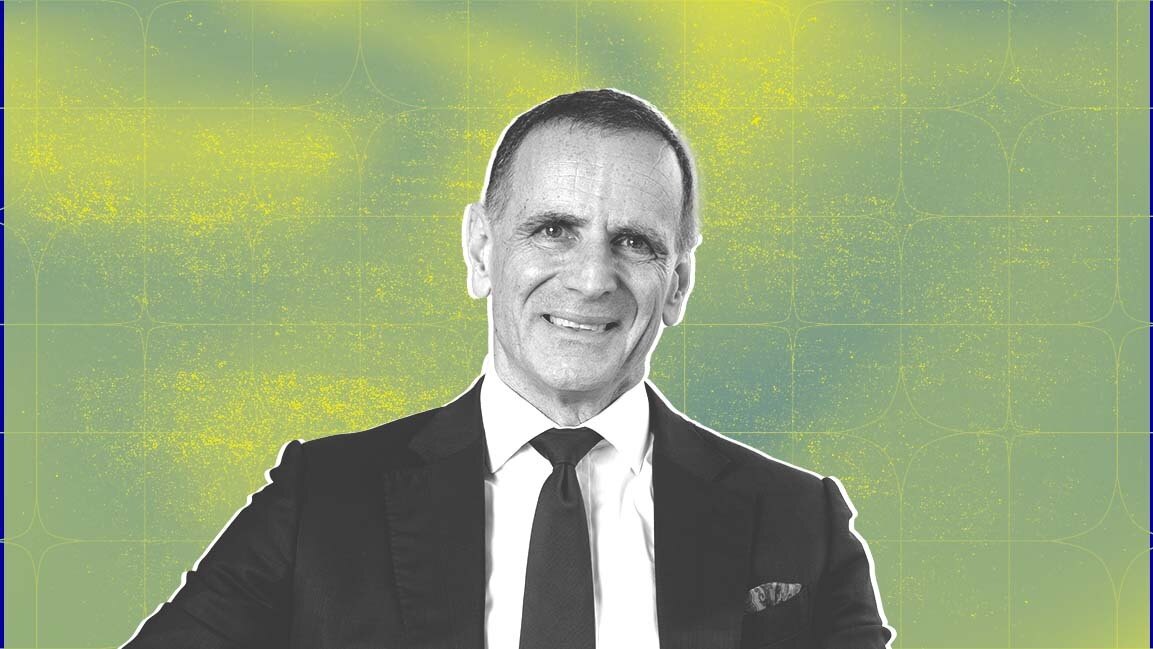
John Iossifidis, Group CEO of Al Ghurair, approaches modernization in multigenerational family businesses, focusing on growth that can scale, adopt new technologies, and strengthen operations while avoiding transformation that exists only in words. Growth is credible when a business can translate broader trends into operational depth, technology adoption, and scalability. Warning signs appear when performance falls behind or when transformation is purely rhetorical. The expectation today is clarity, resilience, and capability, not comfort in heritage.
To operationalize this approach, Iossifidis explains that they “assess legacy businesses against the structural forces shaping the UAE, the region, and the global economy.” A business is positioned to scale when it can benefit from broader trends, including digitalisation, economic diversification, and productivity growth, with the operational strength and governance needed to compete regionally and globally.
At the same time, the pace of change is relentless. Declining worker-to-retiree ratios, the rise of automation and AI, and pressures on the middle class are reshaping markets worldwide. Businesses that cannot adapt, improve productivity, or remain relevant in a more digital and diversified economy need to be reassessed. “Our role is to ensure Al Ghurair’s portfolio remains future-ready, resilient, and aligned with where long-term value will be created,” he says, reinforcing the focus on discipline and execution over heritage alone.
INVESTING WITH PURPOSE
Setting new priorities means guiding capital and executive attention with discipline rather than intuition. The group relies on an internal framework that evaluates each business based on current performance, a three-year forecast, and alignment with long-term growth themes. This assessment is anchored in “global and regional growth themes, market dynamics, and structural shifts that may shape future demand,” with detailed planning extending to 2028 and “a glide path to 2033,” says Iossifidis.
Existing operations continue to generate capital that funds areas with the most significant future potential, whether through expanding adjacencies, such as “starch applications within our food portfolio,” or entering new sectors with compelling long-term prospects, like healthcare. Leadership bandwidth follows the same logic, ensuring that time and senior oversight are allocated to the businesses that will define “Al Ghurair’s next phase of growth.”
That discipline also shapes how the group invests in new capacity. The new corn-starch plant in KEZAD is structured as a strategic, resilience-driven asset rather than a single-purpose industrial facility. It is “designed with long-term feedstock resilience and strategic growth in mind,” says Iossifidis, and will produce essential inputs including corn syrup, native corn starch for food manufacturers, and maltodextrin for baby food. The plant will support leading multinational companies manufacturing baby food in the UAE and serving markets across the GCC, Levant, and East Africa.
Its role, however, extends beyond food manufacturing. The facility will also provide feedstock to the emerging precision fermentation sector, enabling the development of alternative proteins, oils, and biodegradable plastics from starch-based ingredients. This model, Iossifidis notes, “ensures both supply security and alignment with broader sustainability and innovation trends in the region,” positioning KEZAD as a hub for advanced, high-value ingredients rather than just another industrial site.
The same forward-looking mindset is shaping how Al Ghurair approaches financing responsibility. When it comes to decarbonization, the group is actively evaluating models that link funding to measurable outcomes, rather than abstract commitments. “We are exploring sustainability-linked financing to support projects,” says Iossifidis. He points to Mashreq’s loan to Dar Al Marefa School, where “the cost of capital is linked to performance on scholarships and educator development,” as a clear example of how finance can enforce delivery. The intention is to back environmental and social initiatives while ensuring financial terms remain tied to tangible progress and accountability.
BUILDING WITH DATA
The most tangible impact of AI within the group has been in mobility, particularly the Kabi taxi operation. Iossifidis highlights how technology has reshaped both productivity and operational efficiency. “In our Kabi taxi operation, by leveraging AI for route allocation and operational efficiencies, we have reduced trips to base stations and enabled more remote management of processes. As a result, time on meter has increased by 20% over the past three years,” he says.
The benefits of AI extend beyond a single business unit. Automation has helped “boost overall productivity, improve process accuracy, and strengthen compliance across our operations,” replacing slower, manual systems and enabling faster, more comprehensive decision-making throughout the organization. For Iossifidis, AI is a partner rather than a replacement. “AI today plays a pivotal role in automation, productivity, and decision-making,” he notes, describing it as a tool that “serves as a powerful partner in supporting processes and research, essentially augmenting human intelligence rather than replacing it.”
Data underpins this approach, functioning as a strategic asset rather than mere information. “Data is a core asset, driving efficiencies across operations, from optimising customer processes to enhancing manufacturing performance, critical supply chain and logistics functions,” Iossifidis says. Its value is measured by the decisions it enables and the performance improvements it delivers.
Monetisation is approached with caution and precision. “We distinguish between aggregate and personal data,” he explains. Aggregated, non-identifiable data can safely inform strategy, campaigns, and trend analysis. Personal data, however, “requires explicit customer consent before use. Only with consent can it be leveraged for targeted sales or service campaigns; without it, using such data risks damaging the brand and reducing customer trust and NPS.” Privacy and regulatory compliance remain central. “Privacy and regulatory compliance are therefore central to any decision to monetise data.”
Property technology is treated with the same dual focus on efficiency and market relevance. “We take a dual approach to property technology, focusing on operational improvements and building products that can compete in the broader market,” Iossifidis says. A flagship example is “EQARCOM, our UAE-based PropTech platform that digitises leasing and property management, automating lease onboarding, maintenance tracking, and online billing, while integrating with systems such as Ejari and UAE Pass.” Beyond efficiency, “It also enhances transparency and compliance for landlords and tenants and supports broader real estate digitisation in partnership with the Dubai Land Department.”
The group continues to modernize the end-to-end leasing journey, improving digital touchpoints, responsiveness, and service quality, creating both immediate operational gains and a product with standalone market credibility.
BUILDING GREEN BY DESIGN
As consumer behaviour shifts, Al Ghurair is rethinking retail distribution, focusing on following demand rather than defending traditional channels. Historically, around 70–80% of food and CPG products moved through modern trade. That model is evolving: online grocery is projected to grow from 3% in 2021 to 10% by 2029, and discount retail from 5% to 10% over the same period. Large physical formats are gradually losing share, with supermarkets dipping from 22% to 21% and hypermarkets from 49% to 40%.
The group has responded by rebalancing its approach, strengthening e-commerce, partnering with discount retailers, and optimising modern trade presence. The goal is to stay where consumers choose to spend rather than defend legacy formats.
Mobility has also moved beyond experimentation. It now functions as a standalone sector with dedicated strategy, investment, and growth plans. Kabi taxi operations and the ride-hailing platform Zed operate independently, with Kabi preparing to expand into Saudi Arabia and Zed scaling across the UAE. Together, they illustrate that mobility is a committed business vertical with regional ambition.
Sustainability is embedded in new manufacturing from the outset. KEZAD and the group’s state-of-the-art facility feature energy management systems, water recycling and reuse processes, and process optimisation that reduce environmental impact while maintaining output and quality. These measures are not symbolic ESG gestures, but rather practical, economically disciplined choices that enhance competitiveness, reduce costs, and strengthen operational resilience. Environmental responsibility and efficient operations are designed to reinforce one another.
ENGINEERING RESILIENCE
For Al Ghurair, concentration risk is not an option. Supply chains are deliberately diversified across markets, customised for each business, and continuously assessed for vulnerabilities. Rather than relying on a single geography, resilience is embedded through design and disciplined oversight. During recent regional tensions, the group conducted proactive reviews, convened internal teams, and activated scenario planning and business continuity measures that had been refreshed just two months earlier, allowing risks to be identified and mitigated efficiently.
More broadly, supply chain strategy is grounded in adaptability. Operations are designed to respond to geopolitical shifts, market disruptions, and evolving business realities, ensuring the group remains resilient, responsive, and able to adjust quickly as circumstances change.