- | 9:00 am
Is Riyadh’s rent freeze a reaction? Or a long-term strategy
The rent freeze may be a stopgap, but it’s forcing developers to think in decades rather than cycles, and pushing the kingdom’s cities toward sustainable growth.


For years, Saudi Arabia’s real estate sector has been characterized by rapid expansion, high demand, and rising prices. However, as the government seeks to curb inflation and stabilize the market with a rent freeze, a quieter transformation is underway, prompting landlords and developers to reassess what value means in real estate.
With quick profits off the table, the focus is shifting from speculative towers to livable, long-term spaces, raising a bigger question: can a five-year rent cap redefine how cities grow and who they serve in the kingdom’s urban future?
It’s changing how developers design, how investors calculate returns, and how people imagine the future of living in Saudi cities.
Riyadh’s rent freeze came after years of steep rental inflation that risked outpacing incomes. According to the General Authority for Statistics (GASTAT), the kingdom’s real estate price index rose 3.2 percent year-on-year in Q2 2025, with residential prices inching up just 0.4 percent compared to 11.7 percent growth in commercial property values.
The moderation reflects both cooling demand and the effects of tighter regulation.
“The rent freeze may be limited to Riyadh, but its ripple effect is national,” Yazeed Al-Shamsi, Co-Founder and CEO of Ejari, says. “It’s forcing landlords to think like operators, not speculators. Retention, service, and professionalism are becoming the new currency of value. It’s already setting a precedent for how the market operates by pushing the sector to institutionalize and moving away from fragmented, mom-and-pop ownership toward professional management.”
The freeze, he adds, is part of a broader effort to restore balance to an overheated market while new supply comes online through build-to-rent projects, White Land Tax enforcement, and the release of previously frozen lands.
“When rents rise 50 percent in three years, that’s not growth, that’s distortion,” Al-Shamsi says. “It’s priced families out of neighborhoods and forced many retail SMEs to shut down. The freeze is an aggressive response to an aggressive market but is designed to protect both residents and businesses and to stabilize conditions while other initiatives bring long-term supply back into the system.”
This shift is ushering in a new era of maturity for the sector. Developers, PwC’s Imad Shahrouri says, are starting to “think in decades rather than cycles.” The old model of chasing short-term gains is giving way to one rooted in community, livability, and stability.
Data transparency is also transforming decision-making. Platforms like Ejar and the Rental Index have made it easier to track lease renewals and average rents, reducing speculation and improving market visibility.
DESIGNING FOR YIELD
The freeze has also reshaped the design philosophy of the real estate industry. Developers are now focusing less on sales cycles and more on delivering an exceptional experience, service, and yield consistency.
“The rent freeze has shifted the mindset from short-term speculation to long-term sustainability,” says Ibrahim AshShohail, CEO and Chairman of Aqar. “Developers and investors now focus on livability, tenant retention, and operational performance rather than quick resale profits. We’re entering what I’d call a ‘design for yield’ era—where the value of real estate is defined by how well it performs over time, not how fast it sells.”
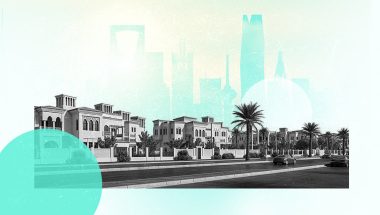
That’s visible across Riyadh’s emerging districts, where new developments are prioritizing walkability, mixed-use planning, and mid-market affordability. Knight Frank’s Saudi Report 2025 notes that demand for mid-income housing remains resilient even as luxury sales soften, signaling a pivot toward projects that serve long-term residents rather than speculative buyers.
AshShohail confirms that projects are becoming more community—or tenant-focused, explaining that developers have become far more competitive and mindful.
“Quality of life, community planning, and amenities are now essential selling points. You can’t attract serious buyers or tenants anymore with location alone – projects must differentiate through livability and experience,” he says.
According to Shahrouri, design has become a “strategic investment tool” rather than an aesthetic choice. “Good design isn’t just about how a place looks, it’s about how it lives,” he says.
“When homes are well planned, streets are shaded and walkable, and everyday amenities are close by, residents stay longer and value holds. Design becomes a practical way to protect investment by creating places people genuinely want to live in.”
This approach is changing how developers operate. Shahrouri says that in a steadier rent environment, developers are competing on quality and service rather than speed. They’re investing in digital systems, energy efficiency, and day-one service quality—things that drive loyalty and reputation.
On an investment front, short-term property flipping has become far less attractive in today’s market, as new regulations and stabilized land prices have reduced the quick gains that once drove speculative investment. Investors are now rethinking their strategies, shifting focus toward steady, income-generating assets that offer predictable returns over time.
“We’re seeing a growing interest in income-generating assets and REITs, while speculative buying is slowing down. The market is clearly moving from ‘trade and profit’ to ‘hold and perform, ’” AshShohail says..
POLICY AS URBAN STRATEGY
For analysts, the rent freeze is less about regulation and more about long-term urban strategy— a deliberate move to reshape how Saudi cities grow, anchoring expansion in livability, data, and affordability rather than speculation.
Shahrouri believes such interventions are as much about stability as they are about reform. It also gives families and developers a sense of predictability. When people feel secure in their homes, communities thrive, and that stability supports affordability and quality of life.
By slowing down the market’s pace, the government is effectively buying time to build smarter, ensuring that infrastructure, amenities, and financing models evolve in tandem with population growth. It could be seen as an urban reset.
Faisal Durrani, Partner and Head of Research MENA at Knight Frank, says the government’s priority is clear. It’s about expanding access to affordable housing and helping more citizens move from renting to owning their homes, aligning with Vision 2030’s goal of raising the national homeownership rate to 70% by the end of the decade.
“Large-scale housing developments will be central to this…High house prices and high rents are undermining affordability,” he says.
Durrani adds: “We have already seen a direct impact on transaction values and volumes in Riyadh, for instance, which are down 20% and 30% respectively over the last 12 months. Any measures to help bridge the gap between affordability and current market rates are a welcome move.”
Homeownership rate among Saudi families reached 65.4% by the end of 2024, surpassing the 2025 target of 65%. This reflects the effectiveness of the housing and financing initiatives and enablers provided by the program in cooperation with partners.
Durrani says that policies like the White Land Tax and the release of government plots at controlled prices are “tilting the balance toward end-user affordability” and making cities more accessible to younger Saudis and first-time buyers.
A FIVE-YEAR RESET
The rent freeze is officially temporary, a five-year measure, but many in the industry believe its impact will last longer.
“The rent freeze addresses an immediate affordability pressure and rent inflation driven by supply constraints, but it marks an important transition to a more institutionalized rental market,” says Al-Shamsi, adding that it marks an important transition to a more institutionalized rental market.
“Its purpose is to create breathing room while new supply comes online.”
The freeze also signals a broader structural shift toward a more institutionalized and professionally managed rental market. Rather than relying on fragmented ownership and speculative gains, the new direction encourages developers and investors to focus on operational quality, tenant retention, and long-term returns.
Shahouri points out that this period of recalibration is crucial. “Saudi Arabia’s real estate sector is entering a new phase of confidence and depth. We’re seeing broader transaction volumes, stronger governance frameworks, and clearer asset-management standards taking shape.”
It is enabling closer alignment with international best practice, from green building codes to valuation standards and institutional capital inflows through REITs and sukuk-financed platforms.
“Looking ahead, we expect continued alignment with international best practice, from consistent valuation standards and wider adoption of green building codes to the rise of long-term, service-led models such as build-to-rent,” Shahrouri adds.
The freeze on its own isn’t a complete solution to the housing imbalance, but it serves as a crucial reset point for the market.
“The freeze alone won’t fix the structural imbalance, but it allows the market to recalibrate and for policy-led supply to catch up, helping the sector transition toward a more balanced and resilient rental ecosystem,” says Al-Shamsi.
According to AshShohail, the five-year window gives the market time to rebalance supply and demand. “If needed, these measures will evolve or be extended to ensure the market remains stable. It’s not a pause—it’s a reset.”
Meanwhile, financial data indicate that the market is already adapting. SAMA’s Q2 2025 Real Estate Financing Report records total residential financing at $8.5 billion, down from $10.2 billion a year earlier—signaling a cooling but more measured pace of growth as the sector adjusts to policy constraints.
FROM BOOMTOWN TO BLUEPRINT
Analysts indicate that Riyadh is shifting from rapid expansion to a more deliberate and long-term approach to urban development. Al-Shamsi states that it is a period where “supply planning, livability, and institutional investment take center stage.”
For Shahrouri, this transition represents the true purpose of Vision 2030: to shift from rapid urbanization to more thoughtful and coordinated city-building. By integrating housing, transportation, and green infrastructure, and utilizing transparent data and digital planning tools, we can effectively direct investment into developments that benefit residents and enhance economic resilience.
“If housing delivery continues and affordability improves, a more balanced, stable rental environment could emerge after the freeze period,” Durrani adds.