
- | 9:00 am
No panic, no fire sales. Why is Dubai’s property market playing the long game?
The emirate recorded 3,660 sales transactions from March 8 to March 14, totaling about $3.2 billion, according to Dubai Land Department Data



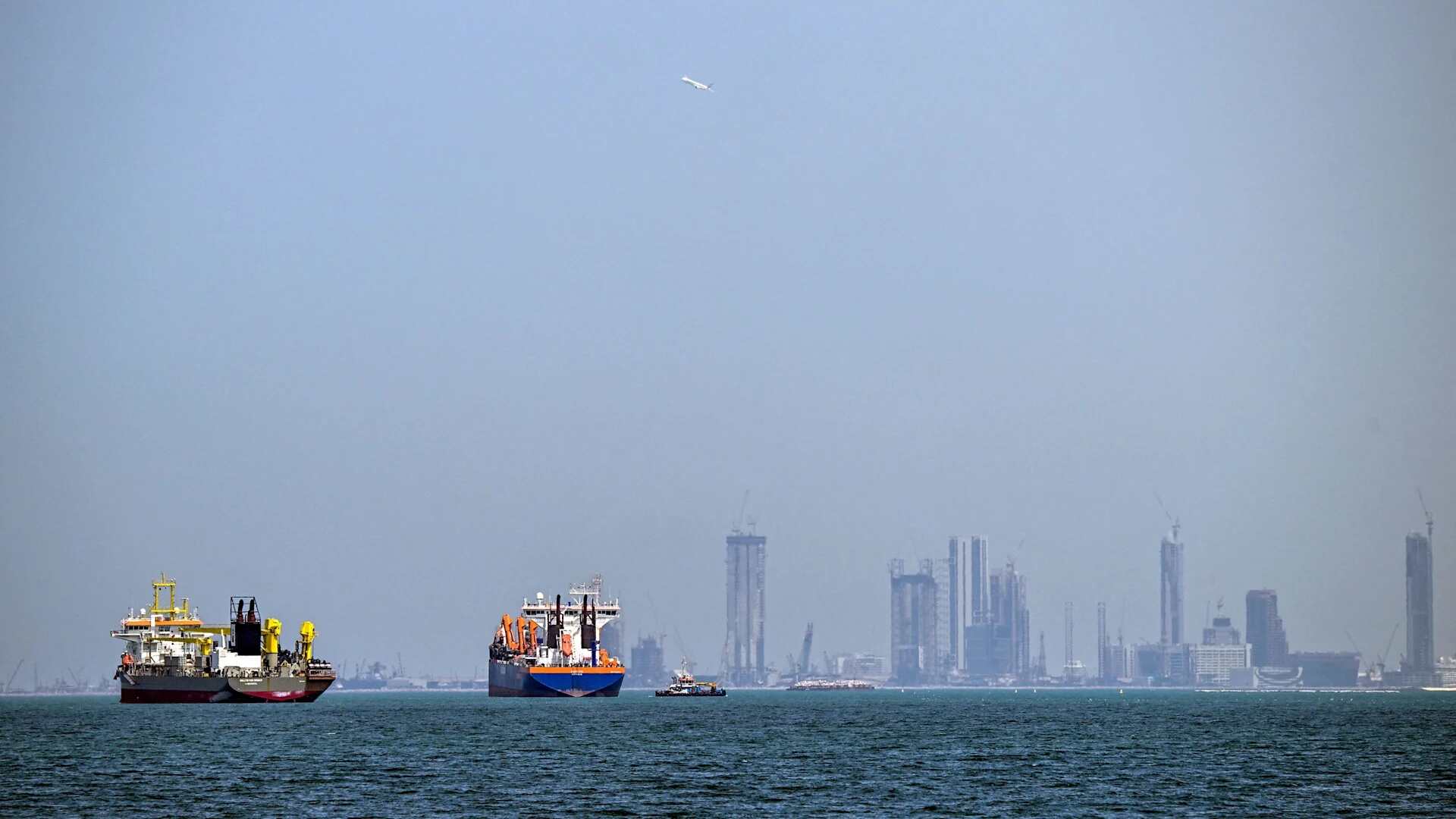
Dubai’s property boom is facing challenges as the conflict escalates, with missiles and drones hitting key parts of the city like airports, ports, and hotels. While global headlines quickly questioned Dubai’s reputation as a safe haven, analysts on the ground have a different perspective.
Ray Vermon, a luxury real estate broker in Dubai, says the real estate sector in Dubai is holding steady despite the ongoing conflict, though some investors are adopting a wait-and-see approach.
“We’re seeing a ‘wait and see’ type approach,” he says. Buyers are well informed about the wealth they’ve generated globally and are experienced in real estate markets. So, they are very confident about Dubai’s long-term ambitions.”
Transactions have slowed over the past few weeks, but they are still occurring. The emirate recorded 3,660 sales transactions from March 8 to March 14, totaling about $3.2 billion, according to data from the Dubai Land Department.
Buyers are also staying committed to purchases made before the war started, according to Vermon. “We particularly are not seeing distressed selling above and beyond what already exists in the marketplace,” he adds. “It’s not as if the market has now become more distressed or there are more below-market opportunities. The market here is extremely fluid; distressed opportunities are just running at the normal rate that it typically does.”
He’s not alone in this view. Simran Sethi, a partner at Treysta Real Estate, says she hasn’t seen any ‘panic selling,’ though she has received calls from buyers seeking distressed deals. “It’s been two weeks now since the conflict,” she says. “In the first week, most of the messages were asking whether there were any distressed deals or if people would start selling at 20–30% lower prices. But nothing like that has happened in the market — absolutely nothing — and we’re still not seeing it.”
She adds that last week she and the team closed five deals, which was unexpected given the circumstances.
She believes it is because investors trust Dubai to emerge stronger from the conflict. “There are some investors in a wait-and-see situation, while others are already jumping on opportunities,” she says. “Some investors are able to negotiate terms with certain developers because of the uncertainty. They believe in Dubai, as we do as residents, and that it will bounce back like it always has.”
STRUCTURAL FUNDAMENTALS IN PLACE
The property market seems to be holding firm, supported by structural fundamentals. Unlike previous challenges such as the 2008 financial crisis and the COVID-19 pandemic, Dubai has created a resilient market. In the last few years, it has attracted wealthy migrants, family offices, and businesses, all attracted by the country’s tax-free policies, economic reforms, and residency visa programs.
Sethi believes these factors are still strong. “People like Lakshmi Mittal and Pavel Durov are moving their bases to Dubai,” she adds. “So, everybody is looking at Dubai. They know it is going to grow into something huge, and they want to be part of it.”
The real estate sector has shown strong long-term growth. Dubai property prices have risen 70% over the past four years, including a 27% increase as of January 2025, according to Invicta Property, a Dubai-based international property investment firm.
However, the true impact on the real estate market will only be clear once the conflict ends.
The longer it goes on, the more likely it is to affect the sector.
The Dubai Real Estate Index declined about 20% over the last two weeks amid escalating tensions.
BUILT ON DEMAND
Dubai’s real estate demand mainly comes from foreign buyers—expatriates and non-residents drawn to Dubai’s reputation for safety, whether to live, work, or protect their wealth. To give some context, the UAE has over 11 million people, with an overwhelming expatriate population of about 88.5%, according to Global Media Insight.
If they lose confidence in the market, it could negatively impact the real estate sector. Tarek El Assra, a long-time resident and investor in Dubai, believes that the current situation might deter foreign investors in the short term, but that Dubai will bounce back in the long term. “The question is, for the people coming in from abroad, especially from the US, Europe, and Asia, will this still be an attractive proposition for them?”
He expects a slight market correction soon, especially if the conflict ends quickly. But if it drags on, recovery could take longer.
Even before the war, there were concerns of oversupply in the market. Fitch Ratings expects a market correction of up to 15% in Dubai’s real estate market between the second half of 2025 and 2026, driven by anticipated supply increases and slightly slower population growth.
The slight downturn, however, could be an opportunity for those looking to buy property in Dubai. “I do think that those who live and spend some time here will probably look at this and want to invest, especially if there is a price correction,” says El Assra. “People will look to buy at lower prices, especially those who have been looking to buy and were priced out.”
“But whatever happens in the Middle East, and in Dubai in particular, it is an area where historically there is a lot of wealth,” he adds. “The city has built up very good systems, very modern cities with good amenities, and people can have a nice family life and feel safe, so it will always generally be a place of interest. But it could take time.”