
- | 9:00 am
Record prices didn’t kill gold demand in the GCC. They actually strengthened it
Record prices were supposed to cool demand. In the GCC, they only reinforced a deeper instinct: when volatility rises, trust becomes tangible
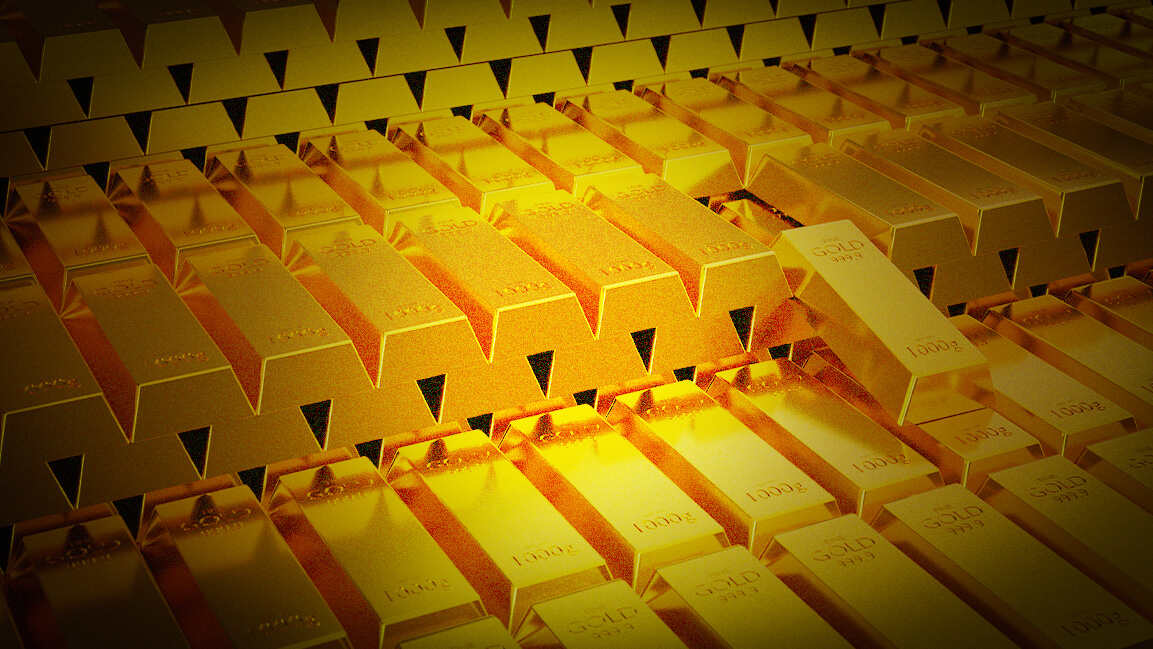


Gold was expected to be too expensive this year. It hit fifty-three new all-time highs, with an annual average price of $3,431.5 per ounce, up
44 percent year-on-year. The Q4 average reached a record $4,135.2 per ounce, up 55 percent.
By textbook logic, that kind of rally should reduce demand. Instead, 2025 became a historic year for gold. Globally, total demand, including OTC, crossed 5,000 tonnes for the first time, reaching an unprecedented $555 billion in value, up 45 percent year-on-year.
Price surged. Demand surged. Confidence didn’t blink.
In the GCC, that response feels less surprising. Gold here is not simply an asset class. It’s a language of security that has outlived oil cycles, currency swings, and every new financial instrument promising to replace it.
The real story isn’t that gold is expensive. It’s that trust in gold seems fundamentally stronger than trust in the markets themselves.
WHEN PRICES SPIKE, BUYERS ADAPT RATHER THAN EXIT
The surge in prices did change behavior. It just didn’t erase demand.
“The remarkable gold price rise in 2025 inevitably imposed affordability constraints on jewellery consumers in the GCC and other key markets as well,” says Andrew Naylor, Head of Middle East and Public Policy at the World Gold Council.
But the cooling effect that many expected never fully materialized.
“It did not, however, stifle consumer appetite for jewellery – as evidenced by the sharp jump in demand value during the year, with consumers spending a larger share of wallet on gold, even if in smaller volumes,” Naylor explains.
Globally, jewellery volumes fell 19 percent year-on-year, which is a predictable reaction in a record-price environment. Yet the value of global jewellery demand climbed 18 percent to a record $172 billion.
The message is clear: sentiment held, even if sizing shifted.
In the GCC, that shift is visible in the format. “Another notable shift in this high price environment is that consumers are, in general, opting to purchase small bars and coins instead of jewellery,” Naylor says.
Instead of stepping back, buyers adjusted their purchases. Instead of abandoning gold, they found better ways to hold it.
SAFE-HAVEN ISN’T A BUZZWORD
The World Gold Council’s 2025 report repeatedly points to “safe-haven and diversification motives” as consistent drivers throughout the year.
Investment demand rose 84% year-on-year to 2,175.3 tonnes. Bar and coin buying hit a 12-year high, rising 16% annually to 1,374.1 tonnes. ETFs saw 801 tonnes of inflows — the second-strongest year on record.
These are not speculative metrics. They show defensive moves.
“Gold demand reached a new record high in 2025, surging to 5,002 tonnes as volatile macroeconomic and geopolitical conditions drove investors to gold for a safe haven and diversification benefits,” Naylor says.
He stresses that demand remains “driven by the fundamentals, making gold a preferred choice for those seeking stability over speculative gains.”
In the GCC, the focus on stability hits home. This region has faced oil price crashes, currency peg challenges, regional tensions, and pandemic disruptions all within recent memory. Gold acts less like a risky bet and more like a steady anchor.
CAPITAL PRESERVATION IS THE STRATEGY
The institutional layer reinforces the narrative. Central banks purchased 863 tonnes of gold in 2025 — historically elevated, even if slightly slower than the prior year.
For Nadim Sabeh, CEO of First Financial Markets and an economist, that behavior sets the tone.
“Indeed, today, the thinking that central banks are adopting through hedging operations and gold and metal purchases in general is not about achieving profits,” he says.
“A central bank, at a certain point, does not aim for trade or profit-making; rather, its goal is capital protection, safeguarding the currency, protection from risks, hedging against inflation, and preserving capital,” Sabeh continues.
In short, gold isn’t being bought to beat stocks. It’s being bought to survive shocks.
Even the gains from 2025’s rally are mostly theoretical for institutions. Sabeh points out that central banks are holding onto their reserves, so many gains are on paper rather than cashed in. This shows a long-term mindset.
Retail investors may be split between short-term speculators and long-term hedgers, Sabeh says, but both groups share one thing: they are choosing gold.
A REGION BUILT AROUND PHYSICAL GOLD
The GCC’s demand profile differs structurally from Western markets, where gold is often accessed through financial instruments.
“Jewellery is the largest component of gold demand in the region (unlike in Western markets). Approximately 60% of demand is for jewellery, compared to 40% for investment,” Naylor says.
He adds: “The Middle East is the third largest consumer of gold in the world after China and India. It is primarily a consumption market, and whilst there is gold production in Egypt and Saudi Arabia, most countries in the region do not produce significant quantities of gold.”
At the same time, the wider ecosystem boosts credibility. The UAE has become a major refining center and the world’s second-largest cross-border trading hub for physical gold. Infrastructure, liquidity, and supply chain transparency all matter.
Globally, total annual gold supply grew just 1 per cent in 2025, even as demand climbed. Recycling rose only 3 percent despite a 67 percent increase in the US dollar gold price, suggesting holders were not rushing to cash out. That reluctance to sell into record highs is a subtle but powerful signal of confidence.
DIGITAL ACCESS, SAME CORE BELIEF
One clear change is digital.
ETF inflows were particularly strong in the fourth quarter, with 175 tonnes added in the quarter alone. Online gold platforms are also gaining traction, particularly when physical supply is tight.
“The demand on online platforms—what we call online platforms—has certainly increased in the recent period, and it facilitates some aspects of gold trade for those who want to hedge or who prefer to buy gold online to save on currency or because physical gold is sometimes scarce,” Sabeh says.
He adds, “Many times, this physical gold is out of stock, or you buy it today and receive it after four or five months. Thus, resorting to buying gold through online platforms is certainly increasing in the recent period.”
Digital access is making things easier. It’s not changing why people buy gold.
Naylor notes that digital gold tools are expanding, but are not yet materially altering total demand patterns. The thesis remains analogous. The interface is modern.
CAN GOLD KEEP PLAYING THIS ROLE?
Looking ahead, the World Gold Council expects ongoing geopolitical tension, strong ETF inflows, solid bar and coin demand, and high central bank buying to support another strong year. Jewellery volumes might stay under pressure due to persistent high prices.
Lower interest rates and ongoing uncertainty could also boost demand.
Sabeh dismisses the idea of a structural collapse. “Talking about a gold decline today is not logical, because all the factors that led to the rise in gold are still present. Thus, we are continuing on the gold recovery journey, but it will be a difficult journey with very high volatility,” he says.
But perhaps the more important question is cultural, not just about cycles.
In the GCC, gold is not simply about maximizing returns. It is about minimizing vulnerability. It is chosen not because it promises exponential upside, but because it reduces exposure to downside risk.
Record prices didn’t shake that belief in 2025. They tested it. For now, trust remains the region’s most valuable asset.