
- | 9:00 am
Red Sea cable failures are a growing digital risk. How do we fix it?
Recent incidents expose the fragility of digital infrastructure that relies on undersea cables.
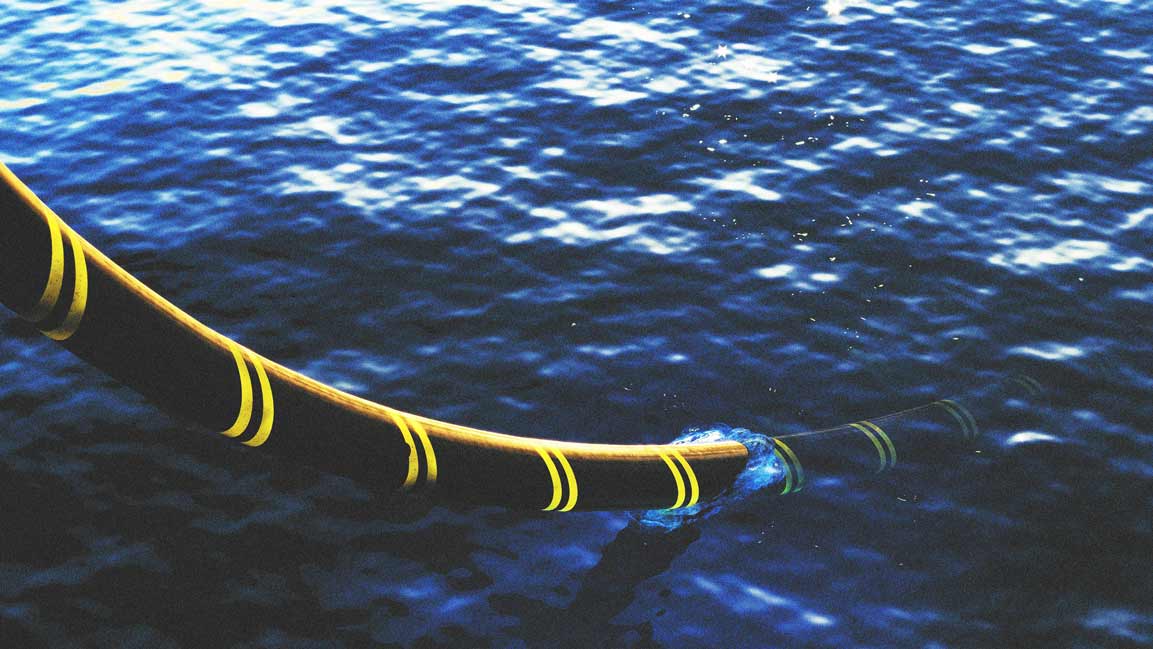


Subsea cables, laid in deep water, are the invisible arteries of our connected world, carrying 99 percent of international telecommunications traffic, including Teams calls, movie streams, emails, and social media feeds. These fiber-optic lifelines facilitate trillions of dollars’ worth of financial transactions daily, carry sensitive government communications, and transmit data around the internet.
Of late, subsea cables, long obvious targets, are becoming increasingly vulnerable.
“While many cuts historically stem from accidents such as ships dragging anchors, the repeated disruptions have pushed these vital undersea links into the spotlight as potential weak points,” says Iliya Dafchev, Senior Security Researcher at Acronis TRU, adding that there is a growing concern in digital security planning.
Experts warn that in the Red Sea—especially at chokepoints like the Bab el-Mandeb Strait—the greatest risk now comes from the intersection of non-state actors, hybrid threats, and regional conflicts, jeopardizing both physical infrastructure and digital supply chains.
In September, cable damage disrupted Etisalat and DU networks in the UAE, slowed Microsoft Azure services, and underscored the fragility of critical digital arteries. In Kuwait, authorities stated that the FALCON GCX cable, which runs through the Red Sea, had been cut, resulting in disruptions in the small, oil-rich nation.
“The Red Sea, handling over 90 percent of Europe-Asia data, is no longer just a trade corridor—it’s a strategic digital chokepoint,” says Carl Sykes, CEO, Neptune P2P Group. “The Red Sea incidents have marked a stark inflection point in how we must now perceive subsea cable security not merely as an operational risk but as a strategic fault line.”
What we are witnessing is not the emergence of a new frontier, Sykes adds, but rather the “sharpening of one that has long existed in the shadows of global security frameworks”.
SIGNIFICANT CONSEQUENCES
While the repairs are complex, slow, and costly, Morey Haber, Chief Security Advisor at BeyondTrust, says, “The magnitude and concentration of recent incidents, including multiple cables severed near Jeddah, elevates subsea cables from known low-risk physical attack vectors with little defenses outside of the depth of the cable, into a full-blown risk that has significant consequences.”
As a key global internet corridor connecting Europe, Asia, and Africa, Red Sea cable disruptions can degrade cloud performance, trade, and communications. For regional stakeholders, governments, telecoms, financial institutions, and critical services, the implications are deeply interlinked.
“The cable disruptions in the Red Sea in 2025 have underlined how quickly regional economies can be affected by what appears to be a distant, underwater issue,” says Sykes.
“Slower internet speeds or latency spikes are only the visible symptoms,” adds Skyes. “Behind them lie broader risks, including delayed financial transactions, cloud-based platform interruptions, compromised emergency communications, and potential loss of investor confidence in infrastructure reliability.”
Given the region’s geostrategic significance, experts stress the need for an integrated approach to safeguarding subsea cables, as connectivity underpins regional stability, economic diversification, and digital transformation.
“The threat exposes how fragile digital sovereignty is when vital infrastructure traverses areas that are not physically protected and extends across maritime zones,” adds Haber.
CAN EMERGING TECH HELP?
Experts say emerging technologies—from AI-driven surveillance to autonomous underwater vehicles—hold the potential to protect subsea cables. And beyond monitoring, design innovations might make the next generation of cables inherently more resilient to tampering.
“AI, for instance, can be used to monitor maritime traffic patterns, detect anomalies in vessel behavior, and flag potential threats near cable routes. When integrated with satellite surveillance and seabed sensors, AI offers the potential to create a predictive layer of awareness around vulnerable cable zones,” says Skyes.
Robotic surveillance and autonomous underwater vehicles can patrol and repair subsea cables, and identify potential threat actors, before outages occur.
“Autonomous underwater vehicles can provide more agile inspection of cable routes, particularly in high-risk zones like the Bab el-Mandeb Strait,” adds Sykes.
On the engineering side, Dafchev says, “Stronger protective sheathing, deeper burial of cables where possible, and real-time disturbance sensors could help future networks better withstand both accidents and deliberate tampering.”
REGIONAL COOPERATION IS CRUCIAL
However, experts emphasize that true cable security comes from embedding innovation within a governance framework that treats subsea networks as strategic assets.
For the Middle East, which occupies a pivotal role in global digital logistics, Sykes says there is a unique opportunity to lead a new model of infrastructure diplomacy. “By convening regional and international actors from telecom operators to navies, from regulators to intelligence services, nations can play a central role in shaping the next generation of cable security standards and incident response protocols.”
Since subsea cable networks span multiple jurisdictions, connect continents, and often involve complex consortia of private and public stakeholders, Haber says collaboration on redundant undersea and overland routes, satellite links, shared maintenance, real-time monitoring, and tight physical security could transform regional digital infrastructure from vulnerable to robust.
“Cooperative projects can serve as strategic alliance-builders, binding nations together around shared digital economic and security stakes, reducing dependency on vulnerable Internet cables between nations,” Haber adds.
While collaborative efforts in planning, protecting, and quickly repairing cables foster shared standards and mutual trust, Dafchev adds that such partnerships “can also deepen diplomatic and economic ties, showing how critical connectivity can unite stakeholders around common security and development goals”.
Ultimately, safeguarding maritime digital infrastructure goes beyond protecting data—it’s about reinforcing regional cooperation and building lasting resilience.