- | 9:00 am
When matcha stops matcha-ing the mindfulness narrative
From Tokyo’s tea fields to Dubai’s coffee bars, the world’s matcha obsession is fading the line between sustainability and modern consumption.
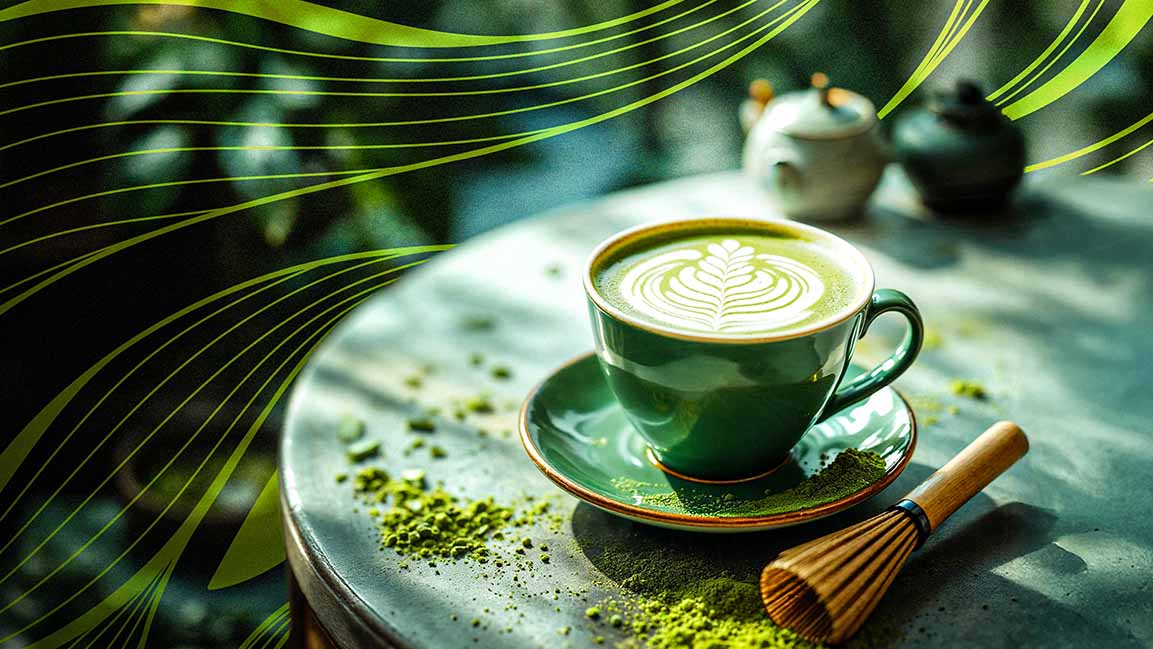


Once an ancient Japanese ritual, matcha has transformed into a global symbol of wellness. In the Middle East, from Dubai’s sleek coffee houses to Doha’s minimalist tea bars, matcha isn’t just a beverage anymore; it has become an aesthetic, a lifestyle, and a statement of intent.
Cafes are now strongly competing over who has the brightest, freshest matcha. They also compete on who has the most compelling social media campaign, especially on platforms like TikTok and Instagram.
Experts warn that Japan’s premium matcha supply is reaching a breaking point, with first-harvest leaves becoming increasingly scarce and prices soaring to record highs, a sign that the world’s most iconic green drink may soon face a real shortage.
Beneath the carefully whisked latte art, there lies a more unsettling reality. Imported almost entirely from Japan, matcha’s production is resource-intensive and its global supply chain increasingly strained.
As Gulf demand surges on café culture and influencer hype, the region’s wellness craze exposes an inconvenient truth: can anything flown halfway around the world really claim to be sustainable?
THE RISE OF A NEW RITUAL
“Matcha demand in the Middle East has risen sharply in the last couple of years. Gulf consumers are very wellness-focused, and matcha has become part of their morning routines, café culture, and daily rituals,” Tayyaba Khurram, Founder of House of Matcha Pakistan, says.
She adds: “I’ve seen a clear shift from coffee to matcha because people enjoy the calmer, more stable energy it provides. This growth is happening at a time when Japan’s matcha supply chain is under historic pressure, which makes understanding origins and quality more important than ever.”
Now, with more cafés sourcing authentic ceremonial-grade matcha from Japan, the narrative has shifted — and so has the price. “Japan is facing one of the biggest price increases in its tea industry,” Khurram notes. “In Uji, auction prices are now 5.2 times higher than in 2020, and nearly three times higher than in 2024.”
According to the Business Research Company’s matcha report, the global matcha market has experienced substantial growth, reaching $3.84 billion in 2024. It is expected to expand further to $6.35 billion by 2029, growing at a compound annual growth rate of 11.1 percent. This growth is primarily driven by rising demand in the global food and beverage industry, where matcha continues to gain popularity for its perceived health benefits and versatility.
A significant trend impacting the matcha industry is the use of supercritical carbon dioxide decaffeination. This process is gaining traction for its role in preserving the quality and health benefits of matcha, aligning with consumer preferences for natural and functional ingredients.
In 2025, the market is projected to reach $4.17 billion, with an annual growth rate of 8.5 percent. This historical growth can be attributed to increased consumer awareness, broader availability of affordable matcha variants, and greater application in processed foods and beverages.
FROM ZEN TRADITION TO LIFESTYLE AESTHETIC
Matcha’s appeal is undeniable. Its bright green hue and minimalist presentation perfectly capture the language of modern wellness — calm, balanced, and aspirational. “Social media absolutely played a huge role in bringing matcha into the spotlight,” Khurram says. “The color, the visuals, the aesthetics. But some people stay with matcha because of how it makes them feel: focused, calm, and energized without the crash.”
That emotional resonance is powerful, and it’s exactly what has transformed matcha into a lifestyle marker. Dr. Fatin Samara, Professor of Biology, Chemistry, and Environmental Sciences at the American University of Sharjah (AUS), says that the shift is evident in everyday life.
“In the UAE, especially among university students and young professionals, matcha has become very popular in the past few years,” she says. “In Sharjah and Dubai, you can now find it in almost every café on or near campus. Many students see it as a healthier and trendier alternative to coffee.”
Dr. Sarah Dalibalta, Associate Professor at AUS, says matcha originated as a health-driven trend due to its antioxidant properties and benefits for sustained energy, focus, and heart health. “Over time, however, it has evolved into a lifestyle symbol- blending genuine nutritional benefits with modern sophistication. With its premium pricing, aesthetic appeal, and association with mindful living, matcha now represents both health consciousness and luxury lifestyle aspirations.”
THE HIDDEN COST OF GREEN
However, the environmental impact of matcha contradicts its calm and peaceful branding. “Matcha production is resource-intensive,” says Dr. Samara. “It requires shaded cultivation, fine grinding, and significant energy input. When exported thousands of kilometers to the Gulf, its carbon footprint increases substantially. This long-distance, refrigerated supply chain contrasts with the product’s image of simplicity and sustainability.”
Khurram breaks down the process. “Tea plants are covered for 20–35 days before harvest to increase chlorophyll and L-theanine,” she explains. “Farmers hand-pick only the youngest, softest leaves and grind them slowly on granite stones. It takes over an hour to produce 30–40 grams of powder.”
Each of these steps—shading, hand-picking, steaming, and grinding — demands intensive labor and energy. Add to that the cost of air freight, refrigeration, and packaging, and matcha’s carbon trail stretches far from its eco-friendly image.
Producing high-quality matcha is a meticulous process that begins long before the leaves are harvested. It typically takes between three and five years to properly cultivate the soil and grow tea trees that are capable of yielding premium matcha leaves. This foundational phase is crucial, as the quality of the soil and the care given to the young tea plants directly impact the flavor, texture, and nutritional value of the final product.
“True wellness cannot be detached from environmental responsibility,” says Dr. Dalibalta. “A product marketed as ‘green’ but produced through energy-intensive, globalized supply chains represents a contradiction. For matcha to retain credibility, sustainability must extend from farm to cup.”
JAPAN’S FRAGILE SUPPLY CHAIN
The global appetite for matcha is testing Japan’s centuries-old production system. The best ceremonial-grade matcha is still grown in Uji and Kagoshima — regions with small farms that rely on traditional, labor-intensive methods. But climate change, aging farmers, and export pressures are making production increasingly difficult.
“The cost of first-harvest tencha — the leaf used to make matcha — has hit record highs,” Khurram explains. “Across the industry, we’re seeing Kagoshima first-harvest matcha increase by up to 1.5 times, and Uji by almost 1.7 times.”
Japan’s tea fields, shaded under black mesh to stimulate chlorophyll production, are sensitive to fluctuations in both temperature and light. As weather patterns shift, maintaining quality has become costlier and riskier.
For Gulf consumers, this means their “daily matcha” is part of a global squeeze — one that may soon make premium-grade matcha even more exclusive.
CAFES’ INFLUENCING SOCIAL IDENTITY
In the Middle East, where café culture has evolved into an extension of social identity, businesses play a crucial role in defining what sustainability means. “Cafés have a major role to play,” says Khurram. “Many customers experience matcha for the first time at a café, so what they’re served shapes their opinion of the drink. If a café uses low-quality matcha and markets it as ‘ceremonial,’ it misleads customers and damages the category. Often, people trying matcha for the first time are given poor-quality blends that taste bitter or grassy — leading them to believe that’s how matcha naturally tastes, when in reality, authentic ceremonial-grade matcha is creamy, sweet, and full of umami.”
Dr. Samara echoes this sentiment: “By sourcing more transparently, reducing packaging waste, and communicating the true sustainability story of their ingredients, cafés can turn wellness trends into opportunities for genuine environmental awareness.”
Some regional brands are already beginning to adapt – emphasizing provenance, introducing compostable packaging, and offering educational workshops. However, these are still exceptions in a marketplace where “aesthetic sustainability” often takes precedence over actual accountability.
THE SOCIAL MEDIA MIRAGE
Much of matcha’s success in the Middle East can be attributed to the visual economy of social media. Some people invest in their matcha-making tools, including a bamboo whisk, a ceramic pot, and even an ultra-thin bamboo spoon. “Matcha’s vibrant green color, ceremonial preparation, and healthy indulgence narrative translate perfectly into visual storytelling. Influencers and lifestyle brands have amplified their image as both a health ritual and a luxury statement, a combination that strongly resonates with Gulf consumers, especially the young communities,” says Dr. Dalibalta.
GREEN WELLNESS IS RUNNING OUT
Aside from Gen Z-driven social and wellness trends fueling demand, matcha is also in short supply due to the inherent limitations of traditional production methods. The challenge lies not only in growing the tea leaves but also in the delicate and time-consuming process that follows.
Once harvested, matcha leaves must be meticulously processed and ground using traditional stone mills — a method that produces just 30 to 40 grams per hour. This slow output makes scaling up production extremely difficult.
As demand surges globally, especially from cafes and wellness brands, the supply chain remains constrained. This has led to widespread shortages, inflated prices, and an influx of inferior “matcha-style” powders. Still, brands focused on authenticity refuse to compromise, insisting on direct sourcing, rigorous quality standards, and traditional techniques that preserve matcha’s purity and value.
THE PRICE OF ECO-LUXURY
As matcha cements its place in Gulf wellness, it spotlights a paradox: in the region, green is a lifestyle flex. Matcha, EVs, vegan cuisine — more image than impact. It signals status more than sustainability.
Khurram argues matcha can’t embody wellness if its supply chain isn’t sustainable. Its very identity is built around mindfulness — from the slow, deliberate preparation to the calm, steady energy it provides — but those values lose meaning if the process behind the product harms the environment or exploits the farmers who cultivate it. “Wellness has to include the earth and the people behind the product,” adds Khurram.
As wellness becomes a status in the region, matcha offers a reminder: sustainability isn’t about the drink’s color but the integrity behind it. And the real price of matcha—as with modern wellness—is the gap between how we look and what we actually change.