
- | 10:00 am
Why Guido Grassi Damiani believes continuity, not reinvention, defines modern luxury
A perspective on what it takes to preserve identity while evolving in modern luxury
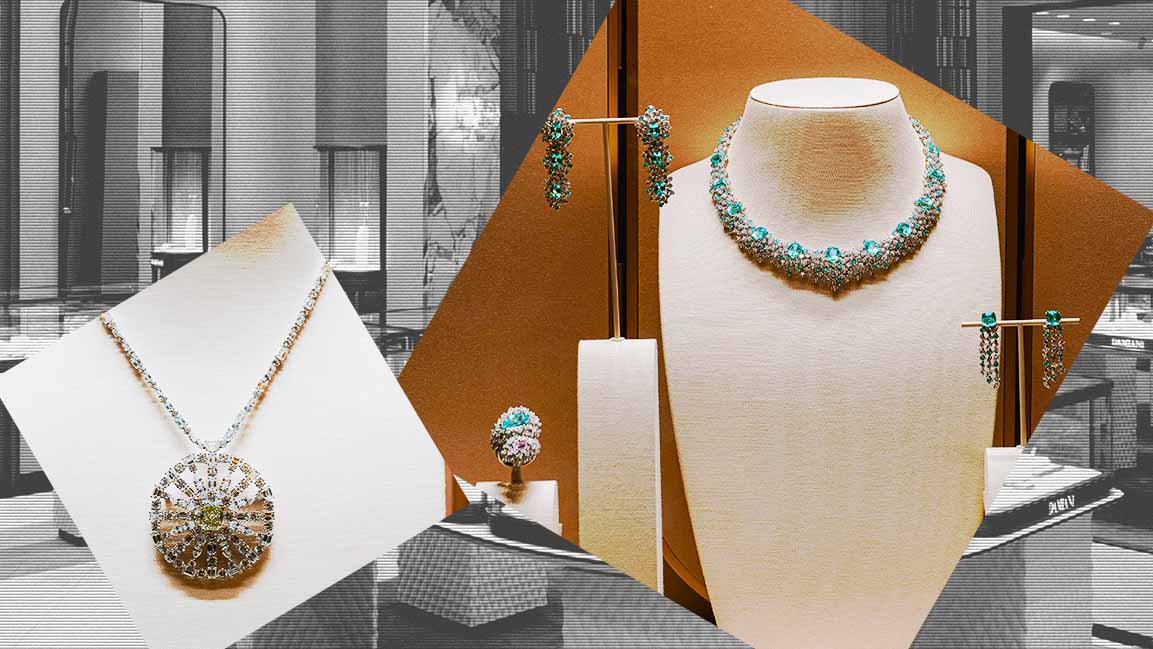


Luxury jewelry holds a distinctive position in the Middle East, valued as much for its cultural resonance as for its craftsmanship. Statement pieces have long served as symbols of status and wealth, with demand closely linked to weddings, religious celebrations such as Eid and Ramadan, and major life milestones. These occasions have cemented strong gifting traditions, giving jewelry an enduring emotional significance that extends beyond its material worth.
As this tradition-driven market continues to evolve, shaped by rising incomes, tourism, and a growing appetite for distinctive design, international luxury maisons are strengthening their regional focus. Italian jewelry manufacturer the Damiani Group is among those expanding its presence in the Middle East, most recently reinforcing its footprint in the UAE and Bahrain. Guido Grassi Damiani, President of the Damiani Group, shares his perspective on what heritage means for a family-owned luxury maison, and how tradition can be preserved while continuing to innovate.
HERITAGE AND TRADITION
Damiani speaks about preserving the maison’s heritage as one of the few family-owned luxury brands to have remained independent for more than a century, describing it as something deeply personal. “Damiani is not only the name of the brand, but it is also the surname of my grandfather, my father, and, most importantly, my children. This is a great source of pride, but it also carries significant responsibility,” he says.
That sense of responsibility is shaped by a clear set of values that have defined the brand since its earliest days. Creativity, craftsmanship, passion, a strong sense of family, and Italian identity continue to guide the group’s leadership and strategic direction. At the same time, Damiani emphasizes that heritage is not a constraint. “We embrace innovation, new markets, and new generations of clients, but we do so without compromising who we are,” he says. “Heritage does not mean only looking backward, it means knowing where you come from so you can move forward with clarity.”
For Damiani, leadership extends beyond day-to-day management to the transmission of culture and values. “My role is not only to manage the company, but also to transmit a way of doing things based on integrity, long-term vision, and love for our craft,” he explains, adding that heritage remains both a privilege and a responsibility that shapes the brand’s daily decisions.
Independence is the other pillar guiding the group’s strategic choices. Operating outside large luxury conglomerates presents clear challenges, particularly when competing alongside global players. “Independence means competing in the same arena as major luxury brands,” Damiani says. “This requires us to be disciplined, selective, and very focused in our investments.”
However, he argues that independence also brings decisive advantages. It allows the group to take a long-term view, free from short-term shareholder pressure, and to invest consistently in creativity, craftsmanship, and people. “We are free to invest even when the return is not immediate, because we know that real luxury is built over time,” he says.
Ultimately, independence is closely tied to responsibility toward the next generation. “Our goal is to hand over a strong, healthy, and globally recognized group to our children, the fourth generation, together with the same principles on which it was founded,” Damiani says. “Independence, in this sense, is not only a business model; it is a legacy we are committed to preserving.”
EVOLUTION AND INNOVATION
Damiani believes that modernization does not require a break with the past, but rather a process of continuous evolution. “We constantly invest in new technologies, research on materials, and the improvement of processes, including digitalization in several strategic areas,” he says. “However, these innovations only partially affect the core of our production, which remains fundamentally artisanal. Our jewelry is still entirely crafted by hand, using techniques passed down through generations of Italian master goldsmiths.”
Innovation, he adds, is also reflected in design. The brand closely observes shifts in lifestyles and how people wear jewelry today, translating those insights into contemporary expressions without losing its identity. “To modernize means to interpret new trends and lifestyles without distorting who we are,” he says.
The evolution of the client experience is equally important, spanning both digital platforms and physical boutiques. While technology has had a limited impact on artisanal production, Damiani notes that it has significantly reshaped how luxury brands engage with customers and understand their expectations. “In manufacturing, technology has facilitated certain stages, such as 3D rendering during the design phase and the use of more advanced tools,” he explains. “But the heart of our creation remains handmade craftsmanship.”
Where digital transformation has had the greatest influence, he says, is in customer relationship management and communication. Enhanced data and insights allow the brand to understand clients’ tastes, preferences, purchasing habits, and the occasions that matter most to them, enabling a more personalized approach while preserving the discretion that defines luxury.
“Technology has also brought us closer to potential clients through targeted campaigns and more direct, engaging storytelling,” Damiani adds. “Digital channels allow us to share the brand’s universe, values, inspirations, and creations with a global audience in real time.”
Despite this shift, the boutique experience remains central to fine jewelry. “Clients want to feel the weight, proportions, and brilliance of a gem, and to build a personal relationship with our advisors,” he says. “Digital tools do not replace the physical experience; they complement it.”
Ultimately, Damiani sees modernity as an extension of the maison’s identity rather than a reinvention. “For Damiani, modernity is not about changing who we are, but about expressing who we are in the language of today.”
PILLARS AND PRINCIPLES
As certain pillars become central to long-term success, Damiani speaks about embedding sustainability, responsible sourcing, traceability, and ethical production into the brand’s growth strategy, noting that these values have always been integral to its philosophy.
He recalls a mantra passed down from his father. “Nature gives us beauty, and we must honor it by making it shine,” Damiani says, explaining that he grew up with a strong awareness of humanity’s responsibility toward the natural world. That sense of gratitude, he adds, has translated into a lasting commitment to giving back to both the environment and society.
“We have placed sustainability at the heart of everything we do, across its economic, environmental, and social dimensions,” he says. “This approach is reflected in concrete initiatives and in the way we conduct our daily business.”
Those efforts span the entire value chain, from sourcing raw materials to final delivery. Damiani notes that the group works with a carefully selected network of suppliers that comply with the Kimberley Process, the international protocol designed to prevent diamond trading from financing civil conflicts.
Beyond sourcing, the maison has a long history of supporting social initiatives. Among them is the “Clean Water” project, through which the group has financed the construction of more than 70 wells providing access to drinking water in Africa since 2008. The company has also supported charitable and fundraising efforts for women affected by the 2011 earthquake and tsunami in Japan, as well as relief initiatives following earthquakes in Italy’s Emilia region in 2012 and in Nepal in 2015. During the COVID-19 pandemic, it extended support to local communities and institutions.
As a result, responsible sourcing, ethical practices, and social engagement are embedded in Damiani’s long-term vision, shaping an approach that seeks to balance creativity with responsibility toward people and the planet.
Damiani also reflects on his approach to leadership, shaped by years of observing his father’s work. “Our father had already achieved something extraordinary. He transformed Damiani from a family atelier into a true company, with a strong organizational structure and a distinctive image,” he says.
When Damiani assumed leadership, his focus was not on radical change but on building upon the foundations already in place. “Our objective was clear from the very beginning: to honor our heritage while guiding Damiani into its next chapter as an international luxury maison,” he explains.
For him, leadership is defined by the ability to create value over time. “Not only economic value, but also human, cultural, and social value,” he says. “Being a leader means safeguarding and developing a heritage made of people and with people.”
He acknowledges that difficult moments are inevitable during periods of expansion and transformation. “In those moments, what guides me most is a long-term vision, acting not only for the next quarter, but for the next generation,” Damiani says.
That perspective, he adds, is rooted in his upbringing. Growing up immersed in the business, with the family home located above the workshops, he and his siblings witnessed their parents’ dedication firsthand. “We watched our parents work with extraordinary commitment, and that experience profoundly shaped our way of thinking,” he says.
“These principles, long-term vision, respect for people, protection of craftsmanship, and a deep sense of family, are the compass that has guided me through every phase of expansion and transformation.”
A PLAN FOR THE FUTURE
Looking ahead, Damiani says the group will focus on strengthening its international footprint over the next decade, with an emphasis on both consolidation and selective expansion. “We aim to reinforce further our position in the markets where we are already established, while also entering new regions with strong potential for fine jewelry,” he says.
Growth, he explains, will be guided by a quality-first strategy rather than rapid scale. This includes opening boutiques in carefully chosen locations, building long-term partnerships, and continuing to refine the overall brand experience. From a market perspective, the group will remain focused on major global luxury hubs, while deepening relationships with existing clients who already have a strong affinity with the brand.
At the same time, Damiani notes that emerging generations of consumers are becoming an increasingly important consideration. These clients, he says, are more global, informed, and attentive to values such as sustainability, transparency, and authenticity, factors that are shaping how the brand positions itself for the future.
Beyond business strategy, the next decade also carries personal significance. “It has a generational meaning for us,” Damiani says. “We are working to leave a strong, healthy, and truly international group to the fourth generation of our family. Our greatest ambition is not only to grow the business, but to ensure that Damiani remains a family-owned company, independent, value-driven, and true to its identity, for a long time to come.”