
- | 3:00 pm
H.H. Sheikha Moza bint Nasser on reclaiming Qatar’s place in the global innovation narrative
Innovation has never had a single geography—and its future won’t either.
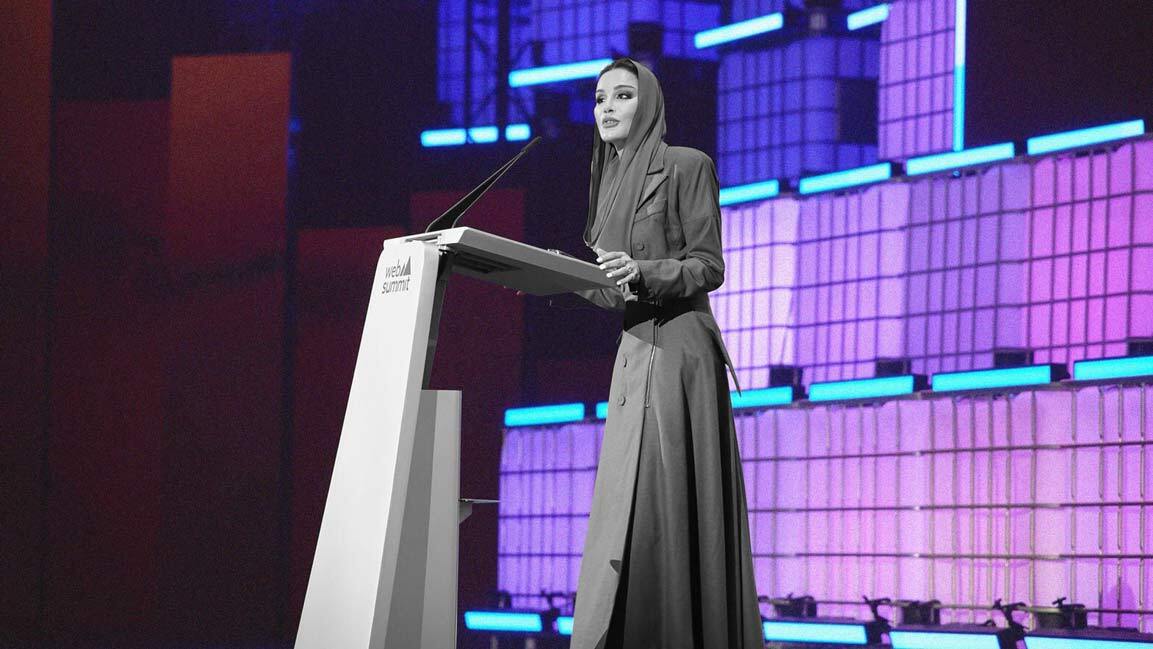


For decades, the story of technology has been told as a linear and universally accepted tale, beginning with the European Industrial Revolution and accelerating toward Silicon Valley. It is a familiar arc, polished and repeated until it feels definitive. But as HH Sheikha Moza bint Nasser, Chairperson of Qatar Foundation for Education, Science and Community Development, argues, that version of history is selective and incomplete.
“Too often we talk about technology. We tell the story selectively,” she says. “We begin with the European Industrial Revolution, and fast forward to Silicon Valley, as if innovation has a single geography, a single language, a single image. But the story is incomplete.”
The omissions are not minor footnotes. They are foundational. Long before modern cybersecurity became a pillar of the digital economy, Al-Kindi was breaking encrypted messages by identifying recurring patterns, laying the groundwork for cryptanalysis. Centuries before artificial intelligence began questioning whether awareness requires sensory input, Ibn Sina was debating the very nature of consciousness itself. Even the roots of algorithmic thinking, she notes, trace back further and more broadly than conventional narratives admit.
“This is not history as nostalgia, ladies and gentlemen, not a petition for recognition, not a romantic return to the past,” Sheikha Moza emphasizes. “It is a statement of continuity. We were there at the foundations of knowledge and work, and we are here today, shaping its future.”
That sense of continuity is central to Qatar Foundation’s vision, positioning the region not as a late adopter of global innovation but as an active architect of its next chapter. It is, in her words, a “sandbox of innovation, a space where history meets the present, not to rehearse the past but to equip the future.”
Crucially, she highlights that innovation cannot be culturally narrow. “Linguistic diversity is critical in developing technologies that are relevant across cultures,” she says, highlighting the importance of building systems that reflect and serve the plurality of human experience.

Featured Videos
More Top Stories:




FROM OUR PARTNERS