
- | 2:00 pm
UAE expands renewable footprint as capacity crosses 7.7GW
UAE renewable energy capacity surpasses 7.7GW and is set to exceed 23GW by 2031, according to WAM via Trade Arabia
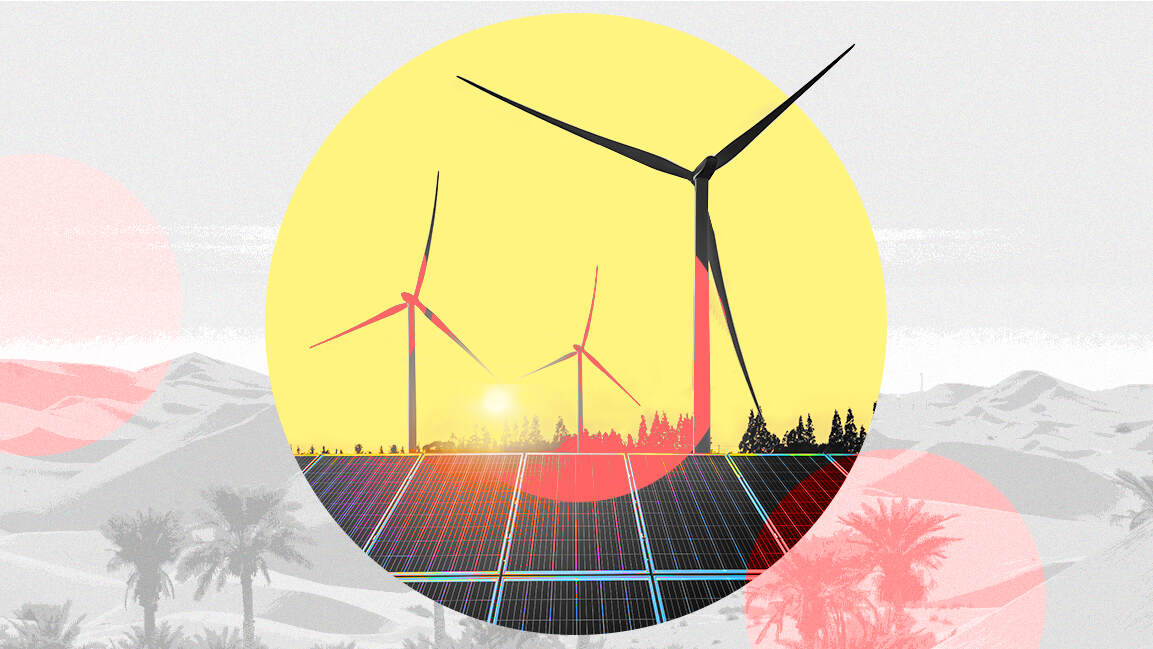


The UAE is rapidly scaling up its clean energy ambitions, with renewable capacity expanding at a pace as the country positions itself as a global investment hub for sustainable power.
Installed renewable energy capacity has now exceeded 7.7 gigawatts (GW), with projects under development expected to push total capacity beyond 23 GW by 2031. According to a report by Emirates News Agency, cited by Trade Arabia, capacity grew by 117% between 2022 and 2025, highlighting the impact of national policies and the acceleration of strategic projects.
This momentum is being driven by a wave of initiatives launched in 2026 by leading national players, reinforcing the UAE’s strategy to deliver reliable, low-carbon energy across Asia, Africa, and Europe, while supporting economic growth and reducing emissions.
Policy frameworks are evolving in parallel. In January, the UAE introduced its Sustainable Digital Services IT Guideline to promote renewable energy adoption alongside advanced technologies such as artificial intelligence and cloud computing, while encouraging environmentally responsible IT practices.
At the same time, the Abu Dhabi Department of Energy unveiled the Solar Energy Self-Supply Policy during the World Governments Summit 2026. The policy creates flexible mechanisms for on-site power generation and storage and is aimed particularly at enabling the agricultural sector to transition toward more efficient and sustainable energy systems.
That shift is already taking shape on the ground. Masdar has partnered with Elite Agro to launch the region’s first agricultural photovoltaic (AgriPV) project at Al Foah farm in Al Ain, offering a scalable model for integrating clean energy into food production systems.
Beyond the UAE, Masdar’s global footprint continues to expand. The company has reached 65 GW of clean energy capacity worldwide and is targeting 100 GW by 2030.
Its 2026 pipeline includes the 150 MW Quipungo solar project in Angola, expected to power 300,000 homes and create 2,000 jobs. In Uzbekistan, Masdar has also achieved financial close on a 300 MW solar plant coupled with a 75 MWh battery storage system, part of a broader investment exceeding $2 billion.
Strategic partnerships are further accelerating growth. The company signed an agreement with RWE Renewables to develop up to 1 GW of renewable energy capacity by 2030, with the potential to expand to 2 GW by 2035. It has also entered a $2.2 billion joint venture with TotalEnergies to consolidate onshore renewable assets across nine countries in Asia.
Meanwhile, Abu Dhabi-based Global South Utilities is extending the UAE’s clean energy reach into emerging markets. Its projects include a 5 MWp solar plant in Berbera in the Horn of Africa, aimed at reducing diesel dependence and strengthening energy security.
The company has also partnered with Weiheng, a Chinese manufacturer of battery storage systems, to localize advanced clean energy manufacturing in Abu Dhabi, supporting the UAE’s broader industrial and supply chain ambitions.
As investment, policy, and technology converge, the UAE is not only expanding capacity but also shaping the infrastructure and partnerships that could define the next phase of the global energy transition.