

- | 1:00 pm
The renewable energy boom is not yet translating into broad job opportunities
Despite record renewable energy installations, global jobs grew only 2.3% in 2024, IRENA and ILO report, urging inclusive, people-centered transitions.
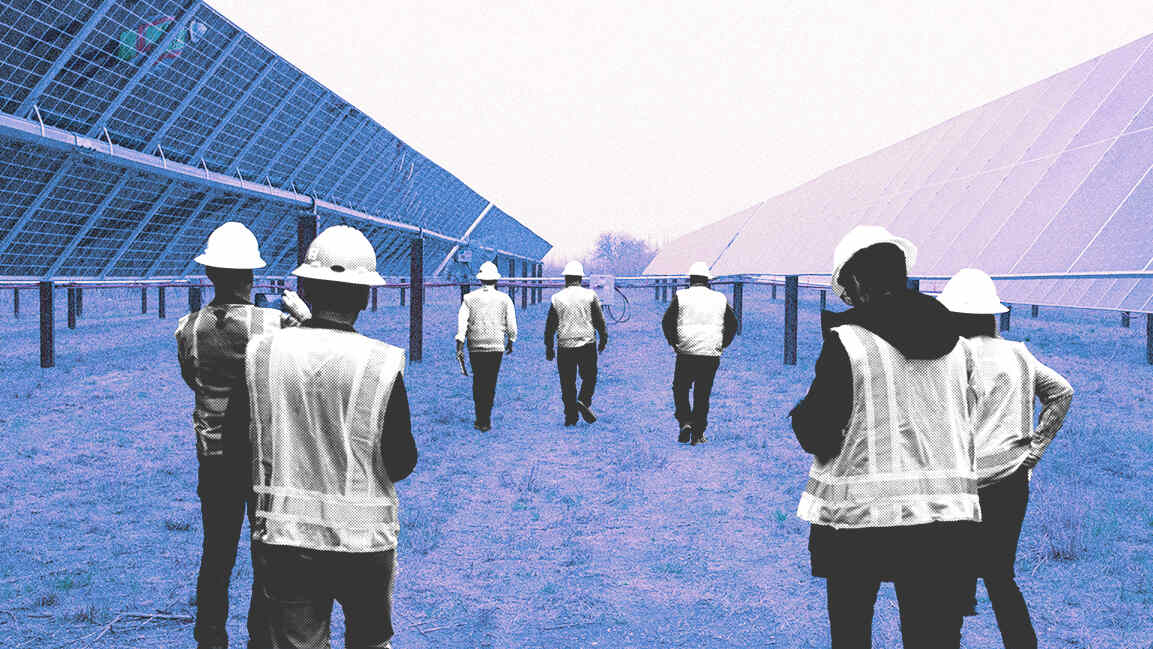


Despite record-breaking growth in renewable energy installations, global employment in the sector recorded only a modest increase of 2.3 percent in 2024, reaching 16.6 million jobs, according to the newly released Renewable Energy and Jobs – Annual Review 2025 by the International Renewable Energy Agency (IRENA) and the International Labour Organization (ILO).
The report highlights the growing impact of geopolitical tensions, geoeconomic frictions, and automation on renewable energy employment worldwide, according to the Emirates News Agency.
As in previous years, growth remains uneven across regions. China continues to dominate both renewable energy deployment and equipment manufacturing, supported by its extensive and cost-efficient supply chains. The country accounted for 7.3 million renewable energy jobs in 2024, representing 44 percent of the global total. The European Union followed with 1.8 million jobs, while Brazil reported 1.4 million. India and the United States experienced slower growth, with 1.3 million and 1.1 million jobs created, respectively.
IRENA Director-General Francesco La Camera underscored the importance of prioritizing people within the energy transition. “Renewable energy deployment is booming, but the human side of the story is as important as the technological side,” he said. “Governments must put people at the centre of their energy and climate objectives through trade and industrial policies that drive investments, build domestic capacity, and develop a skilled workforce.”
He further emphasized that bridging the global employment gap requires renewed international cooperation. “Countries that are lagging behind in the energy transition must be supported by the international community. This is essential not only to meet the goal of tripling renewable power capacity by 2030, but also to ensure that socio-economic benefits become lived realities for all, helping to shore up popular support for the transition,” he added.
In terms of technology, solar photovoltaics (PV) continued to lead global renewable energy employment, accounting for 7.3 million jobs in 2024. Asian countries hosted three-quarters of these positions, with China alone generating 4.2 million. Liquid biofuels followed with 2.6 million jobs, hydropower with 2.3 million, and wind energy with 1.9 million.
The report also highlights the need for greater inclusion and equity within the renewable energy workforce, particularly for women and individuals with disabilities.
ILO Director-General Gilbert F. Houngbo noted, “A just transition to a renewables-based future must be grounded in inclusion, dignity, and equal opportunity. Accessibility for persons with disabilities—who too often face barriers to inclusion despite their skills and experience—must be built into every stage of policy design and implementation.”
He added that accessible training systems, inclusive hiring practices, and equitable workplaces are essential for resilient labour markets and sustainable development. “By removing barriers to equality and promoting decent work, we strengthen economies and ensure that the energy transition truly works for all,” he said.
The Renewable Energy and Jobs – Annual Review 2025 marks the 12th edition of the series and the fifth produced jointly by IRENA and the ILO. The report forms part of IRENA’s broader analytical work examining the socio-economic impacts of a renewables-based energy transition. This year’s edition features a dedicated focus on disability inclusion in the workforce.

Featured Videos
More Top Stories:





FROM OUR PARTNERS