
- | 1:00 pm
UAE extends Mars mission to 2028 after delivering more than 10 terabytes of data
The mission’s extension highlights how space science is shaping the UAE’s long-term innovation strategy.
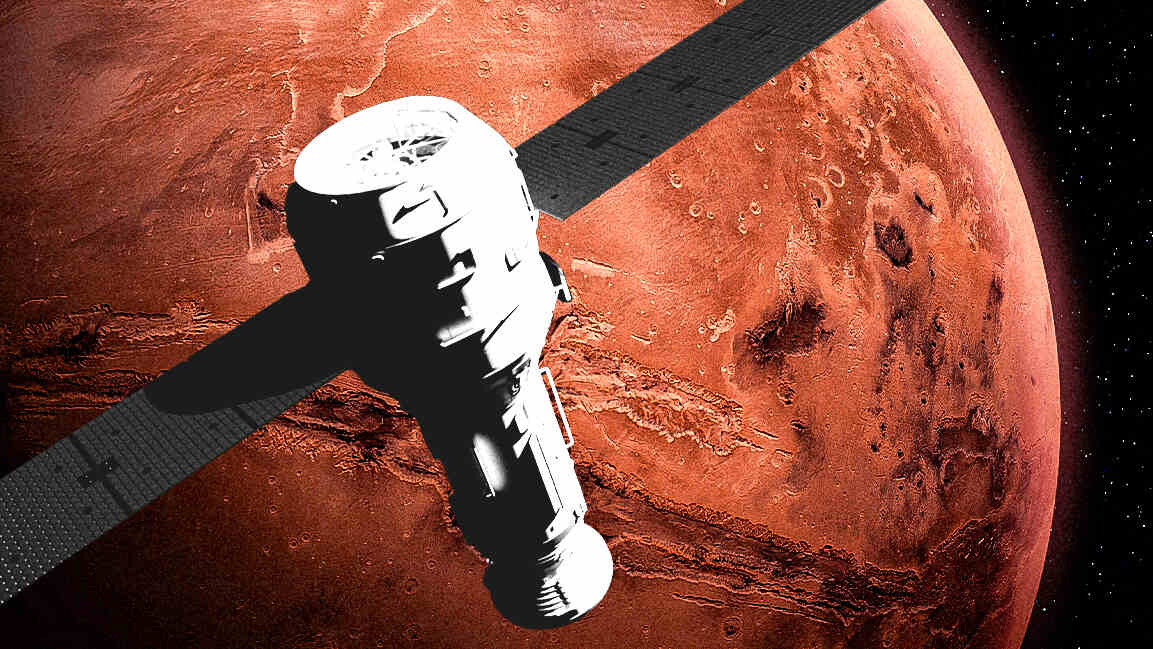


The UAE Space Agency has extended the Emirates Mars Mission through 2028, doubling down on one of the region’s most ambitious scientific bets after what officials describe as a dramatic overperformance in both data and impact.
Announced by Dr. Ahmad Belhoul Al Falasi, chairman of the agency, the three-year extension will allow the mission’s spacecraft to continue probing the Red Planet’s atmosphere—particularly the unexpectedly complex interplay between its lower and upper layers.
“When we started this mission, the initial goal was to send one terabyte of data,” Al Falasi said. “Today, we have exceeded that target tenfold, delivering more than 10 terabytes of high-quality scientific data.”
Launched in 2020 and entering Mars orbit on February 9, 2021, the mission’s Hope Probe made history as the first Arab spacecraft to reach Mars. Designed to create the first complete global picture of the planet’s daily and seasonal weather cycles, the probe has since become one of the most comprehensive atmospheric observatories operating around Mars.
Among its key achievements is the observation of a rare interstellar comet and the capture of new data from Deimos, Mars’ smaller and more enigmatic moon. Using its three scientific instruments, the probe collected measurements from a unique vantage point approximately 100 kilometers away, offering fresh insights into the moon’s composition and origin.
Al Falasi described the orbiter as one of the most advanced and accurate probes studying Mars, highlighting its ability to deliver a full atmospheric snapshot. The extension will allow scientists to further explore how energy and particles move between atmospheric layers, research that could deepen understanding of how Mars lost much of its atmosphere over time.
But the mission’s ripple effects extend far beyond planetary science. Since the programme’s launch, the UAE has recorded a 31% increase in student enrollment in science, technology, engineering, and mathematics fields. Al Falasi said the mission is helping to scale the country’s scientific capabilities nationally while positioning the UAE as a regional hub for advanced research.
At the time of orbital insertion in 2021, Mohammed bin Rashid Al Maktoum hailed the achievement as the result of more than five million working hours by over 200 Emirati engineers.
“Our goal is to give hope to all Arabs that we are capable of competing with the rest of the world,” he said.
Roughly the size of a small car—measuring about eight feet wide and 10 feet long and weighing 1,350 kilograms—the Hope Probe remains in “good shape,” according to officials. With its extended runway through 2028, the spacecraft is expected to continue delivering data that not only advances planetary science but also reinforces the UAE’s long-term strategy: investing in space as both a research frontier and a catalyst for economic transformation.
“When we started this mission, the initial goal was to send one terabyte of data,” Al Falasi said. “Today, we have exceeded that target tenfold, delivering more than 10 terabytes of high-quality scientific data.”
Launched in 2020 and entering Mars orbit on February 9, 2021, the mission’s Hope Probe made history as the first Arab spacecraft to reach the Red Planet. Designed to build the first complete, global picture of Mars’ daily and seasonal weather cycles, the probe has since become one of the most comprehensive atmospheric observatories operating around the planet.
Among its standout achievements: observing and studying a rare comet from outside the solar system and capturing new data from Deimos, Mars’ smaller and more enigmatic moon. Using its three scientific instruments, the probe collected measurements from a unique vantage point roughly 100 kilometers away—yielding fresh insights into the moon’s composition and origin.
Al Falasi described the orbiter as “one of the most accurate and developed probes across Mars” and “the first of its kind” in delivering a full atmospheric snapshot. The extension will allow scientists to further investigate how energy and particles move between atmospheric layers—research that could reshape understanding of how Mars lost much of its atmosphere over time.
But the mission’s ripple effects extend far beyond planetary science.
Since the programme’s launch, the UAE has recorded a 31% increase in student enrollment in science, technology, engineering, and mathematics fields. Al Falasi said the mission is helping to scale the country’s scientific capabilities nationally while positioning the UAE as a regional hub for advanced research.
At the time of orbital insertion in 2021, Mohammed bin Rashid Al Maktoum hailed the achievement as the result of more than five million working hours by over 200 Emirati engineers.
“Our goal is to give hope to all Arabs that we are capable of competing with the rest of the world,” he said.
Roughly the size of a small car—measuring about eight feet wide and 10 feet long and weighing 1,350 kilograms—the Hope Probe remains in “good shape,” according to officials. With its extended runway to 2028, the spacecraft is expected to continue delivering data that not only advances planetary science, but also reinforces the UAE’s long-term strategy: investing in space as both a research frontier and a catalyst for economic transformation.

Featured Videos
Today's Top Stories:
More Top Stories:



FROM OUR PARTNERS