- | 9:00 am
Ola Källenius says the S-Class is more than a car. Mercedes-Benz is building tech-powered luxury
Speed, agility, and AI are now the core of automotive innovation at Mercedes


For 140 years, Mercedes-Benz has built its reputation on pushing the boundaries of what a car can do. Today, those boundaries are no longer mechanical. They are digital, defined by software stacks, sensor arrays, and computing power capable of making decisions in milliseconds.
The new S-Class is Mercedes’ clearest attempt yet to reconcile its past with that future. Beneath its restrained design, the flagship has been reengineered as a software-led platform, integrating AI-driven assistants, autonomous-driving readiness, and a new operating system that now sits at the vehicle’s core.
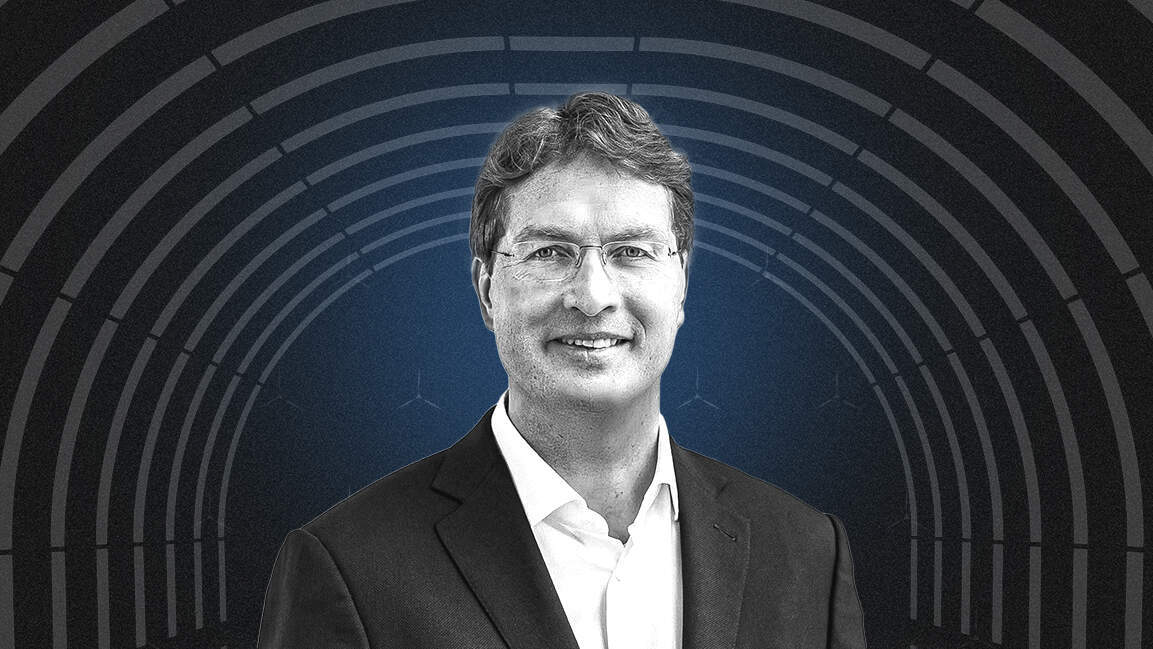
In conversation with Ola Källenius, CEO of Mercedes-Benz, the discussion extended well beyond the S-Class itself. He spoke about how the company is adjusting its internal structures to move faster, how leadership decisions are made in an environment where predictability has diminished, and how expectations around luxury are shifting as customers place greater emphasis on intelligence, usability, and digital capability alongside comfort and design.
REDEFINING MODERN LUXURY
Mercedes-Benz is marking two milestones at once: the launch of the new S-Class and the 140th anniversary of the car itself. “If you go back to the original recipe of our founding fathers, you can see, and this is still very much in the DNA of the company today, that they were inventors, pioneers, and brave entrepreneurs,” says Källenius. “They pushed the boundaries of what was possible. Yes, they invented this machine that changed the world, and that is one of the core sides of the Mercedes-Benz brand: the promise to always push technology to the next level.”
He positions the new S-Class as a direct continuation of that legacy. While the most significant shift is unfolding on the technological front, it also prompts a broader question: how is luxury defined today? “If you walk through the Mercedes-Benz Museum, you start with a horse, then the first car, and move through the decades, you see 140 years of technological excellence, engineering substance, and safety innovation,” he says. “But alongside everything that makes Mercedes, Mercedes, quality, longevity, ride, and drive, you also see elegance. Timeless elegance.”
That sense of desirability runs consistently through the brand’s history. Källenius points to examples spanning the century, from the car Clark Gable drove in Hollywood to the S-Class used by Konrad Adenauer, the gull-wing design of the 1950s, and the original SL driven by Princess Diana. “What is that?” he asks. “It is the desirability. Beauty. Something almost intangible, almost irrational. And that blend of innovation and emotion is the secret sauce of Mercedes.”
In the new S-Class, that approach now extends deeply into software and artificial intelligence. Supercomputing is integrated with AI stacks and Mercedes virtual assistants, which arbitrate large language models in real time. “So you have your own butler in the car,” Källenius says.
Sensors continuously monitor the surroundings, and, through partnerships with Uber and Nvidia, the S-Class can be equipped as the first luxury limousine L4-ready for robotised chauffeur pilots later this year.
These advanced capabilities are expressed through a design language that balances function with desire. The illuminated star on the hood is a case in point. “A typical Mercedes engineer thing to come up with,” Källenius says. “Do you absolutely need it? No. Do you want it? Yes. That is it, innovation and technology paired with desirability.”
Over the past five to ten years, Mercedes-Benz has been adapting to two major technological shifts. The first is the move toward zero emissions. By the end of this decade, every relevant segment and model will have a fully electric alternative. “We already cover almost the entire portfolio, but by the end of the decade, we will be able to serve markets completely electrically,” Källenius says.
The transition, however, remains uneven across the 150 countries where Mercedes operates. As a result, electrified high-tech combustion engines and plug-in hybrids, for example, will continue to play a role for the next decade and beyond.
“This is good news for the customer,” he adds. “Everything is covered.”
The second transformation centers on intelligence, including supercomputing, sensing technologies, and AI-based software stacks. Mercedes has worked with electronics and advanced driver assistance systems for more than 30 years and pioneered first-generation assistance technologies. For much of that time, Källenius says, the company was “the world’s best technology integrator.” Over the past five years, that role has evolved into co-inventing technology.
This shift has required a significant expansion of in-house software capabilities. Källenius points to the addition of thousands of engineers across mission control centers all over the world, for example, in Germany, Bangalore, Beijing, Shanghai, Silicon Valley, or Tel Aviv. “Shanghai is a new tech center that has been established over the past three years,” he notes. While Mercedes does not write every line of code itself, it is deeply embedded in development through partnerships with Momenta, ByteDance, or Tencent in China, or Nvidia and Google in the US, and “This is where we co-invent,” he says.
Working closely with software has also reshaped how decisions are made and products are built. Development cycles are faster, more iterative, and inherently less predictable. “Now that I also carry a German passport, although I am Swedish, I can say we Germans love to plan,” Källenius says. “But you also have to embrace uncertainty and flow.” Speed, agility, and flexibility have become central to the process, and while the journey is ongoing, the company’s deeper move into software has already driven a fundamental shift in mindset.
BALANCING INNOVATION WITH FINANCIAL DISCIPLINE
Mercedes-Benz faced a challenging year with slowing sales and pressure on profits. Källenius emphasizes that “all the financial numbers come down to one figure: what is the free cash flow that you can produce with the business you are running.” While the 2025 results have not yet been disclosed, they are scheduled for February 12.
Preliminary indicators suggest that even in a tough environment, Mercedes remains “one of the best free cash flow producers in the world.”
At the same time, the company is investing heavily in its future. “We are investing at the highest level in the history of the company, double-digit billion euro numbers per year, in research and development, tooling, and in our manufacturing operations,” Källenius says. He notes that these investments are among the highest in the auto industry and the world, reflecting the capital-intensive nature of the business.
To support this level of investment, the company is pursuing efficiency measures across the board. “Even though it may sound a little counterintuitive, you have to double down on efficiency more than ever before,” he explains. Mercedes has spent several years lowering fixed costs, carefully prioritizing capital expenditures and R&D, and increasing the effectiveness of every euro spent. Källenius describes this approach as “slimming down and becoming a fitter and better version of ourselves.”
The competitive intensity in markets like China further underscores the need for balance. Källenius notes that roughly 100 car companies are vying for a market that could realistically support only around 30. “I do not think you have a choice but to do both at the same time. Be aggressive in technology, innovation, and investment, but equally aggressive in efficiency. That is what we are trying to do. Maybe you have seen that, and maybe you have done that here.”
The S-Class remains central to this strategy as the brand’s halo car. While a typical mid-cycle refresh might add new technology and tweak the exterior, this update goes far beyond that. “If you then decide to change 2,700 parts, literally redo more than half the car, and revolutionize the brain and central nervous system of the car, and, by the way, on the side, develop every single electrified combustion powertrain new, for example, the V8 from the ground up, then you are combining Swiss watch precision with something that can meet any of the most stringent emission standards in the world while protecting performance,” he says.
Källenius emphasizes the scale of the update as unprecedented. “That is not normal. That is huge. By a wide margin, it is the biggest mid-cycle update we have ever done. That is how important it is.”
NAVIGATING TARIFFS AND GLOBAL MARKETS
Källenius approaches the topic of tariffs with the same measured precision he applies to product planning. Financial modelling at Mercedes-Benz, he explains, is deliberately cautious. “If you are a CFO of a company, you should be careful about the assumptions you make,” he says. As a result, Mercedes does not factor in any reduction in tariffs from current levels.
He acknowledges positive developments elsewhere, including the free trade agreement between India and the EU and the planned EU-Mercosur agreement, both of which he says are likely to spur growth in their respective regions. “We see some of those things happening, but in general, we are not calculating on a relief scenario in the foreseeable future regarding tariffs,” he adds.
The United States remains a core growth market. “It is the biggest economy in the world, with above-average growth rates for a long time,” he says. For the S-Class, which is produced in Sindelfingen, exports are naturally affected by tariffs, yet Källenius stresses that this does not alter the company’s broader strategy. Dealers have already seen the new S-Class and responded positively.
Investments in the US go beyond policy considerations. “In the auto industry, you do not build overnight. It takes several years to build and adapt, but you do not do it for currency or policy reasons alone. It has to be based on a belief in where you think your brand can go in the market,” he explains.
India remains a key growth market for Mercedes-Benz, and Källenius frames the new EU-India free trade agreement as a catalyst rather than a disruptor. “In general terms, India is a growth market. So whatever happens, we are going to grow and continue to invest in India,” he says. He adds that decisions on which models to produce locally and the optimal production balance are still being evaluated.
Källenius emphasizes that Mercedes-Benz sees a larger future in India and intends to continue expanding its operations, including its R&D center, which remains a cornerstone of the company’s global technology network.
Källenius frames Mercedes-Benz’s global approach as part of the company’s DNA, tracing it back to the earliest days of Gottlieb Daimler and Carl Benz. “Gottlieb Daimler invented the car in 1886 together with Carl Benz. In 1888, imagine this, he set up shop in the United States. So we are the original car manufacturer in the United States,” he says. He emphasizes that this history instilled a global perspective, one that
continues to shape the company’s industrial footprint across Europe, the United States, and China today.
He cautions against overly rigid local content rules in Europe, arguing that such policies risk stifling growth and disrupting complex supply networks. “While one should not be naive in the world we live in today, certainly not politically, I would caution policymakers against applying European local content regulations in a crude way that could stifle growth, drive inflation, and cut off trade,” he says.
Källenius notes that Mercedes-Benz already maintains a high level of local content in European-built vehicles. Yet the scale and sophistication of modern luxury cars, particularly the S-Class, rely on components from around the world. “To build the most sophisticated high-tech product in the auto industry, the S-Class that we are going to see, all five continents are in that car. That is because of the sophistication of the supply networks that have been built up over decades,” he notes.
The underlying message is that growth and technological excellence depend on a global perspective, one that integrates innovation from multiple regions rather than imposing artificial limits on supply chains.
REDEFINING VEHICLE ARCHITECTURE WITH MB.OS
On the technical front, Källenius describes a fundamental shift in how Mercedes-Benz approaches the architecture of its cars. “The old paradigm of buying ECUs from Tier 1 suppliers, which had some level of compute and a software package in them, and then knitting them together like an American quilt to create something that works for the customer, that approach is completely over,” he says.
Instead, the new Mercedes-Benz operating system, MB.OS, rethinks the entire electrical and electronic architecture, the brain and central nerve system of the car. The company now specifies the performance of supercomputer chips for different functions and develops the infrastructure, middleware, and application software layers. “Holistically, that entire setup represents a completely different architectural drawing from what we had before,” he adds.
This approach requires a different set of skills. “We have very deep expertise in what is needed in terms of compute for different functions in the car, including automated driving, and how you integrate that into the car, what cooling is required, and all those different aspects,” Källenius explains. When it comes to building chips, Mercedes-Benz collaborates with established leaders. “The best companies in the world for chips, like Nvidia and Qualcomm, operate on a cycle, a speed, and an economy of scale that, in our view, surpasses a tailor-made solution you would develop yourself,” he says.
The decision to expand production in the United States, he says, is grounded in market potential. “In addition to the large SUVs we already manufacture in the US, and our van operation in South Carolina, where we are also investing heavily, we will add the next car in the family where we see the biggest market potential in the United States. That car is the hybrid GLC, the smaller sibling of the GLE and the GLS, for the next generation,” he confirms.
Long-term planning today must contend with a world where volatility has become the baseline. “It comes back to the idea of a plannable world, if it was ever truly plannable at all,” he says. Markets, policies, and technology cycles are unpredictable, and the only response is speed. “You have to move faster, and you have to accelerate how technology is developed and deployed in the car, particularly on the digital side,” he adds.
This need for speed is at the heart of MB.OS, which Källenius describes as a genuine paradigm shift. For a company with Mercedes-Benz’s history, this goes beyond incremental change. “For an established manufacturer, this is not incremental change but a redefinition of how the company builds vehicles in the middle of a broader transformation,” he notes.
Introduced first in the CLA in late summer last year, the system is already running in one of the brand’s most sophisticated combustion-engine models. “Ten years ago, that would have been unthinkable,” he says.
The technology itself is secondary to what it enables. MB.OS allows faster iteration, shorter feedback loops, and the ability to transfer capabilities across platforms without waiting for full model cycles. “Agility and speed are no longer advantages. They are requirements,” Källenius emphasizes.
Passion and high expectations guide his own feedback to the MB.OS team. “I am a passionate and, admittedly, a demanding customer,” he says. Magnus (Östberg) and his team, he notes, have “carried the torch for the implementation of MB.OS, and that is not a small task inside an established manufacturer.”
Building a software platform like MB.OS in a company with decades of legacy systems presents a different challenge from a startup beginning with a blank sheet. “If we had been a startup five years ago, you design the architecture, the software, and the hardware together from day one,” he explains. In a company of Mercedes-Benz’s scale, customers already on the road expect perfection, and existing systems cannot be discarded.
The solution is a holistic electrical and electronic architecture that continues to evolve. “It is like a river that keeps flowing, where you continuously add to it. The river is already there, and I would say the sky is the limit,” he says. The platform integrates data analysis, anonymized consumer behavior, and global technology partnerships from Google in the West to Tencent in China seamlessly into the environment.
Even with all that capability in place, Källenius remains a hands-on user. “I really believe the sky is the limit, but I will continue to be that passionate, slightly demanding customer,” he adds, highlighting the personal standard he sets for future S-Class iterations.
THE EVOLUTION OF THE S-CLASS
While the S-Class remains the benchmark for Mercedes-Benz, the brand is adapting to a broader range of customer preferences. “The S-Class is the flagship, but with the diversification of customer needs, that segment is broader now than it was 30 years ago,” Källenius explains. For customers seeking an S-Class in SUV form, the GLS fulfills that role, with the next generation arriving later this year.
Mercedes-Benz is also extending the S-Class experience to other vehicle categories. “We have announced that for our people mover, or MPV, which in Europe is called the V-Class, there is more to come, so stay tuned,” he says. He hints at upcoming developments with a mix of playfulness and anticipation. The approach is clear. The qualities that define the S-Class, including technology, luxury, and performance, are now being applied across the Mercedes-Benz lineup.