- | 8:00 am
Are you part of the ‘distraction economy’?
In a world built to capture our attention, constant distraction does more than hurt productivity—it quietly erodes self-knowledge.


A client once described to me what happened after they had lived through a traumatic assault. For a long time, life stayed busy enough that they rarely had to think about it. Work, obligations, and everyday distractions filled the hours. Whether intentionally or not, staying occupied kept the past at a distance. Then one day things slowed down. There was a rare stretch of quiet. And in that quiet the memory returned all at once, like a tsunami.
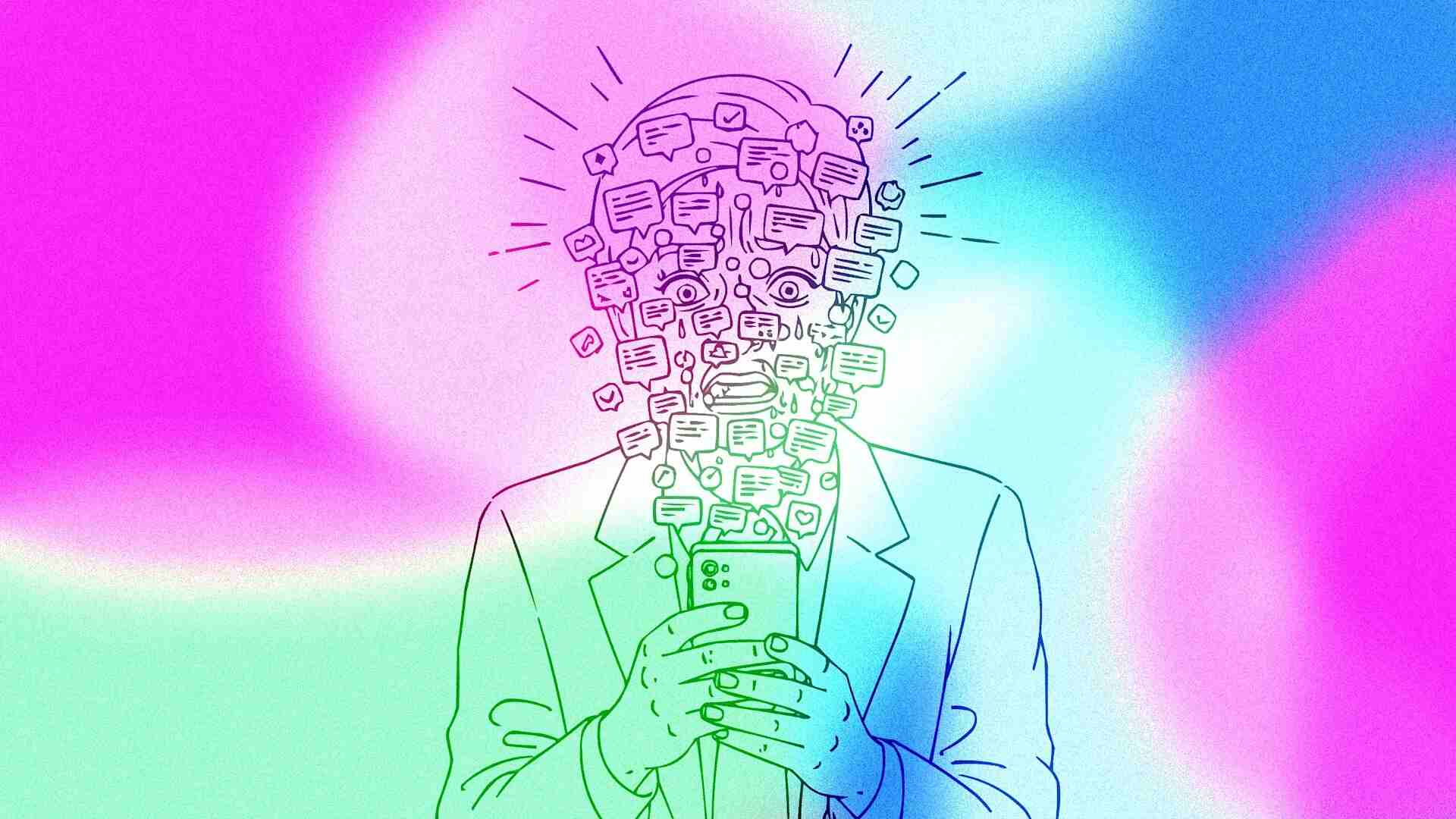
We might not have lived through trauma of that magnitude, but the example reveals something about distraction itself. When our attention is constantly absorbed elsewhere, we can avoid more than a painful memory. We can avoid ourselves. Distractions are not merely problematic because they waste time. They also displace the self. Have you ever completely lost track of time while scrolling on social media or watching videos? It’s not hard to imagine how that same pattern can play out in larger ways.
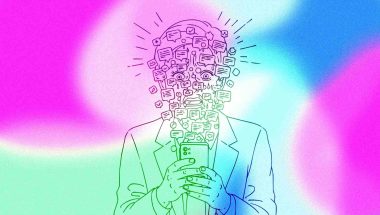
Some have proclaimed our time as the attention economy. From the perspective of business, that feels true: companies are constantly vying for your attention. But from our individual perspective, it is more accurate to call it the distraction economy. That distinction matters, because attention is not merely a resource others extract from you. It is something you wield. Every time you direct your focus, you are making a choice, and every time you surrender it, you are making one too.
Philosophers since Socrates have urged people to know themselves. Søren Kierkegaard understood what was at stake when that effort fails: “The greatest hazard of all, losing the self, can occur very quietly in the world, as if it were nothing at all. No other loss can occur so quietly; any other loss—an arm, a leg, five dollars, a wife, etc.—is sure to be noticed.”
Busyness Is Not a Self
Many professionals have had the experience of reaching a milestone they spent years chasing, only to feel surprisingly hollow. When we never pause to examine what we actually want, we get very good at pursuing the wrong things, such as metrics that measure activity rather than impact and approval in place of self-knowledge.
It’s well established that we don’t truly multitask. Our brains have to stop and start each time we switch tasks. Overloaded with stimuli, our attention spans erode. We want everything to be quick, but as we know from cooking, slow food is often healthier and usually tastier.
When we talk about the dangers of distraction, we tend to default to productivity as the main concern. It’s a real issue, but it’s the lesser one. The deeper danger is what chronic distraction does to us as people. When we succumb to a distraction loop, we become more reactive or miss cues about others. For example, a leader half-present in a conversation may snap at a team member who raises a concern at the wrong moment, or miss the early signs that a trusted colleague is burning out. We end up thinking the answer is simply to work harder, mistaking motion for meaning. Keeping busy is not the same as being busy with a purpose.
Cal Newport’s concept of deep work is usually understood as a productivity strategy: sustained, distraction-free focus as a path to better output. But its real value runs deeper than that. When we genuinely engage in focused learning, working, and interacting, we discover things about ourselves that scattered attention never surfaces: what we actually find meaningful, where our thinking naturally leads, what we value when no one is nudging us toward the next click. Losing ourselves to distraction leaves those abilities and understandings permanently untapped. Deep work, in this sense, is less a professional skill than a form of self-knowledge.
This doesn’t mean every moment of distraction is a crisis. Some distractions are useful, like when we’re having a bad day and need to laugh. It’s the quantity and habituation that causes trouble.
Reclaiming Your Attention
The good news is that attention, like any capacity, can be rebuilt. A few practices help.
Look at a painting or listen to music while doing nothing else: no phone, no second screen, no half-attending. Try it for five minutes. Art works for this purpose because it demands your full interpretive presence. Unlike a news feed, it cannot be skimmed. It asks you to dwell.
Read a short passage of philosophy and sit with it before moving on. This isn’t about acquiring knowledge so much as practicing the act of sustained thought, following an idea through rather than bouncing off its surface.
Both practices may feel surprisingly difficult at first. That difficulty is the point. It tells you something about how far the erosion has gone, and it’s where the rebuilding begins.
While occasional fasting from devices or particular apps can be a useful cleanse, what we ultimately need is daily discipline, not as self-punishment, but as a form of self-respect. Discipline, in this context, is simply the decision to treat your own attention as worth protecting.
The Quiet Return
Most of us have been shaped by the distraction economy without fully realizing it. But that’s not cause for despair. It’s cause for attention. We don’t have to keep paying for a system we never consciously chose. We can reclaim ourselves, one focused moment at a time, and remember that the self we’ve been too busy to notice has been there all along. What you attend to is what you become. Make that choice deliberately, or it will be made for you.