
- | 9:00 am
How can companies in the Middle East manage AI displacement before it becomes a crisis?
Experts recommend that companies start preparing for the AI era now and plan for related risks. Adapting to AI works best when supported by the right organizational structures.
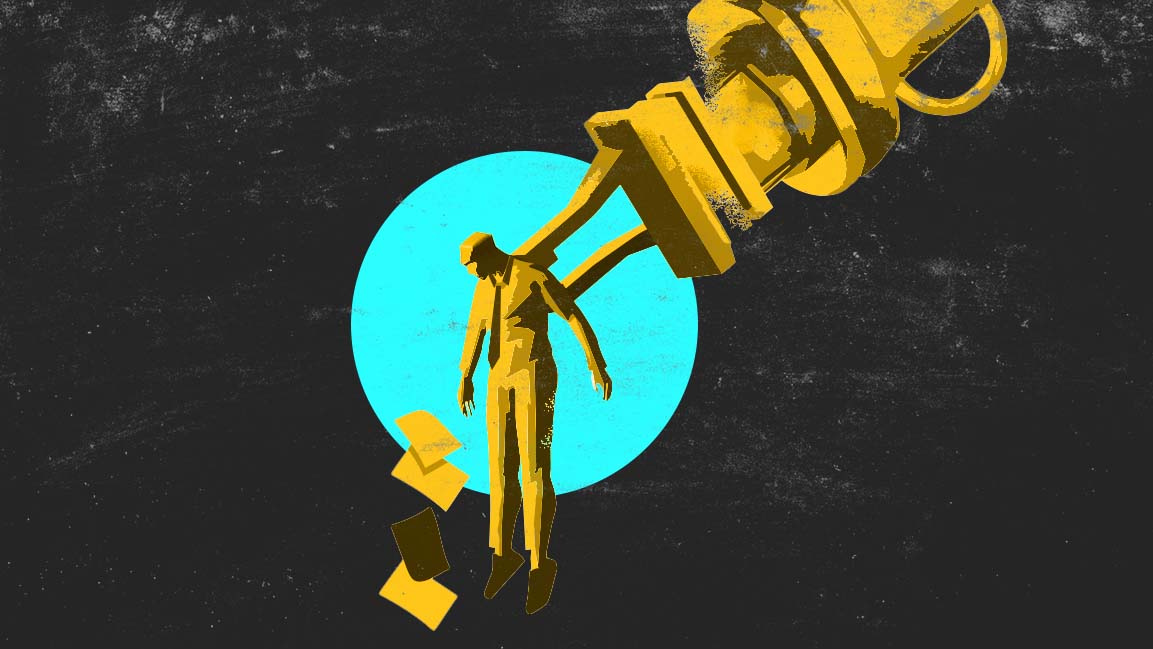


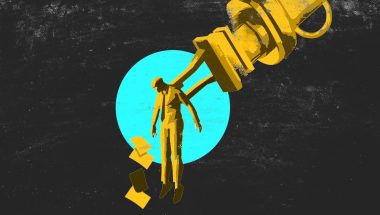
AI has changed things, including the number of layoffs.
On April 1, Oracle announced major layoffs worldwide. Around 10,000 jobs were cut, affecting senior engineers, architects, operations leaders, program managers, and technical specialists. Reports say these layoffs happened at a time when the company is spending more on AI and has begun using AI tools, enabling fewer employees to handle more work.
Oracle is not the only company making cuts. Meta is reportedly considering a 20% workforce reduction, and Amazon has announced plans to lay off 16,000 employees. In the US, job cuts rose by about 25% in March, and a quarter of those losses were due to AI.
Layoffs tied to AI are already a major reason some people are pushing back against the technology.
Recently, JPMorgan Chase’s CEO, Jamie Dimon, cautioned that AI could lead to widespread job losses in the US and urged both the government and businesses to prepare for the impact.
PLANNING FOR THE RISK
More interestingly, Dimon said the bank, which has a tech budget of nearly $20 billion and doubled its use of generative AI, especially in customer service and tech roles, is working to manage AI’s impact on its employees.
At an investor meeting in February, Dimon said the bank has “huge redeployment” plans. This approach seems like a step toward using AI responsibly in the workforce.
As AI reshapes the workforce and automation speeds up, it is important for companies to plan for this risk and help employees affected by the AI transition move into new roles.
“The aim should be a managed transition, not an abrupt displacement,” says Asma Derja, AI ethics expert and Founder and Director of Ethical AI Alliance. “It’s also important that workforce impact is treated as a core design constraint, not a side effect after deployment.”
According to Derja, workers should not “bear responsibility for systemic shifts beyond their control.”
She says AI adaptation must be matched with the right institutional support. “We already see alternative approaches, for example, China is explicitly framing AI around job creation, job quality, and social stability, rather than treating displacement as an inevitable outcome. It’s important to understand that displacement is a policy and business choice, not an inevitability.”
In recent years, industries like banking, telecom, and manufacturing have slowed hiring as they use more AI tools in their operations to cut costs.
However, Mounir Hijazi, CEO at GCC, TP, says the real value of AI is in boosting productivity and improving experiences, not just reducing costs.
He says that adopting AI responsibly begins with strong leadership and preparing employees. “Technology alone doesn’t transform organizations; people do. That’s why companies need governance around how AI is deployed, but also a clear commitment to reskilling employees to work alongside it.”
TRANSPARENCY ON REPLACING JOBS
As more companies use AI, there is growing pressure for them to be open about which technology could replace jobs.
Derja says organizations should clearly state which roles are at risk, provide timelines, and explain how transitions will take place.
“If we take a step back, the truth is that most layoffs today are driven by AI expectations, not actual capability. But the deeper question is whether we should even get to that point. Workers are often put in a position where they are effectively training the systems that replace them, without compensation or protection, in a sort of ‘transfer of value’.”
Derja adds that the real issue is not only about how to pay workers, but also whether some types of job loss should be allowed at all. “At minimum, the principle should be reciprocity, as part of a fair social contract: if workers contribute to building AI systems, they should share in the benefits.”
Others argue that transparency should be balanced so it does not cause unnecessary worry among employees who may fear losing their jobs.
“The optimum strategy is to involve employees at every stage and try to outline what opportunities there may be for them to work alongside the AI technology and how they can be supported to achieve this,” says Professor Fiona Robson, Head of Edinburgh Business School and School of Social Sciences, Heriot-Watt University Dubai.
Cosmin Ivan, CEO at Platinumlist, believes transparency helps build trust and understanding. “At Platinumlist, we’ve focused on building a shared AI culture where adoption feels additive, something people opt into. When employees see AI being used in real workflows around them, they start to get it on their own and begin to understand its value.”
Ivan says that every role can benefit from AI, and “companies that get this right show AI use cases in real time, encourage people to experiment and learn from each other, and make it safe to try things without the pressure to be perfect right away.”
WHO SHOULD BE RESPONSIBLE?
All stakeholders have a role to play in ensuring that displaced employees have other opportunities to remain employable, says Robson.
Organizations should cover reskilling costs, support employees in transitioning to new roles, and provide fair compensation. Governments need to create policies and labor protections, invest in education and workforce programs, and plan for long-term changes in the job market.
Robson adds that governments can support programs to build talent and reduce unemployment. “Organizations can offer retraining and redeployment options that fit workers at different levels, helping them keep their skills and commitment.”
Ivan suggests that instead of blaming employers for job losses, it is better to help every worker grow with AI.
“Employers have to lead here. That means embedding AI into everyday workflows, offering practical upskilling that’s tied to people’s actual roles, and framing the whole thing as an enhancement, not a threat.”
He adds that employees should treat AI as a basic skill, on par with communication or Excel. “The more AI becomes a normal part of the professional skill set, the less ‘displacement’ becomes a reality and the more evolution becomes the default.”
NEW JOBS AND SKILLS MISMATCH
While AI is replacing some jobs, many supporters say it is also creating new kinds of work. However, Derja notes that many of these new jobs, such as training, labeling, evaluation, and oversight, are unstable, low-paid, and scattered, so they do not offer real opportunities for advancement.
“At the same time, there is a mismatch: skills are not easily transferable, and transitions often mean downskilling or worse job quality. The issue is less about reskilling per se, and more a structural one.”
“AI may generate work, but not stable, well-paid, or dignified employment,” she adds.
Hijazi says that while AI is creating new types of work, like automation supervision and digital customer experience design, organizations that see AI as both a technology shift and a workforce change—and invest in ongoing learning so employees can move into these new roles—will be more successful.
Ivan says that as new areas like automation oversight, AI-assisted decision-making, workflow optimization, and human-AI collaboration emerge, existing roles are becoming more strategic. “People can focus on the parts of their job that actually matter. So what we see is more like job evolution.”
“The good news is that people don’t need to completely reinvent themselves to keep up. They need to take what they already know and enhance it with AI. That makes the transition much more realistic, even for mid-career professionals who aren’t starting from scratch.”
ADAPTATION IS POSSIBLE UNDER THE RIGHT CONDITIONS
For mid-career employees to learn new skills, Derja says, adaptation is possible for a subset of workers, and under the right conditions. “Reports show it works best when transitions are within the same domain, training is funded and embedded in jobs, and the primary AI use case is augmentation, not replacement. Without these conditions, the expectation that mid-career workers will ‘just reskill’ is not supported by evidence. It is possible, but structurally constrained.”
Some reports show that only 24% of at-risk workers have viable transition pathways based on existing skill overlap. Most workers face structural barriers, not just motivation gaps. Derja says the challenge is not ‘learning’ itself, but mobility. ‘Transitions often require significant reskilling, not incremental upskilling, and many mid-career workers cannot easily move across occupations without institutional support.’
Overall, there is no simple answer to this issue. However, Derja says some steps can help. These include creating new jobs, strengthening labor protections, stabilizing incomes, shortening workweeks to share productivity gains instead of cutting jobs, and designing technology that supports workers rather than replacing them.
Experts also say companies should report AI-related job losses to the government every quarter and help develop laws that support workers during the AI transition.
While Dimon’s remarks add to the urgency of preparing for rapid shifts as AI adoption accelerates, Derja notes that current AI can handle only about 2.5% of real-world tasks, which limits its capabilities and supports a gradual approach. “The focus should be on transforming and enhancing jobs, not cutting them,” she says.