
- | 3:00 pm
How a coordinated wave of government initiatives is reshaping support for businesses in the UAE
The initiatives span liquidity support, industrial policy, innovation incentives, and entrepreneurship funding.
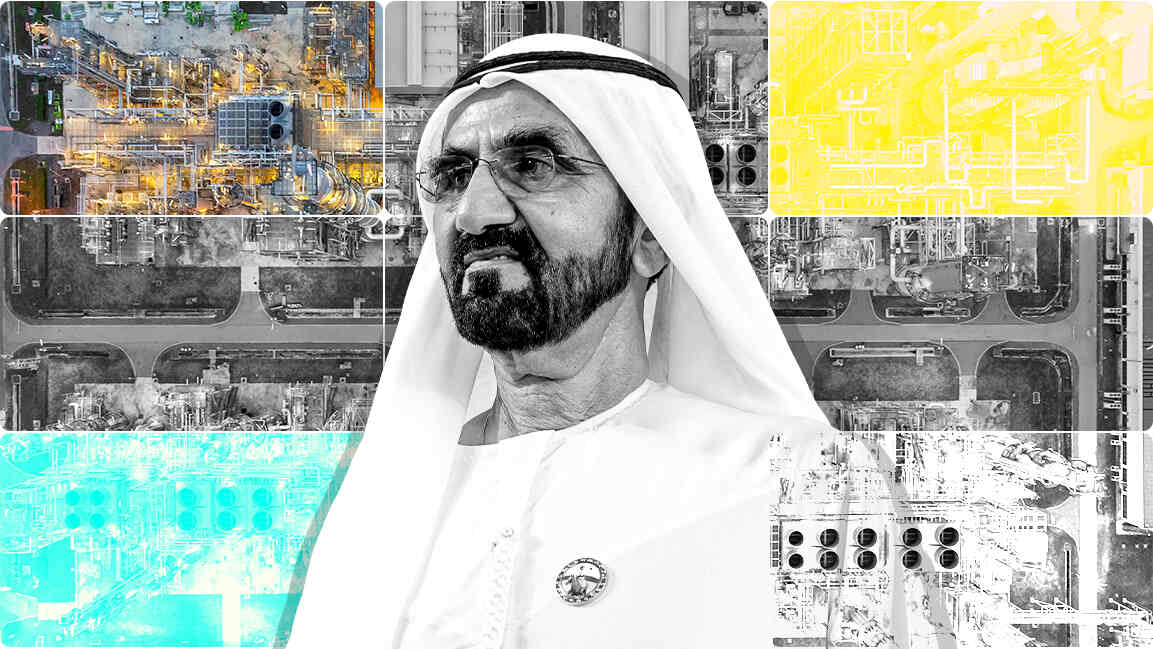


Dh1 billion industrial resilience fund
At the center of the response is Dubai’s AED1 billion ($272.26 million) economic support package, introduced to help businesses navigate current market conditions.
Rolled out from April 1 over a three to six-month period, the measures are designed to enhance economic flexibility, support business continuity, and strengthen preparedness amid ongoing uncertainty.
National In-Country Value Program
Alongside short-term support, the UAE is doubling down on localization. The UAE Cabinet has approved amendments to the National In-Country Value (ICV) Program, transitioning it from an incentive-based framework to a mandatory model across selected sectors, including federal entities and government-linked companies.
The move is intended to channel procurement spending toward priority national products, strengthen supply chain resilience, and enhance industrial self-sufficiency.
National Industrial Data Committee
The Cabinet has also approved the establishment of a National Industrial Data Committee, chaired by Hasan Jassim Al Nowais, Undersecretary of the Ministry of Industry and Advanced Technology.
The committee will focus on identifying priority industrial data, improving its availability, and integrating it across national systems to enable real-time access for decision-making. It will also address data-related challenges and recommend policy and legislative updates, as needed.
Commenting on the initiative, Dr. Sultan bin Ahmed Al Jaber, Minister of Industry and Advanced Technology, said the measures reflect a broader vision to build “a more resilient and sustainable national industrial model,” supported by stronger supply chains, localized industries, and the accelerated adoption of artificial intelligence.
90-Day Government Fee Deferment
In a move to support liquidity and ease operational pressures, Dubai’s Department of Economy and Tourism has introduced a 90-day deferment of government fees for mainland business licenses, effective from April 2026.
The policy applies to new licenses, renewals, and amendments, covering license fees, trade name registration, and associated administrative charges. It also extends to tourism-related fees, including hotel sales charges and the Tourism Dirham fee, providing targeted relief to the hospitality sector amid a slowdown linked to regional instability.
The deferment is part of a broader support package aimed at sustaining business activity, allowing companies to maintain compliance while easing immediate financial obligations. For businesses, the most immediate benefit is improved short-term cash flow, enabling them to proceed with licensing activities, allocate capital more efficiently, and manage operational costs during a period of heightened uncertainty.
Additional measures have also been introduced to support smaller enterprises. Dubai South has rolled out a separate package for SMEs within its Business Park, including rent-free incentives tied to contract renewals, flexible payment plans, and the waiver of certain administrative penalties, alongside maintaining existing rental rates for eligible tenants.
Make it in the Emirates 2026
The fifth edition of Make it in the Emirates, held from May 4 to 7 at Abu Dhabi National Exhibition Centre, is expected to attract more than 120,000 visitors and over 1,000 exhibitors across 12 industrial sectors.
The Khalifa Fund for Enterprise Development (KFED) is participating in the event, showcasing programs and partnerships that support startups and SMEs. The fund is also highlighting several Emirati ventures across sectors, including agri-tech, AI in healthcare, manufacturing, and supply chains, reflecting the diversification of the UAE’s industrial base.
Entrepreneurs Resilience Fund
In Sharjah, the Sharjah Entrepreneurship Center (Sheraa) launched the Entrepreneurs Resilience Fund on April 25th under the directives of Sheikha Bodour bint Sultan Al Qasimi.
The initiative provides fast-tracked financial, operational, and marketing support to startups and SMEs, particularly those operating in sectors such as manufacturing, food security, and healthcare.
The fund offers equity-free, non-repayable grants, alongside business support programs and market visibility opportunities, aiming to mobilize up to AED5 million through public and private sector partnerships.
Designed to support viable businesses facing current challenges, the initiative aims to ensure operational continuity and strengthen the emirate’s entrepreneurial ecosystem.
CBUAE Financial Institution Resilience Package
In April, the Central Bank of the UAE (CBUAE) also approved a Financial Institution Resilience Package to reinforce banking sector stability amid global and regional uncertainty.
The move builds on strong fundamentals, with the CBUAE overseeing more than AED1 trillion ($270 billion) in foreign reserves and a banking sector valued at AED5.4 trillion, alongside substantial system-wide liquidity.
The package is structured around five key pillars designed to maintain liquidity, support lending and provide operational flexibility.
Monetary policy measures will allow banks enhanced access to reserve balances and term liquidity facilities in both dirhams and US dollars. At the same time, temporary relief on liquidity and funding ratios will give financial institutions greater capacity to support economic activity.
The central bank has also introduced capital buffer relief, enabling banks to utilize excess capital to sustain lending, alongside more flexible credit risk management measures that allow loan classifications to be postponed for affected borrowers.
Additional guidance encourages banks to continue extending financing to businesses and individuals, reinforcing the sector’s role in supporting economic stability.
Tax Incentives for Innovation-Driven Businesses
On March 19th, the UAE also launched the first phase of its Research and Development (R&D) Tax Incentives Program, aimed at encouraging innovation and supporting the transition to a knowledge-based economy.
Under the program, businesses can receive a non-refundable tax credit of up to 50% of eligible R&D expenditure, capped at AED5 million.
The initiative is designed to incentivize investment in advanced technologies and innovation, while aligning with global tax developments, including the OECD’s Pillar Two framework.
By supporting innovation-driven sectors, the program reinforces the UAE’s ambition to position itself as a global hub for future industries.

Featured Videos
Today's Top Stories:
More Top Stories:



FROM OUR PARTNERS