- | 9:00 am
How the UAE is seizing the moment in the global art scene
The country invests in the conditions that allow artists and creatives to thrive.
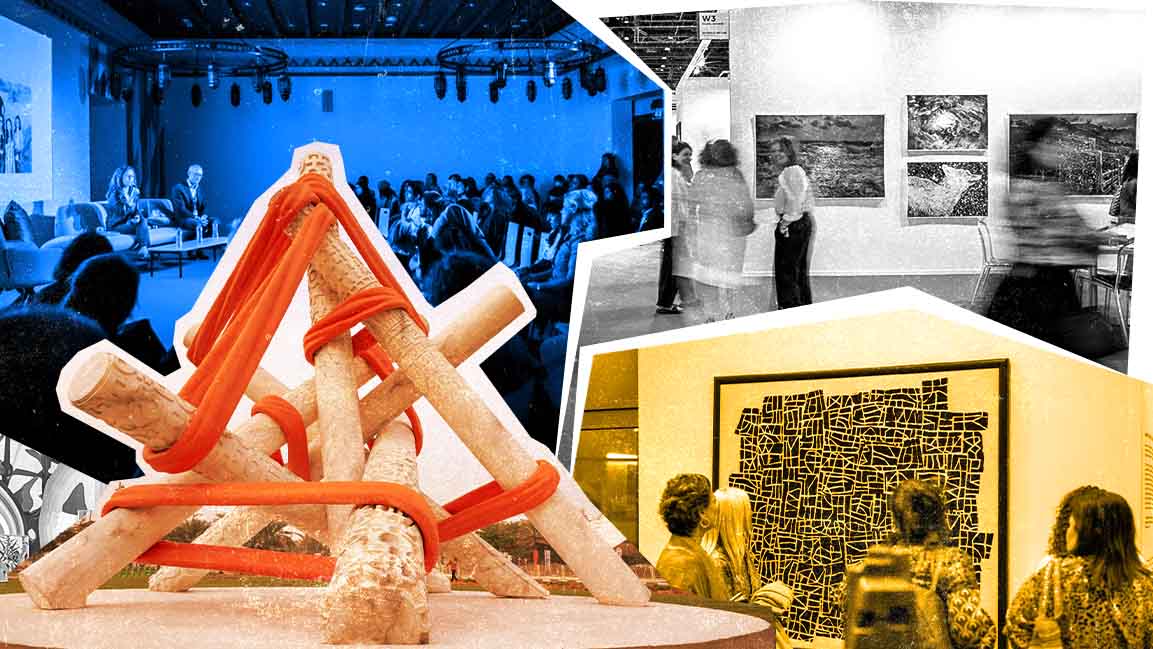


“The UAE emerged as a cultural destination just at the time that the Western narrative of an art world shaped by London–Paris–New York was starting to be questioned,” says Antonia Carver, Director of Art Jameel. “Over the past 20 years, it has become a major art world hub.”
This shift is mirrored in the UAE’s own rapid development as an art market. “When Art Dubai launched in 2007, around 10 commercial galleries were operating in Dubai,” says Dunja Gottweis, Director of Art Dubai, “Today there are more than 40, with the city now hosting around 90% of the UAE’s commercial galleries and functioning as the region’s primary art market center.”
This transformation, she adds, is the result of sustained investment in the conditions that allow artists and creatives to thrive.
What makes the UAE distinctive, Carver notes, is the independent initiatives, philanthropy, and strong government support, all complemented by a genuine public appetite for culture.
“Rather than emerging from a single inherited model, it has grown organically from this dynamic exchange,” she says.
BUILDING AN ECOSYSTEM, NOT JUST A MARKET
Education has played a key role in shaping this landscape. Gottweis highlights initiatives such as Campus Art Dubai and the A.R.M. Holding Children’s Program, which have reached more than 30,000 students across the UAE.
Institutional support has also been critical. The Dubai Collection, developed in partnership with Dubai Culture & Arts Authority, marks the city’s first institutional collection of modern and contemporary art, supporting practices rooted in the wider Gulf.
Meanwhile, long-term residency frameworks such as the Golden Visa signal that artists are considered contributors to the country’s future. “As a result, they are increasingly choosing to build their lives in Dubai,” says Gottweis, “investing in longer artistic horizons, deeper institutional relationships, and more ambitious work.”
What’s emerged is an ecosystem that’s gaining depth and momentum year by year. Carver points to a growing network of institutions, conferences, and educational programs that are deepening engagement between artists and audiences.
Art Jameel, for example, focuses on supporting creative communities while expanding access to contemporary culture.
“We have shaped strategies and programs rooted in an understanding that art can broker critical conversations, the kind that help us navigate the future, which of course is akin to the way the UAE thinks, too,” she says. “That kind of cultural infrastructure is essential for building a resilient environment where artists can develop ambitious practices and reach diverse audiences.”
FROM REGIONAL SCENE TO GLOBAL INFLUENCE
For galleries operating on the ground, this evolution has been equally significant. Kourosh Nouri, Founding Director of CARBON 12, notes that Alserkal houses outstanding regional galleries with solid programs and a strong presence on the international art scene. The gallery itself, still the only NADA member in the region, participates in major fairs, including Frieze London, ABMB, and Art Basel Qatar.
“What differentiates us is the organic growth of the art scene,” he says. “There is now a shift towards more legitimate focus on Middle Eastern artists of the diaspora, rather than short-lived market bubbles.”
That shift is reinforced by major cultural events, such as Art Dubai, now in its 20th year. Gottweis notes that the fair has long platformed artists working across geographies, including those in exile, contributing to a shared visual language that challenges dominant modernist narratives.
Its Global Art Forum has gathered over 650 voices from different fields, serving as a key driver for cross-cultural exchange.
“Over time, Art Dubai has built sustained relationships across these geographies,” says Gottweis, “contributing to a cultural infrastructure that extends far beyond the days of the fair.”
A CROSSROADS OF CULTURES AND COLLECTORS
One of the UAE’s defining advantages is its position at the intersection of multiple regions, creating a platform for these voices.
“Artists from South and Southeast Asia and the wider MENA region often find audiences here who share overlapping histories of migration, trade, language, and culture,” says Carver.
“That creates a particularly rich context for their work to be encountered and understood.
Analiz Cordero, Founder of CHAKA Gallery, echoes this sentiment. “The UAE has evolved into a remarkably open cultural environment,” she says, “where artists from different regions can share their work and engage in meaningful exchange.”
This geographic diversity is mirrored in the UAE’s collector base. “There is a growing audience,” says Nouri. “As Dubai shifts from transient consumption to more established patterns, art patronage is also evolving.”
Gottweis identifies three overlapping groups: long- term institutional and private collectors; younger collectors emerging through local initiatives; and international high-net-worth individuals based in the UAE. “Each engages with art differently,” she says, “collectively creating the conditions for a broader range of practices to gain visibility.”
Cultural districts such as Alserkal Avenue and Al Quoz Creative Zone embed artistic production into everyday urban life, reinforcing this ecosystem.
REDEFINING WHAT “GLOBAL ART” MEANS
The UAE’s influence extends beyond market growth; it is actively reshaping how “global art” is understood.
Rather than operating within fixed hierarchies, the region is fostering networks of exchange. “We are increasingly seeing a more distributed art world,” says Carver, “where recognition can emerge from multiple cultural centers rather than a single dominant axis.”
This shift is grounded in the UAE’s unique character as a place shaped by movement, migration, and exchange. “The art that emerges from or circulates through Dubai is often deeply engaged with questions of identity, belonging, and the in-between,” says Gottweis. “It reflects the lived realities of a place defined by intersection.”
For Carver, this represents a fundamental shift. “We’re projecting an understanding of an art world that is truly global,” she says, “one that connects the UAE not only to the Arab world, but also to South and Central Asia, Iran, and East Africa.”
One example is Anhar: Culture and Climate Platform, developed with the British Council, which brings together artists and organizations across the MENA region to address shared environmental challenges through creative approaches to cultural production.
Major Western institutions, she adds, increasingly recognize that engaging with these regions is no longer optional, and that the UAE serves as a key gateway.
THE NEXT CHAPTER
Looking ahead, one of the most significant shifts is the move from an event-driven model to a continuously active ecosystem. “We are seeing the emergence of a year-round cultural environment,” says Gottweis, “in which galleries, institutions, collectors, and artists are in sustained dialogue.” Art Dubai Projects reflects this evolution, combining the fair with ongoing initiatives that reinforce continuity.
This growth is supported by long-term policy frameworks, including Dubai’s Creative Economy Strategy, Abu Dhabi’s cultural programs, and Sharjah’s institutional commitments, which together contribute to a stable, future-oriented landscape.
For galleries like CHAKA, this environment offers both opportunity and responsibility.
“Being part of the UAE means participating in a cultural landscape that values curiosity, dialogue, and new perspectives,” says Cordero.
As the ecosystem continues to evolve, the UAE is redefining what it means to be a global art hub in the 21st century, creating space for voices that may not have had access to it elsewhere.