
- | 12:00 pm
Why the best travel experiences are the ones you can’t curate
Why slowing down might be the most powerful way to travel
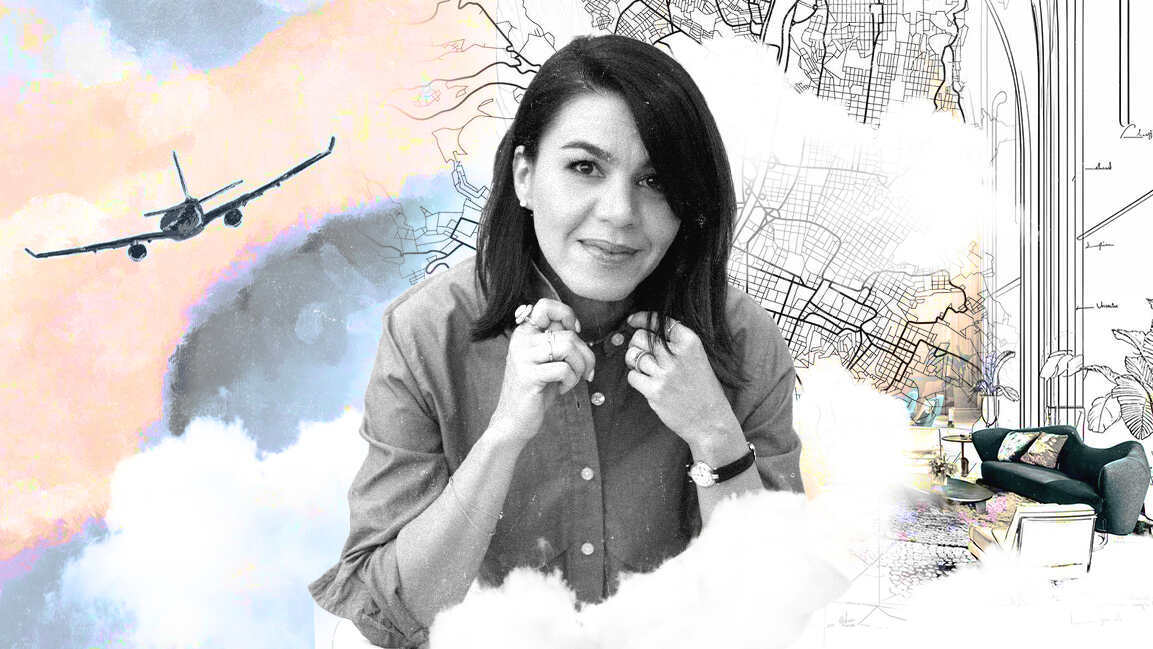


For some, travel is an escape. For others, it serves as a lens through which the world, and one’s place within it, comes into sharper focus. For Rasha Lababidi, Chief Product and Experience Officer at Kempinski Group, it is an ongoing exercise in discovery.
“Traveling leaves you speechless, then turns you into a storyteller.”
Lababidi recalls this quote by Ibn Battuta as she reflects on her enduring affinity for travel. At its core, she explains, travel fuels her curiosity by drawing her beyond familiar comfort zones and immersing her in environments that demand attentiveness and considered observation.
“It’s one of the few things that consistently disrupts routine in a meaningful way,” she says. She adds that travel offers perspective not only on the world, but also on her place within it.
“When you’re in a new environment, stripped of predictability, you become more aware of how you think and react, what you value, sharpening your appreciation of the differences and common threads that connect people across cultures.”
PERSPECTIVE IN MOTION
Lababidi finds it difficult to identify a single experience that reshaped her worldview. Travel, she says, has always been an intrinsic part of her life, shaped early on by parents who were avid travelers.
“Being in motion, whether on a plane or in a new place, was central to how I understood the world from a very early age. In many ways, it was not one defining trip, but a series of experiences that gradually shaped my perspective,” she explains.
That sense of continuity makes it difficult to isolate a singular turning point. Still, she points to her first trip to India as especially formative, describing it as a profound immersion into one of the richest and most complex cultures she had encountered.
Arriving in Mumbai, she recalls being struck by an intensity almost impossible to absorb at once. The color, sound, movement, rituals, and sheer density of life converged into an experience that was both overwhelming and deeply compelling.
“What stayed with me wasn’t just the sensory experience, but the people whose generosity, resilience, and perspective fundamentally shifted how I think about connection and humanity, even today.”
In retrospect, the experience clarified something she had long intuited. Travel, at its most meaningful, is not merely about observing differences, but about expanding one’s capacity to understand them.
PROFOUND IMPACT
Lababidi points to Italy as a place that has left a lasting imprint on her, both professionally and personally. Beyond its landscapes, layered history, and cultural depth, she says the country fundamentally shaped her understanding of luxury.
“There’s a distinct Italian philosophy around luxury that goes beyond aesthetics. It is about intention, craftsmanship, and an uncompromising attention to detail. In many ways, it is not what is created, but how it is considered.”
That perspective became clearer during her time at Emaar, where she worked closely with the late Giorgio Armani, Anthony Saccone, and their teams to develop Armani Hotels & Residences.
“It exposed me to a level of precision where every element, no matter how small, carries meaning,” she says. From architectural design to scent, and even the texture of something as seemingly simple as tissue paper, every touchpoint is deliberate.
“That mindset has stayed with me. It continues to shape how I think about experience today and how I approach my role at Kempinski.”
Beyond its professional influence, Italy continues to inspire her on a more personal level. She is drawn to what she describes as a rare balance between beauty and simplicity, tradition and modernity, discipline and joy.
“There’s an innate understanding of how to live well, not in excess, but in appreciation. It’s that version of the good life that resonates with me.”
In the process, her definition of luxury has evolved. It is no longer about adding more, but about caring more. It is about generosity in the smallest details and the ability to bring joy to every moment.
PRACTICED RITUALS
Lababidi reflects on the small rituals she has carried with her through years of travel, noting that her first stop in any new city is often a supermarket or a pharmacy.
“They may seem like ordinary places, but to me they are incredibly revealing, almost like microcosms of a culture. You see what people buy, how they move, how they interact, and what is considered essential versus aspirational,” she says.
What draws her to these spaces is their unfiltered nature. In observing everyday life at its most candid, she finds both clarity and connection.
“It strips away the curated version of a destination and gives you a more honest view of how people actually live.”
For Lababidi, these quiet rituals serve as a counterpoint to the more performative aspects of travel. They reinforce the idea that travel is not defined by landmarks or fleeting moments, but by a deeper understanding of hyperlocal context and the rhythms of everyday life.
In that sense, it becomes less about where you go and more about how closely you choose to observe.