
- | 9:00 am
Lego’s largest, most complex set ever is a must-have for architecture lovers
Lego’s Sagrada Família captures the complex aesthetic and essence of Gaudí’s massive cathedral in Barcelona.
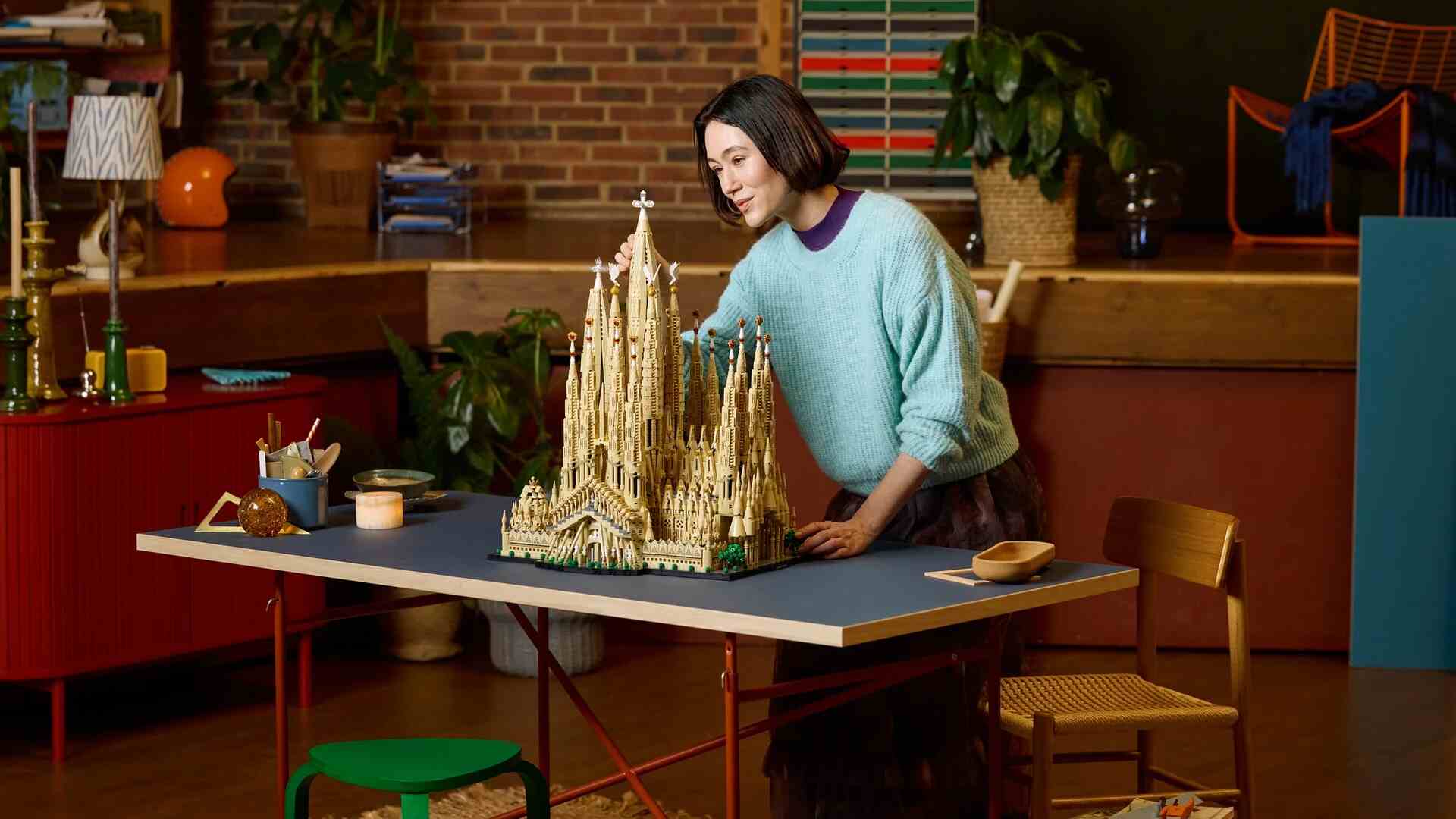


There are 12,060 reasons to clear your weekend calendar. That is the piece count of the new Lego Sagrada Família. It’s the largest, most complex Lego set ever made by piece count, designed around one of the most visually audacious buildings in history. Priced at $800, it is not for everyone, but it sure beats paying for a flight to Barcelona to fight the swarms of tourists buzzing around this iconic landmark.
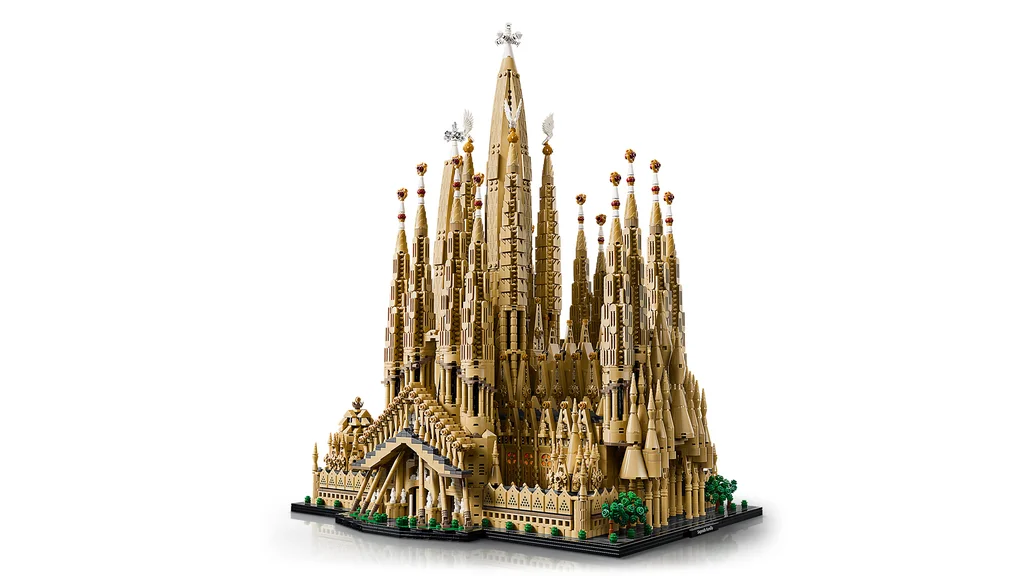
Lego has produced oversized sets before, many of them bloated monuments to their ambitions, but this one earns every single brick. Translating Antoni Gaudí’s century-spanning, organically erupting, mathematically impossible basilica into a display object you can fit on a bookshelf is not a flex. It is a massive design problem that Lego designers have solved masterfully.
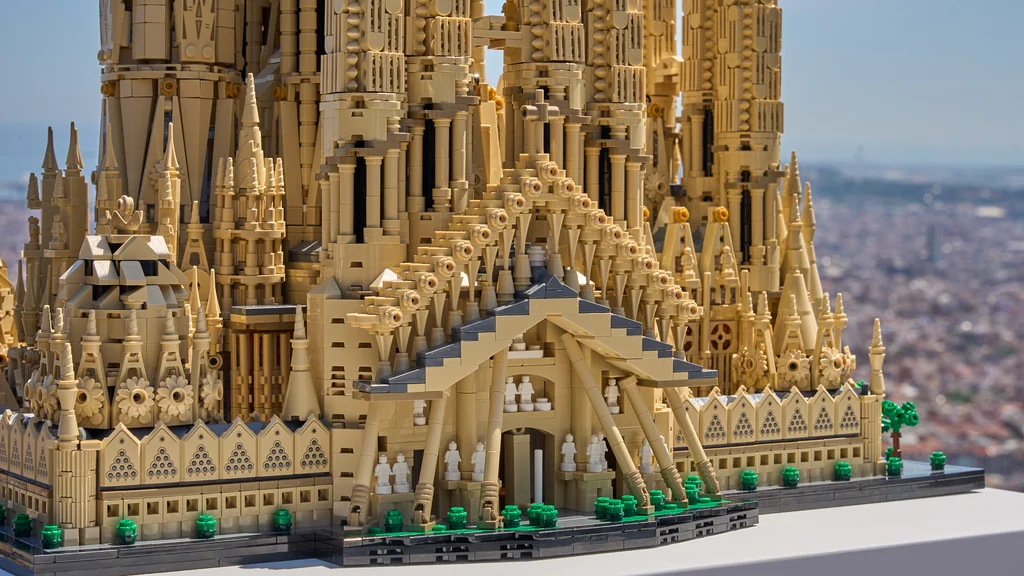
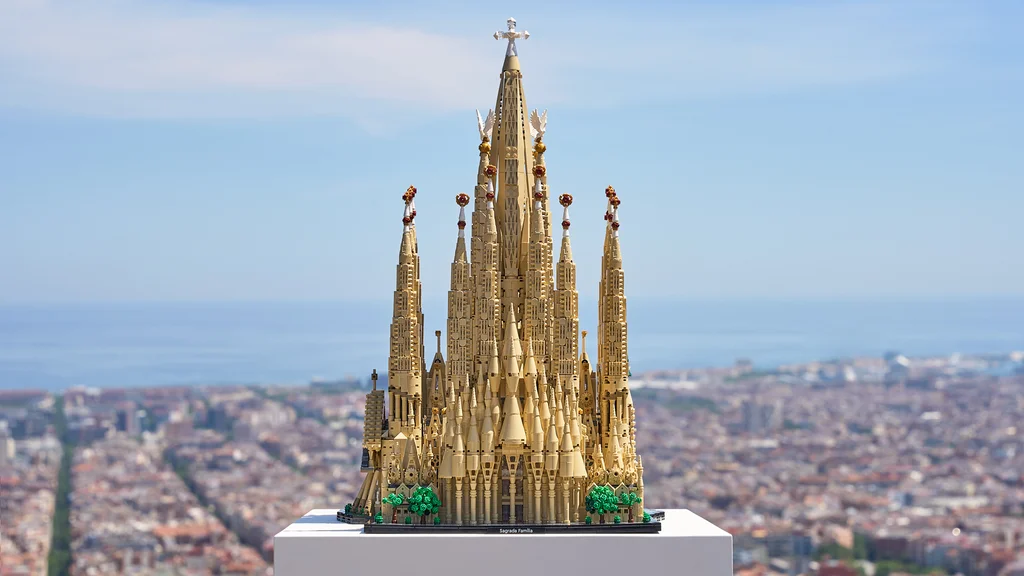
The set, measuring 24 by 18.5 by 15 inches, is truly the ultimate Lego Architecture masterpiece, a product line that translates most famous architectural marvels into bricks. It is a genuine attempt to bring one of the most visually complex buildings ever conceived—a cathedral that has been under continuous construction since 1882 and still isn’t finished—into a display object that captures its essence in an impressionistic way, but with apparent perfect precision.
The mission, as Lego designer Rok Žgalin Kobe frames it, was not to simplify Gaudí’s vision but to honor it. “We felt an immense responsibility to do justice to the Sagrada Família through this design,” Žgalin Kobe says. “Our goal was to honor Gaudí’s vision with the utmost respect, capturing the rhythm of the basilica’s construction, its extraordinary complexity and ambition, and translating that into an immersive building experience.”
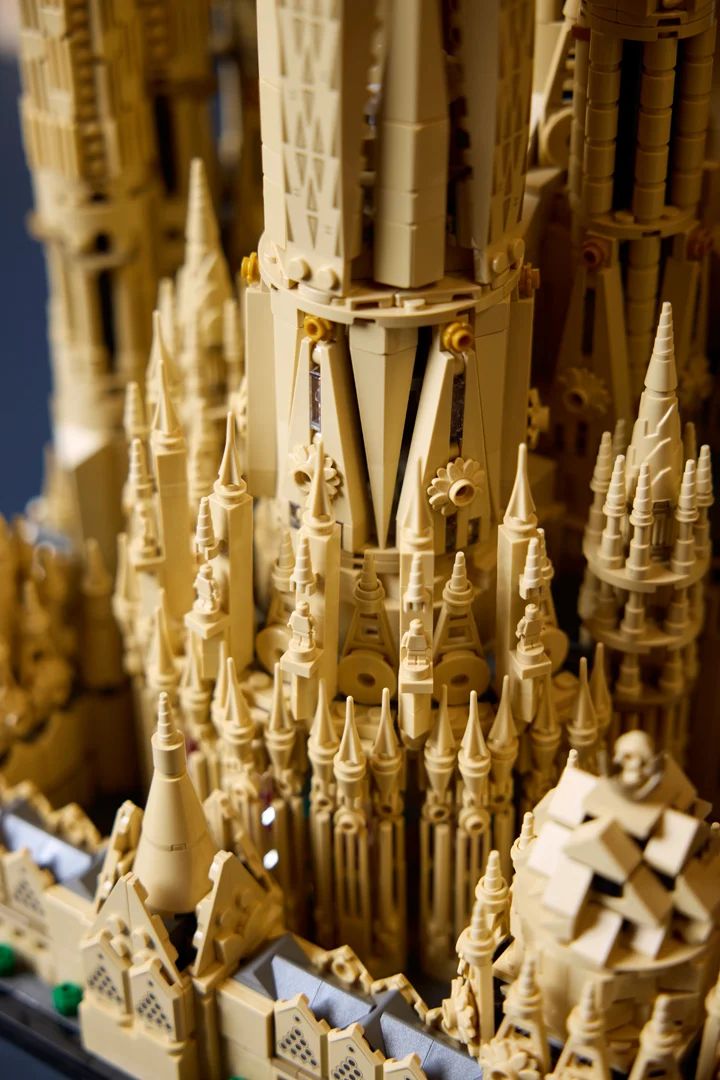
The key for Žgalin Kobe’s translation is not replication but psychological suggestion. The cluster of bricks that he uses to build the towers, for example, does not recreate the soaring stone nave brick by brick; it gives your brain just enough geometric information to recreate one in your mind. Lego works because the brain fills the blanks, and the better the designer, the less the brain has to work to complete the illusion. With the Sagrada Família, Gaudí’s towers are encrusted with organic, nature-inspired ornamentation—stone that looks like it grew rather than was carved.
Surreal masterpiece
The Sagrada Familia is one of the great unfinished stories of modern civilization. Construction began on March 19, 1882, commissioned by the devout Catalan bookseller and philanthropist Josep Maria Bocabella. The first architect, Francisco de Paula del Villar, abandoned the project in 1883 after disagreements with Bocabella’s architectural advisor, Joan Martorell, leaving little more than the crypt complete.
Antoni Gaudí, then 31 years old and already radically unconventional, took over that same year and threw out everything, reimagining the structure as a vertical forest of organic towers, parabolic arches, and stained glass designed to flood the interior with colored light. He knew he would never see it finished.
“My client is not in a hurry,” he reportedly said. On June 7, 1926, at age 73, he was struck by a tram on the Gran Via de les Corts Catalanes. He died three days later in a hospital, on June 10—this year marks the centennial of that death—with about 15% of the building complete.
The Spanish Civil War dealt a further blow in 1936, when anarchists broke into the site, destroyed Gaudí’s original plans and plaster models, and burned his studio, requiring 16 years of painstaking reconstruction from photographs and surviving fragments before building could properly resume.
On February 20, 2026, workers finally installed the upper arm of the cross atop the Tower of Jesus Christ, the central spire Gaudí always intended as the tallest, reaching 566 feet. The Sagrada Família is now officially the world’s tallest church, surpassing the Ulm Minster in Germany. Pope Leo XIV will bless it on June 10—144 years of construction and counting.
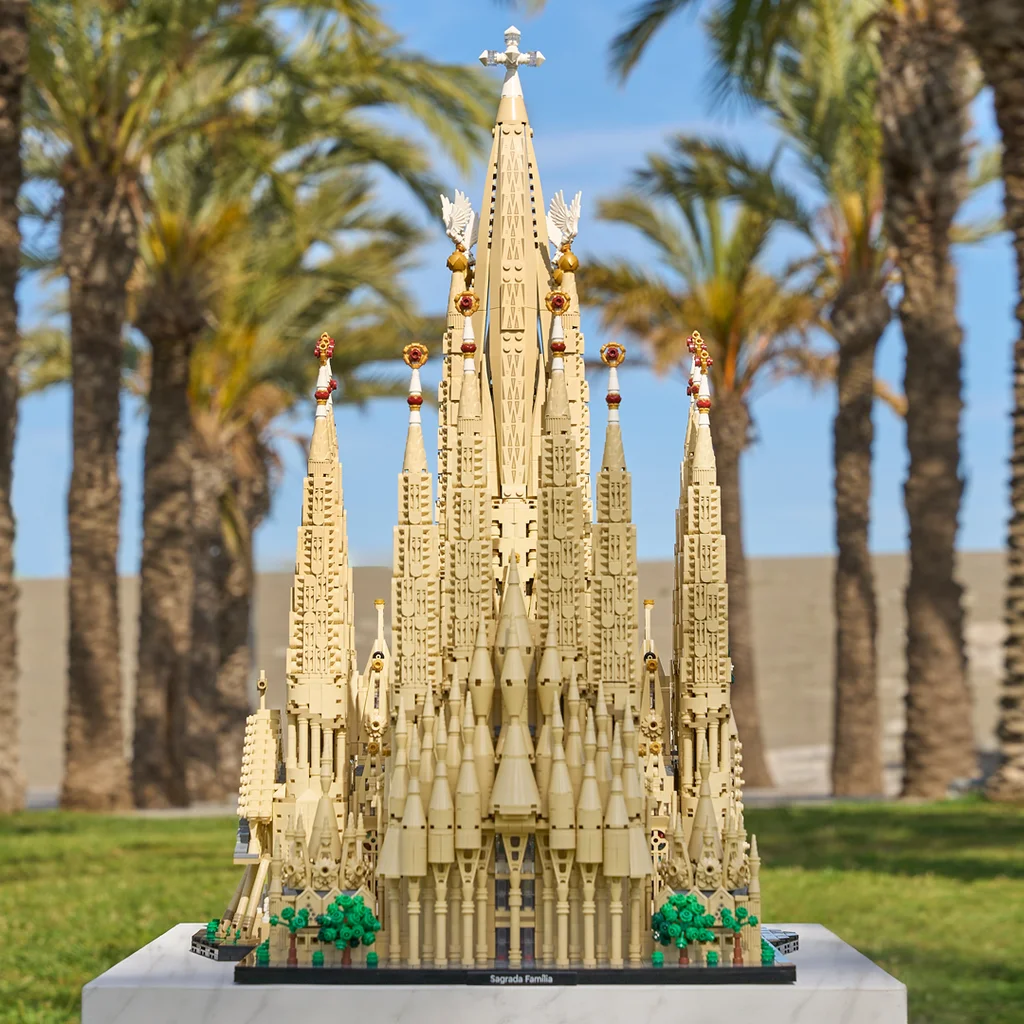
The Lego set mirrors this layered history in the most literal way possible. The build sequence follows the basilica’s actual historical construction order. You begin with the foundational apse and crypt—the oldest surviving section of the real building—move through the Nativity Façade and the dramatic Passion Façade, rise through the grand naves and the Western Sacristy, complete the six iconic towers, and finish with the Eastern Sacristy and the Glory Façade.
Building this set is, in a precise and intentional sense, a reenactment of 144 years of architectural history, compressed into the course of a weekend. As Žgalin Kobe puts it: “Balancing scale and precision, while remaining faithful to a living monument that has been evolving for more than a century, was a unique design challenge, and one we’re incredibly proud of.”
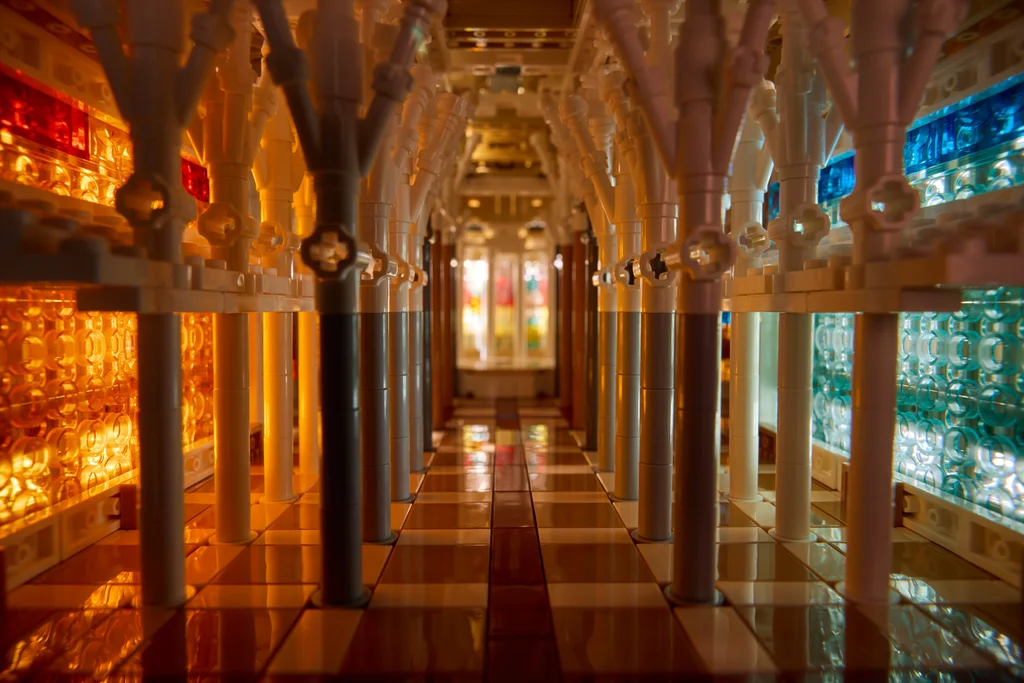
One detail captures Lego’s fidelity to the source material better than anything else: the stained-glass window effect, engineered to echo the way colored light moves through the real basilica’s interior. Gaudí designed the Sagrada Família’s windows with deliberate orientational logic, with warm ambers and reds on the west to capture the setting sun, cool blues and greens on the east for morning light, creating an atmosphere inside the building that shifts hour by hour.
The Lego version cannot move with the sun, obviously, but the designers have built the chromatic suggestion directly into the model’s structure, so that the completed set reads as luminous rather than merely decorative, engineered to be admired from every angle and its inside.

Featured Videos
Today's Top Stories:
More Top Stories:


FROM OUR PARTNERS