

- | 12:00 pm
HMD Watch X1 and DUB X50 Pro Review: Why reliability still matters in wearables
Neither tries to change your routine. Both earn their place in it.
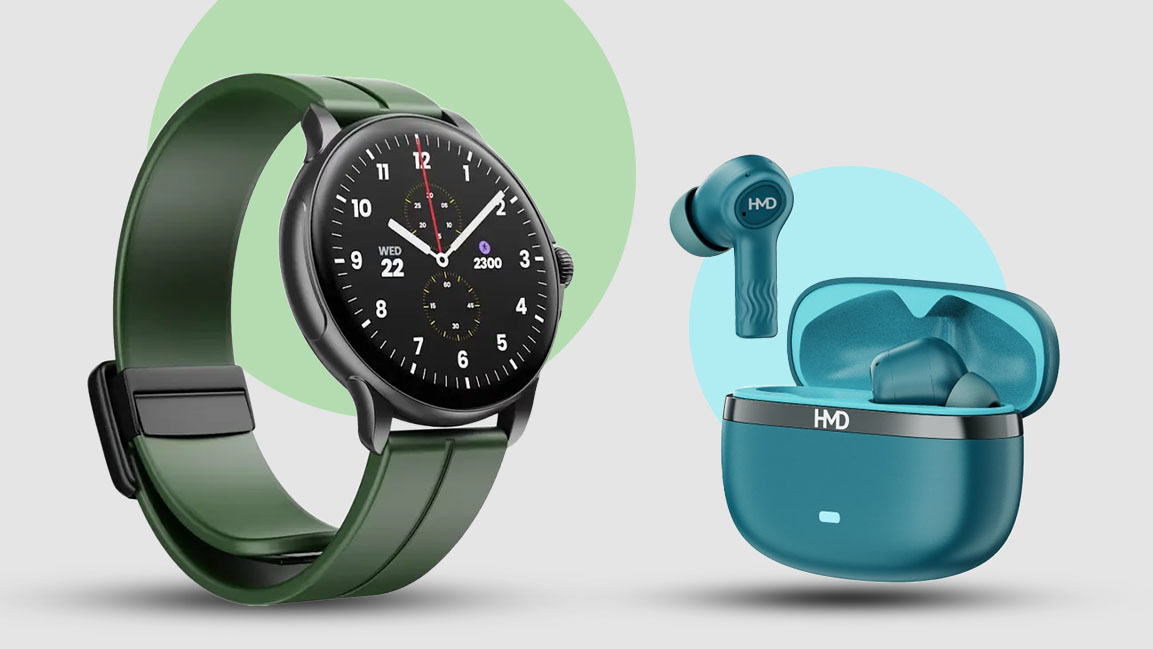


HMD Global has spent years making phones for people who do not need the most powerful device on the market. They need one that works, holds up, and does not get in the way. The Watch X1, the company’s first smartwatch, and the DUB X50 Pro true wireless earbuds follow the same logic. Tested together across a standard working week, gym sessions, daily commutes, and the kind of inconsistency that defines real life rather than a controlled review environment, both devices rest on a premise that is less common than it should be: that a product does not need to be exceptional to be worth using every day.
FIRST IMPRESSIONS
The Watch X1 stands out the moment it goes on the wrist. The large AMOLED display has presence without feeling oversized, which is important because many smartwatches today cross that line into something that feels bulky in everyday use. This one doesn’t. It just sits comfortably and looks like it belongs.
The finish options actually change how you perceive it. The green silicone with the gunmetal dial feels more practical, more gym-focused, but not in a way that locks it into only that space. The leather and metallic versions shift it in the other direction completely. That version could easily stay on through work, meetings, or dinner without feeling out of place.
The DUB X50 Pro feels even more straightforward. The blue finish adds a bit of personality, but nothing that stands out too much. Once they’re in, they just sit comfortably and don’t really demand attention again. They’re light enough that you stop noticing them after a while, which is usually a good sign for earbuds meant for long use.
Used together, the impression is pretty consistent. Neither device feels like it is trying to impress you every time you look at it or use it. They just fit into daily use in a way that feels normal, which is really the point here.
BUILT FOR MOVEMENT
Twice a week, across strength sessions and kickboxing, both devices were tested in their most active setting. The Watch X1 tracked heart rate throughout workouts without any noticeable hit to battery life, and the range of activity modes meant there was no need to overthink how to log different types of training. Strength work, general workouts, and everyday movement all sit comfortably within its scope. It doesn’t try to interpret the session or turn it into coaching feedback, it just records what’s happening and leaves it there for later.
The DUB X50 Pro went through the same sessions without attracting attention. The fit stayed stable through movement, sweat wasn’t an issue thanks to IPX4 resistance, and the sound held up well enough to keep energy up without becoming overwhelming over longer sets. Neither device required any adjustment mid-workout. They just kept going in the background, which is really all you want from gym gear.
STEP TRACKING AND DAILY MOVEMENT
At 7,000 to 9,000 steps a day, the Watch X1 isn’t really being tested for precision so much as for consistency. During strength training, a bit of movement between sets is occasionally counted as steps, which is fairly normal for wrist-worn trackers and not unique to this device. It doesn’t feel overdone, though, and it doesn’t skew the numbers enough to make you question what you’re seeing at the end of the day.
Where it feels most dependable is in the parts of the day that are less structured, like walking between meetings or commuting. That’s where the data starts to feel grounded in reality. By evening, the step count is the kind of number you don’t feel the need to double-check, which is really the point.
The DUB X50 Pro was present for most of that movement, and its ANC proved well-suited to it. The noise cancellation is calibrated for working life rather than total sensory isolation. Engine rumble fades, office chatter becomes muffled, but a colleague approaching or a train announcement still registers. For anyone navigating both open offices and public transport in a single day, that balance is a practical advantage rather than a shortcoming.
ON CALLS AND AT THE DESK
For most people, the day isn’t spent at the gym. It’s spent at a desk, on calls, in meetings, and in all the small gaps in between that make up a work routine. This is where the DUB X50 Pro starts to feel most useful. The four microphones with AI-based noise reduction maintain voice clarity in a range of situations, from a windy walk outside to a long indoor meeting. There’s no need to adjust them constantly or repeat yourself, and no second-guessing whether the other person can hear you properly. Over time, that kind of reliability matters more than any spec on paper.
Through all of this, the Watch X1 stays in the background on the wrist. It handles notifications without taking attention away from what you’re doing and without interrupting the flow of the day. It’s not trying to change the routine. It just fits into it and stays out of the way.
SLEEP AND RECOVERY
Worn overnight across several consecutive nights, the Watch X1 makes its approach to sleep tracking fairly clear. It doesn’t try to turn sleep into a detailed physiological breakdown or overload the user with layers of scoring. Instead, it stays focused on patterns.
After late gym sessions or longer shoot days, the changes are easy enough to spot: shorter sleep, lighter rest, or disrupted recovery. That’s usually enough to connect what the day looked like with how the night played out, without turning it into something that needs constant interpretation.
It also avoids the kind of prescriptive feedback that can make sleep tracking feel like another task to manage. There are no over-explained recovery scores or rigid recommendations sitting atop the data. For most people, that restraint doesn’t feel like a missing feature. It feels like a deliberate choice to keep things simple and usable.
BATTERY LIFE
The Watch X1 lasts just under 4 days per charge in a routine that includes twice-weekly strength sessions, continuous step tracking, notifications, and overnight sleep monitoring. That number matters more than any headline claim because it reflects how the watch actually fits into daily life. Charging stops being something you think about every day and becomes something you deal with when it fits into your week.
The DUB X50 Pro stretches that even further. With a routine of around two hours of calls a day, music during commutes, and podcasts at a desk, it comfortably lasts close to a week before the case needs attention. Fast charging fills in the gaps without any real interruption. A short charge during a coffee break is usually enough to get through the rest of the day.
Together, both devices remove the constant mental check on battery life. And in categories where daily charging has become normal, that kind of predictability ends up being more valuable than it first sounds.
THE BIGGER PICTURE?
What stands out about both devices over time is not any single feature, but the steady lack of friction. The Watch X1 tracks enough to be useful, lasts long enough that it doesn’t need daily attention, and stays simple enough that it doesn’t become something you have to think about. The DUB X50 Pro follows the same pattern in a different form, handling calls, commutes, and long listening sessions without requiring constant adjustment or intervention.
Neither device feels like it is trying to set benchmarks or define a category. They are not built around standout moments. They are built around staying out of the way and continuing to work in the background of a normal day.
Seen that way, the appeal is less about features and more about consistency. This is not about positioning or ambition on paper, it is about whether the devices hold up in day-to-day use without becoming a point of attention. Across both, that is what they manage to do.