- | 9:00 am
MENA’s circular revolution: These startups are turning waste into wealth
From Cairo to Jeddah to Dubai, homegrown innovators are turning some of the most stubborn waste streams into valuable, scalable products
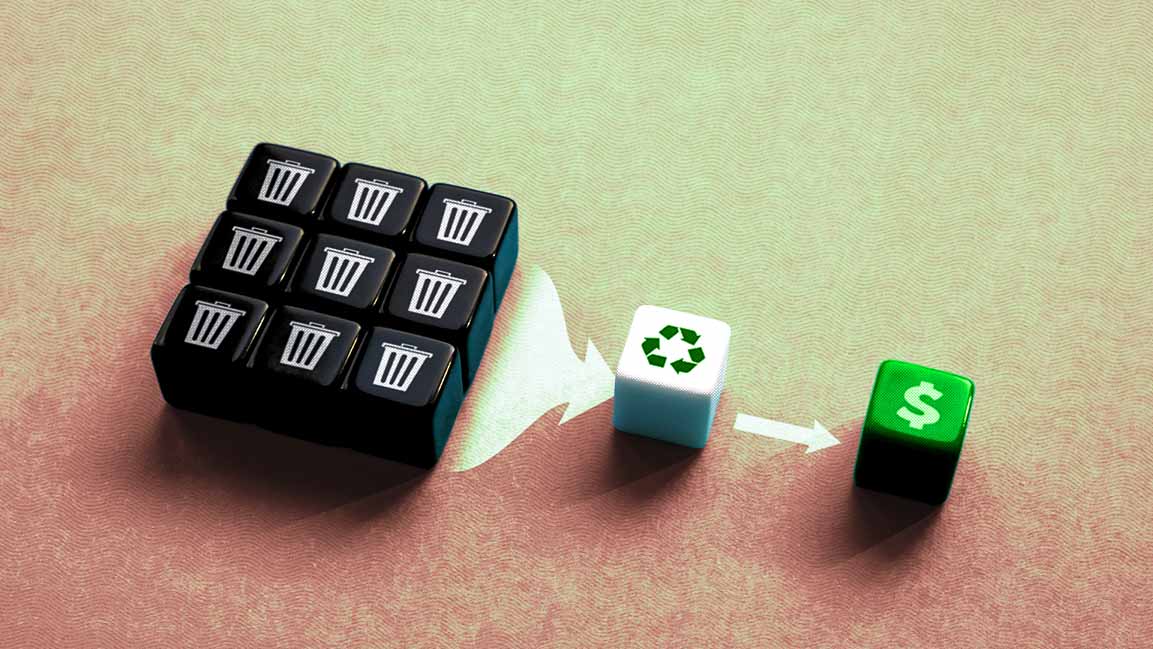


Across the Middle East and North Africa, waste is finding a second life in the hands of bold entrepreneurs. These pioneering startups are proving that sustainability and profitability can coexist, transforming discarded plastics, packaging, and agricultural byproducts into clean fuels, bioplastics, and green construction materials.
In the UAE, Styrex has developed breakthrough technology to recycle and repurpose polystyrene — one of the world’s most persistent forms of plastic waste, mainly due to its widespread use in packaging and food containers.
Recycling polystyrene has long been a losing battle. Existing technologies typically yield low-value items, such as hangers or picture frames, and the material’s lightweight, bulky, and porous nature makes it difficult to collect and clean. As a result, most of it ends up in landfills.
Styrex is changing that equation. The company collects Expanded Polystyrene (EPS) waste from businesses, schools, and community drives, then applies a proprietary 100% natural treatment that uses vegetable esters to trigger molecular breakdown.
“Styrex uses a natural solvent-based process rather than high-heat, high-cost industrial recycling,” explains Rob Mortimer, CEO and founder of Fuelre4m, which developed Styrex. “Unlike conventional systems that simply compact or melt EPS, Styrex breaks it down completely at the molecular level. The result: zero waste, no microplastics, and a clean, usable fuel.”
Every tonne processed generates enough renewable fuel to support 9,000 clean cooking sessions.
Mortimer sees the Middle East as a key player in this new waste-to-energy model. “With high volumes of foam waste from construction, logistics, and hospitality, there is strong potential to close the gap between EPS use and recovery.”
Still, collection and awareness remain obstacles.
“Many businesses are unaware that EPS is recyclable or that it can be turned into fuel,” says Mortimer. “Scaling infrastructure also means building decentralized collection and conversion points in a market where foam is treated as low-value waste. That mindset is starting to shift, but education and strategic partnerships remain key.”
Styrex now plans to expand across and beyond the MENA region, with partnerships in Saudi Arabia and Egypt under discussion. “The priority is replicating the UAE model, adapting it for local conditions, and extending our fuel distribution network to maximize community benefit,” Mortimer adds.
BIOPLASTICS AT SCALE
Meanwhile, in Abu Dhabi, Emirates Biotech is building what it calls the world’s largest Polylactic Acid (PLA) facility, expected to replace 3.2 billion plastic bottles a year and cut 300,000 tonnes of CO₂ emissions.
PLA is a biodegradable polymer derived from renewable plant-based resources. Its cradle-to-gate carbon emissions are at least 75% lower than those of traditional plastics, and it biodegrades through industrial composting rather than lingering as microplastics in the ocean.
“PLA is often used in reusable applications, including dishwasher- and microwave-safe cups and plates. It can be mechanically recycled without losing its key properties,” says François de Bie, chief commercial officer at Emirates Biotech.
Positioned in the renewable materials segment, Emirates Biotech supplies converters that transform PLA into packaging, 3D printing materials, and products for food and beverage producers.
“Beyond production, we also collaborate with waste management companies and other stakeholders to ensure proper end-of-life solutions for PLA, reinforcing our commitment to circularity,” de Bie says. “Food packaging represents the largest demand, accounting for over 60% of global PLA sales.”
As production scales, Emirates Biotech expects PLA to become increasingly competitive with conventional plastics.
“Traditional plastics were once very costly too, but as the market expanded, production scaled up and costs dropped significantly. We anticipate a similar trajectory for PLA as adoption increases and the value chain strengthens through collaboration among producers, converters, governments, and consumers,” says de Bie.
BUILDING WITH PLASTIC WASTE
In Egypt, TileGreen is tackling the region’s plastic crisis by transforming plastic waste into durable construction materials and outdoor furniture.
Using a patented thermo-mechanical process, TileGreen upcycles all types of plastic into over 40 sustainable building products, offering a lower-carbon alternative to cement while diverting waste from landfills.
With the construction sector responsible for 37% of global emissions, demand for TileGreen’s solutions is soaring. As of mid-2025, the company has secured over $3 million in contracts, including a collaboration with Egyptian real estate developer Sodic.
TURNING FARM WASTE INTO BIOPLASTICS
In Saudi Arabia, Polymeron is finding value in agricultural byproducts — converting date palm residues and poultry bedding into biodegradable plastic pellets. These pellets can be used to make cutlery, tiles, and plant pots, offering a cost-effective alternative to petroleum-based plastics.
Born out of King Abdullah University of Science and Technology (KAUST), Polymeron recently developed a custom-built machine to produce its biodegradable plastic pellets, marking a major step toward commercial scale.
The system, assembled at KAUST, was made possible through the university’s bootcamp in Shenzhen, China, which connected the startup to global hardware designers and supply chain partners.
THE CIRCULAR FUTURE
Together, these breakthroughs are transforming how the region addresses agricultural and plastic waste — and putting it on the map for global sustainability.
According to World Bank estimates, the MENA region has the highest per capita plastic footprint globally, with the average resident generating more than six kilograms of plastic waste that enters the oceans annually.
“The MENA region generates massive amounts of plastic waste annually, with foam products representing a disproportionate volume problem. A single foam food container takes up significantly more landfill space than the meal it contains, and the region’s landfills are reaching capacity at alarming rates,” says Nirmal Chhabria, professor of practice at Georgetown University’s McDonough School of Business in Dubai.
He adds that MENA’s arid climate makes plastic degradation especially problematic. “Unlike regions with abundant rainfall that dilutes pollution, MENA’s arid climate means plastic waste doesn’t biodegrade — it photodegrades into microplastics that contaminate our already scarce groundwater.”
The shift to circular and biodegradable materials represents both a strategic opportunity and an environmental imperative.
“The region imports most of its plastic products. Developing local biodegradable alternatives creates significant import substitution opportunities,” Chhabria says.