
- | 12:00 pm
NYU Abu Dhabi develops algorithm to predict Arctic sea ice changes linked to global warming
By analyzing historical sea ice data, researchers at NYU Abu Dhabi have been able to identify patterns and predict how they might evolve
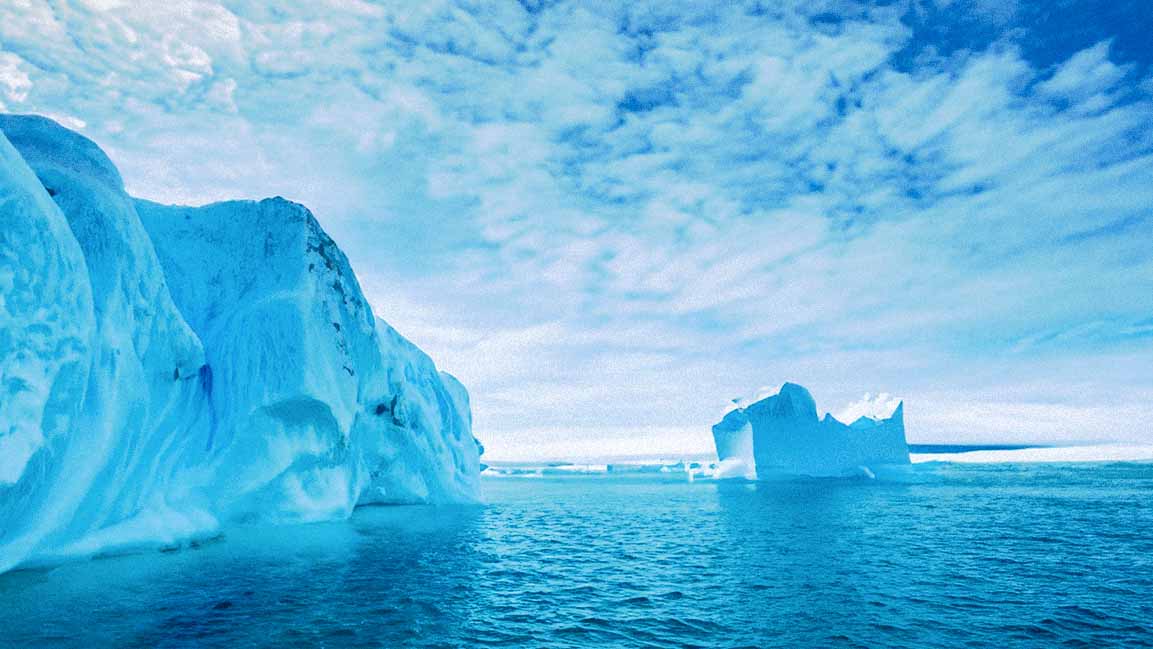


Researchers at NYU Abu Dhabi have developed a new algorithm that can predict Arctic sea ice levels up to nine months in advance, offering a less complex way to forecast changes that could have wider implications for the global climate.
Developed by the university’s Mubadala Arabian Centre for Climate and Environmental Sciences (ACCESS), the algorithm, known as the Random Analogue Predictor (RAP), analyzes historical sea ice data to identify patterns similar to current conditions and predict how they might evolve.
The ability to forecast these changes is becoming increasingly important as the Arctic continues to warm and sea ice declines. Arctic sea ice helps regulate global temperatures by reflecting sunlight back into space. As the ice melts, the darker ocean absorbs more heat, accelerating warming and potentially affecting weather and ocean patterns far beyond the region.
“Forecasting Arctic sea ice several months ahead is a difficult problem, and an increasingly important one as the Arctic continues to change,” said Francesco Paparella, inaugural director of Mubadala ACCESS at NYU Abu Dhabi and senior author of the study.
“Our approach is deliberately simple, but it performs competitively with much more complex forecasting models. Importantly, it also provides an estimate of its own uncertainty, making it a useful and transparent benchmark for evaluating future forecasting methods.”
Unlike conventional climate models, which rely on complex simulations of the atmosphere, oceans, and sea ice, RAP uses past observations to generate a range of possible forecasts. It also estimates the uncertainty surrounding each prediction, helping scientists assess the reliability of the results.
The researchers found that RAP performed comparably to 34 seasonal forecasting models evaluated through the Sea Ice Prediction Network (SIPN), an international research initiative that brings together scientists to improve Arctic sea ice predictions. The comparison focused on September, when Arctic sea ice typically reaches its lowest level of the year.
The researchers believe RAP could serve as a benchmark for evaluating more advanced forecasting systems, including those powered by artificial intelligence, helping scientists determine whether more complex approaches deliver more accurate predictions.