
- | 3:00 pm
Web Summit set to host its largest Chinese tech delegation in Lisbon
Leaders from Tencent, Xiaomi, XPENG, and other Chinese tech companies will join 70,000 attendees to explore advances in AI and robotics.
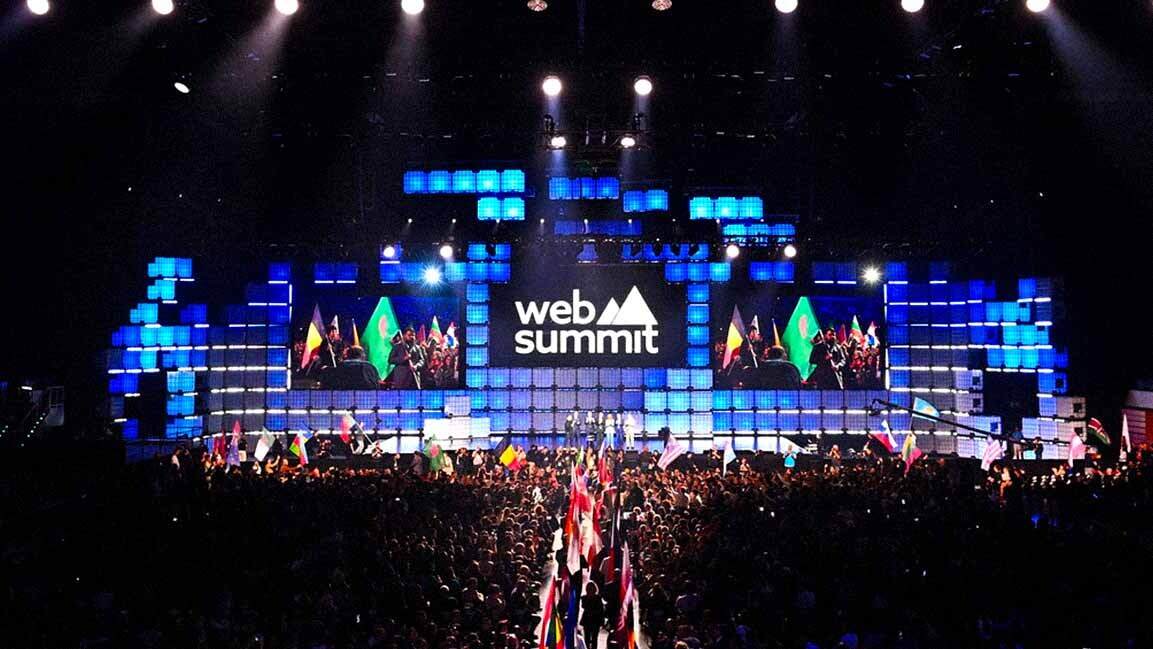


Web Summit will host its largest delegation of Chinese technology leaders in Lisbon this November, bringing together executives and founders from major companies, including Tencent, Xiaomi, XPENG, and Pony.ai, as China’s influence across artificial intelligence, robotics, and other advanced technologies continues to expand.
The gathering will feature representatives from leading AI, robotics, quantum computing, and automotive companies, including Manus AI, Hisense Group, AGIBOT, and Galbot. Chinese humanoid robots will also feature at the event, which is expected to attract more than 70,000 attendees.
China’s Ministry of Commerce and the Cyberspace Administration of China, which oversees internet regulation, data security, and generative AI, will also send delegations to the summit.
Paddy Cosgrave, Founder and CEO of Web Summit, highlighted the growing international adoption of Chinese technologies.
“Adoption of Chinese AI and robotics has no sign of slowing down. GLM, MiMo, Hy4, Manus, Agibot, Galbot are only some of the companies and technologies we’re announcing today,” he said.
Cosgrave added that the companies are among several groups of Chinese speakers and exhibitors expected to participate in the event, many of whom have rarely addressed Western audiences.
The announcement comes amid growing competition between China and the United States in advanced technologies, particularly AI development and open-source models.
According to data from OpenRouter cited by Web Summit, Chinese AI models accounted for 57% to 67% of tokens used on the platform during the week of September 14, 2026, compared with 6% to 13% in February.
Research by Andreessen Horowitz also found that 80% of developers working with open-source tools were using Chinese technology, highlighting the country’s expanding presence in the global AI ecosystem.
China’s technological advances extend beyond AI. According to figures cited in the announcement, Chinese electric vehicles account for 14% of the European market, while China manufactured nearly four in five humanoid robots shipped globally during the first half of 2026, based on data from IDC.
The country also accounts for 85% of global solar panel production, reflecting its position in clean technology manufacturing.
These developments have intensified discussions around technological sovereignty, global competitiveness, and the growing adoption of Chinese-developed systems in Western markets.
The expansion of Chinese open-source AI models has also raised questions about regulatory approaches and their implications for international competition, as governments and technology companies assess how to balance innovation, security, and market access.
Web Summit will provide a platform for industry leaders and policymakers to examine these developments and discuss the future of AI, robotics, and emerging technologies.
The conference will feature more than 700 business and technology founders and executives across 17 tracks.
Among the speakers are Danielle Perszyk, Director of Cognitive Science at Amazon’s AGI Lab; Michele Catasta, President and Head of AI at Replit; Henna Virkkunen, the European Commission’s Executive Vice-President for Tech Sovereignty, Security and Democracy; and Tao Zhang, Co-Founder of Manus.
The event will bring together founders, investors, policymakers, and technology executives to explore emerging innovations and the shifting dynamics of the global technology sector.