Getting violent with your alarm clock? Might be time for chrono working
Chrono working advocates say it can boost performance, well-being and job satisfaction by working with our biological rhythms
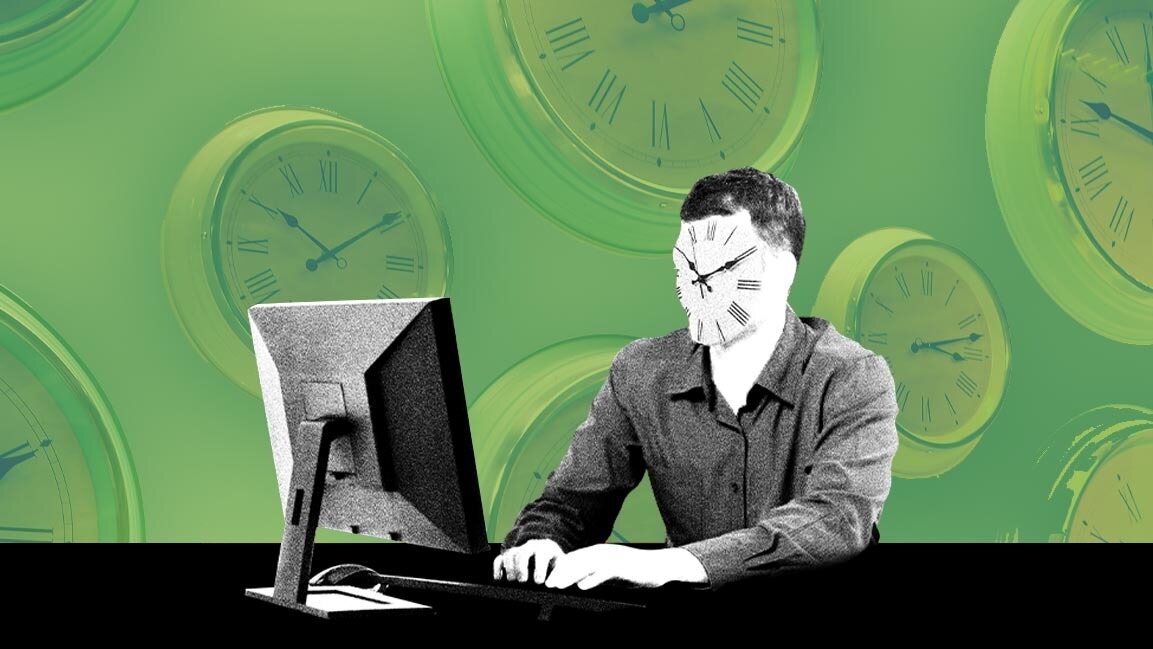


If you’re not a morning person, or you thrive on post-10 pm bursts of productivity, you likely find the standard nine-to-five (or nine-to-six in many GCC offices) especially hard going.
Just as people have different tastes, we also seem to have different biological rhythms, which raises the question of whether traditional working hours give some people an inherent advantage in the workplace.
However, there’s good news on the caffeine-drenched horizon for the terminally tired – the growing trend of so-called “chrono working,” which aligns employees’ schedules with their natural body clocks rather than standard office hours.
WORKING WITH BIOLOGICAL RHYTHMS
The idea is simple. Early birds and night owls work the same number of hours, but at times that match when they’re naturally most alert and productive.
A popular framework devised by Dr. Michael Breus, a California-based clinical psychologist and author of The Power of When, divides people into four chronotypes: Lions (early risers), Bears (midday performers and the majority), Wolves (late starters who peak in the afternoon and evening), and Dolphins (light sleepers whose energy comes in bursts).
Chrono working advocates say it can boost performance, well-being and job satisfaction by working with, rather than against, our biological rhythms.
Science seems to back up what many of us have long suspected about ourselves. “This isn’t about preference or discipline,” says Elizabeth Johnson, executive director of the Wharton Neuroscience Initiative. “Our daily alertness is shaped by two interacting biological forces – the buildup of sleep pressure over time and our circadian rhythm, the brain’s internal timing system. The way these systems intersect determines when each of us is naturally primed for focus, creativity, or recovery. That’s chronotype.”
Which helps explain why a 9 am Monday meeting feels like an endurance test for some, while others arrive annoyingly bright-eyed, bushy-tailed and three emails ahead.
“The brain has an internal clock that regulates sleep and alertness,” says Dr. Ovgu Ozturkeri, neurologist at the German Neuroscience Center. “People who naturally go to sleep and wake up later may be less alert during an early meeting. If they have also had too little sleep, they may find it harder to concentrate, remember information and make decisions.”
She adds: “Over time, regularly getting too little sleep is a concern. People may feel they have adapted, even while their performance is affected.”
For employers in the UAE, the stakes are rising. The newly published Michael Page UAE Salary Guide 2027 found that 51% of employees would consider looking elsewhere if their employer increased office attendance requirements, while 78% of professionals say they are open to changing roles altogether.
The same research notes that replacing talent costs significantly more than keeping it, and that businesses offering meaningful flexibility will be best placed to retain their high performers next year.
In a market where loyalty can no longer be taken for granted, letting people work when they are at their sharpest may prove to be one of the more cost-effective retention tools available.
“Working at times that conflict with your chronotype affects both employee performance and employer profit,” says Claudine Gillard, founder of Dubai-based Sweet Dreams Sleep Coaching. “I think companies and their staff that offer this are going to benefit hugely.”
WARNING SIGNS
Gillard says the warning signs that someone is short on sleep – or simply clocking in at the wrong time for their body – often show up first in the details. Attention slips, reaction times slow, and decisions that should be straightforward become a struggle. Tempers fray too, with a more confrontational attitude, difficulty working collaboratively and, eventually, outright workplace conflict. Left unchecked, she says, creativity, productivity and attitude to work all plummet.
So, should we scrap the traditional work hours completely? “It would be ideal to have flexible working so that individuals can work in line with timings that match their chronotype,” she says.
Of course, for many people, choosing your hours remains a luxury. Shift workers, parents and anyone answering to a demanding boss or clients in other time zones rarely get to pick when they perform.
“When I was in the Special Forces, we worked some crazy hours,” says Ollie Ollerton, former UK Special Forces operative turned entrepreneur, bestselling author and motivational speaker. “Sometimes we were operating through the night, sometimes for days with very little sleep. You could not always choose when you had to perform, so recovery became absolutely critical.”
RECOVERING PROPERLY
It’s a lesson that translates well beyond the battlefield.
“If you are working odd hours, you have to make sure you are recovering properly in between,” he says. “If you keep pushing and you are not getting enough sleep, eventually everything suffers, physically and mentally. We used to rely on power naps a lot. Sometimes even 20 or 30 minutes could give you enough of a reset to go again. You cannot keep withdrawing from the bank without putting something back in.”
There’s a flipside, though.
“It’s useful to understand when you naturally perform at your best, but you do not want that to become a limitation,” Ollerton says. “Life does not always give you the perfect conditions. Sometimes you have to perform when you are tired, uncomfortable, or completely outside your normal routine. That is where resilience is built. Every time you operate outside your comfort window and still deliver, you prove to yourself that you are more capable and adaptable than you thought.”
“Chronotype is partly genetic, but it is not fixed for life,” says Ozturkeri. “Sleep patterns tend to shift later during adolescence and earlier as people get older. Light exposure and daily routines also influence these patterns. Morning daylight, less bright light in the evening, and a consistent sleep schedule can help shift sleep timing earlier. However, the extent of this change varies. Waking up earlier does not automatically make it easier to fall asleep earlier.”
“Where the job allows it,” she adds, “flexible start times may help people get enough sleep and perform better at work.”
For those still setting the 6 am alarm through gritted teeth, let’s give the final word to the man who once operated on next to no sleep at all. “Know your rhythm, use it when you can,” says Ollerton, “but do not become a slave to it.”