Saudi Arabia’s Ceer raises $693 million as it builds a homegrown EV industry
Arab National Bank and Riyad Bank are financing the Saudi automaker’s expansion as it prepares to roll out seven EV models over the next five years
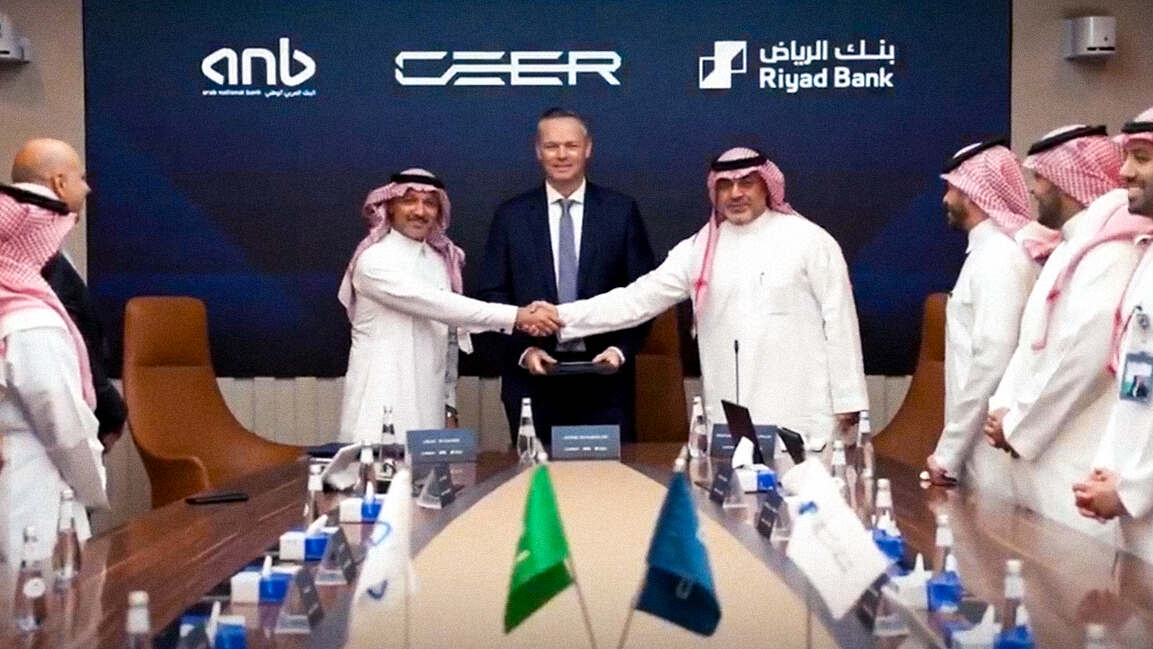


Saudi Arabia’s homegrown electric vehicle maker Ceer has secured approximately $693 million (SR2.6 billion) to expand its operations, as the country works to build a domestic automotive industry.
The Public Investment Fund-owned company signed the financing agreement with Arab National Bank and Riyad Bank at its Riyadh headquarters. The funding will support its growth plans, according to a statement.
The Public Investment Fund-owned electric vehicle maker signed a financial agreement at its Riyadh headquarters. The financing will support its growth plans and the development of Saudi Arabia’s automotive manufacturing industry, according to a statement.
The country’s first homegrown automotive brand unveiled its first two flagship EVs in September, part of a planned portfolio of seven models over the next five years. The vehicles will be manufactured at Ceer’s production complex in Saudi Arabia.
“This agreement reflects ANB and Riyad Bank’s confidence in Ceer’s business model and long-term outlook,” said Joerg Schuessler, chief financial officer of Ceer. “Together, we are investing in the future of a Saudi automotive brand built for the Kingdom and its future economic ambitions.”
Ceer’s expansion forms part of a broader effort to build manufacturing capacity and bring more of the automotive supply chain into Saudi Arabia.
The National Industrial Development and Logistics Program targets an annual manufacturing capacity of 280,000 cars by 2030, along with the localization of 40% of the automotive value chain. That includes parts and components for both electric vehicles and internal combustion engine vehicles.
The ambition extends beyond assembling cars. Developing local suppliers would allow more of the spending associated with vehicle production to remain in the country.
By 2034, Ceer is projected to contribute $8 billion to Saudi Arabia’s gross domestic product and improve its trade balance by $21 billion, according to PIF.
Louai Al-Zaher, chief wholesale bank officer at Arab National Bank, said the agreement reflected the lender’s role in supporting promising sectors, particularly automotive manufacturing, and advancing Saudi Vision 2030.
Mohammed Abu Al-Naja, chief corporate banking officer at Riyad Bank, said the financing reaffirmed its commitment to “supporting national industries and advancing sustainable transport in line with Saudi Vision 2030 and the Saudi Green Initiative.”

Featured Videos
Today's Top Stories:
More Top Stories:

FROM OUR PARTNERS