The UAE is rethinking how it grows food. Can agritech keep up?
Higher import costs are helping UAE growers win customers, but lasting competitiveness depends on what they grow and how much energy they use.


The UAE’s long-standing food security challenge is facing a new test. Shipping costs are climbing as regional tensions disrupt trade routes, while the threat of a strong El Niño could upend rainfall patterns and harvests in some of the world’s biggest agricultural exporting countries.
For a country that imports as much as 90% of its food, many of those pressures are beginning to filter down to the supermarket aisle. In September, Abu Dhabi’s food and drink index hit its highest level this year. Meanwhile, food inflation in Dubai reached 9.1% in October, up from 7.39% in August, with pulses and vegetables costing roughly 20% more than a year earlier.
But those same forces could create an opening for local farmers. Although UAE growers make up between 10% to 17% of local food consumption, they have long had to elbow their way into a market dominated by highly efficient overseas producers — often competing on margins that have historically been stretched thin. Recent events, however, have spurred retailers and the government to take a closer look at domestic production, giving years of investment in agricultural technology a chance to pay off.
“All of this is actually working to the advantage of local farmers like us,” said Mehlam Murtaza, executive director at UNS Farms, one of the GCC’s largest indoor and greenhouse farming companies.
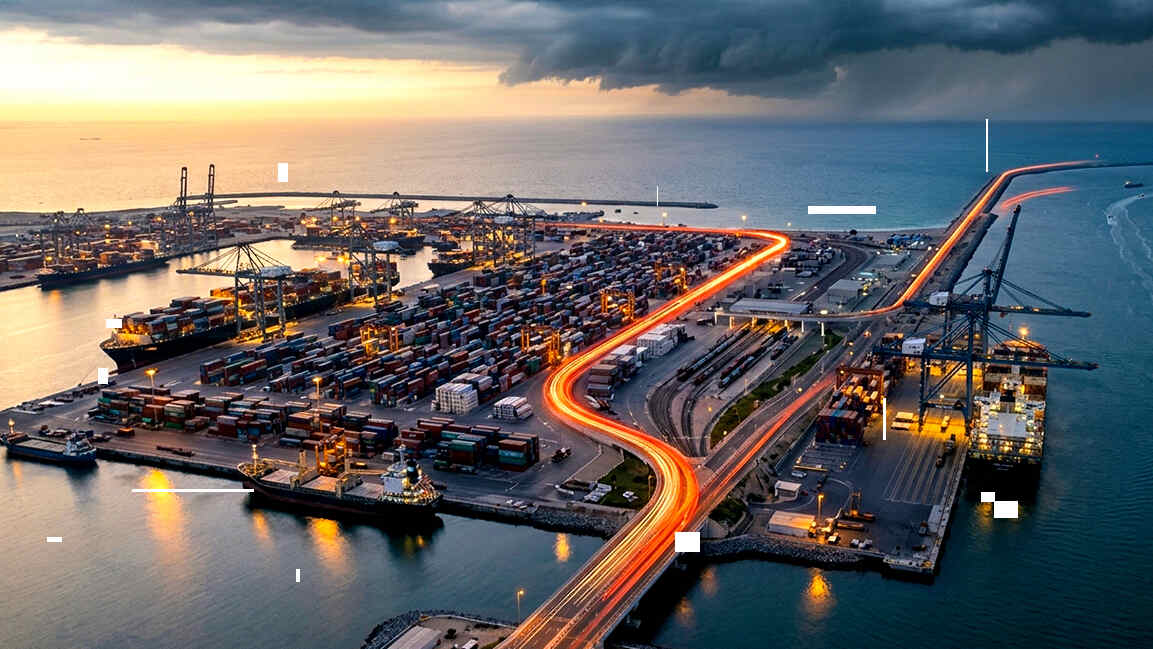
Disruptions wrought by the regional conflict have forced UAE retailers to navigate labyrinthine shipping routes and rely more heavily on expensive air freight, pushing transportation costs per unit up by as much as 68% in 2026 compared with last year.
“The cost of importing is now almost equal to the local product cost,” Murtaza said, pointing to specialty imports such as microgreens and edible flowers costing nearly twice as much as their locally grown counterparts. “Not only are we giving a better quality product because it was harvested in less than 24 hours, but we are giving a much more competitive price,” he added.
The shift has inadvertently narrowed a price gap that agricultural innovations have sought to close. With only about 1% of its land arable, the UAE has invested heavily in hydroponic farms and next-generation greenhouses. Around 1,000 hydroponic and controlled-environment agriculture installations now operate across the country, as growers seek to produce better, less expensively, and more intelligently. But increasing production enough to meet local demand remains a challenge for the industry.
Earlier this year, Pure Harvest, a major local grower, said it struggled to keep up with demand from mass-market grocers that could no longer bring in low-cost produce by sea.
Similarly, Daria Shchurik, who heads growth and marketing at the Dubai-based vertical farm Greeneration, has seen a significant uptick in demand from local restaurateurs seeking specialty ingredients.
“Every shock sends hotels, restaurants and retailers looking for supply closer to home,” she said. Their farm has built a reputation for producing rare, premium ingredients that have typically been flown in from countries such as Japan. The current situation, Shchurik said, has accelerated production and opened up opportunities to reach more customers.
“It’s given us a stable base to expand into more varieties and more products for more customers across the UAE, and to take a bigger share of what the country currently imports.”
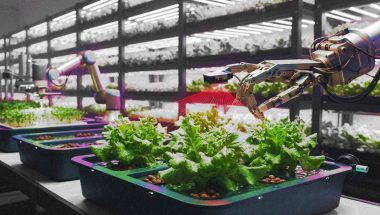
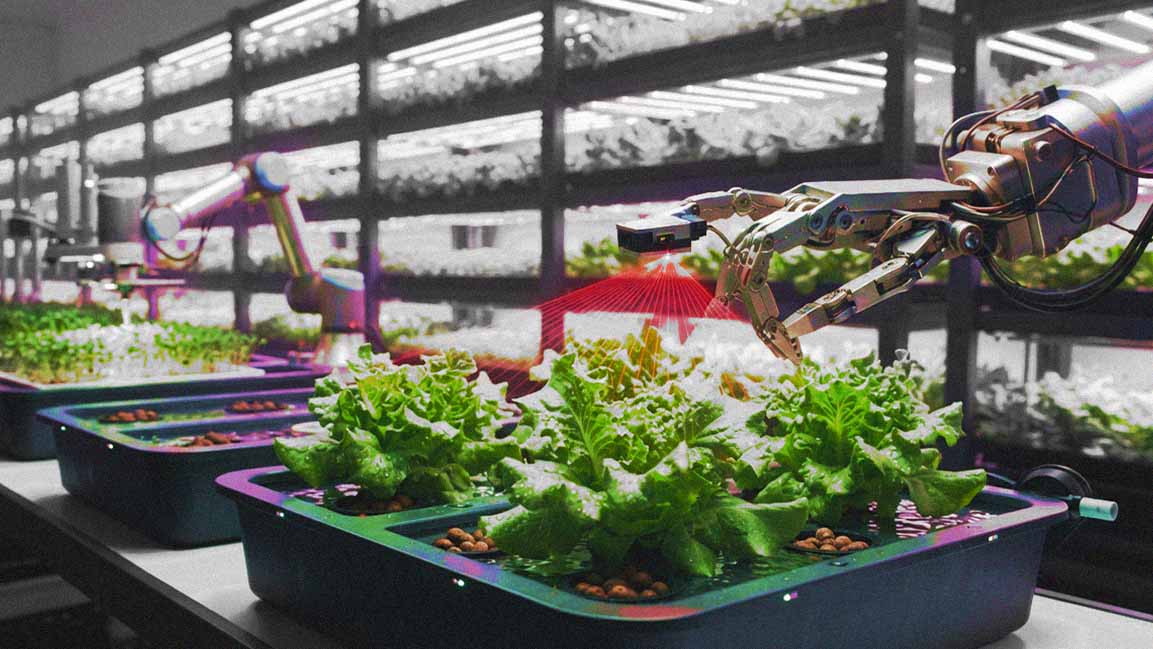
Greeneration and UNS Farms use vertical farming to expand local production, growing crops indoors in stacked trays under white and purple LED lights, while hydroponic systems deliver water and nutrients directly to their roots. The enclosed systems promise yields up to 10 times those of conventional farming, using up to 95% less water and no pesticides. But sustaining that artificial environment takes electricity, which can account for as much as 60% of production costs.
“The first wave of large vertical farms showed the whole industry that staple crops at commodity prices can’t cover an indoor farm’s power bill,” Shchurik explained.
To get around that, many farms have turned to vegetables such as lettuce, kale and microgreens, which are relatively easy to grow and command a high price relative to their weight. As for Greeneration, its business model centers on edible flowers and other specialty ingredients that make the farm “profitable on its own terms,” Shchurik said.
HUNGER FOR INNOVATION
Yet the UAE’s food security ambitions require progress beyond premium ingredients. While the country is self-sufficient in dates, milk, poultry, and eggs, its ability to meet domestic demand in other areas varies sharply. In 2024, local farms supplied nearly four-fifths of its cucumber needs, but only a fifth of tomatoes and 2% of onions. For staples such as wheat and rice, it remains overwhelmingly dependent on imports.
The UAE aims to reduce that reliance to 50% by 2050, though it has offered little detail on how it will achieve that goal. Meeting that target will require innovations that expand both what can be grown locally and the scale.
Among the projects pursuing that ambition is GigaFarm, a waste-to-value facility being developed on a 900,000-square-foot site in Dubai Food Tech Valley.. Developed by ReFarm Global Investments with technology from Intelligent Growth Solutions (IGS), its planned 200-acre project’s towers aim to replace 1% of the UAE’s fresh produce imports, roughly 3,000 tons of fresh produce and are designed to grow more than a billion plants a year, depending on the crops, said Andrew Lloyd, a director of IGS and GigaFarm. But the point of that scale is to make locally grown food affordable, even when regional shipping costs return to normal.
“We will have failed, both as GigaFarm and as an industry, if vertical farming is only ever used to grow luxury food for rich people. This needs to be price competitive with the traditionally sourced alternative,” he said.
For consumers, whether a vegetable is grown hydroponically or in soil matters less than its price, taste, and how long it stays fresh. “Most consumers won’t pay more for it, but they will pay the same,” Lloyd said.
Their solution rests on a more agile lighting system that adjusts the color and intensity for each tray of crops, rather than lighting the entire facility uniformly.
“We call it a weather recipe or a growth recipe,” Lloyd said, explaining that each is tailored to the plant’s needs as it develops. “You’re not burning kilowatt-hours of electricity producing bits of light that do nothing useful to the plant.”
Lloyd said this approach helps IGS use roughly half as much electricity per kilogram of produce as competing systems. IGS has developed growth recipes for more than 300 plant types, allowing growers to switch crops as demand changes rather than tie their business to a single variety.
“Nobody actually knows what crops people will want to buy in any volume five or 10 years from now,” he said. “Therefore, what you need is a capability of growing many different things that can address future demand.”
IGS is also exploring how AI could make harvests more predictable. Even under carefully controlled conditions, genetic differences between seeds mean plants do not always grow as expected. The company is testing sensors that direct laser beams at leaves and analyze the reflected light for signs of stress that may be invisible to the human eye before it’s too late.
“With AI, we can measure what is happening inside the plant and adjust its growth recipe in real time. Doing that at scale is not something any one farmer can do,” Lloyd said.
AI also supports production planning, helping growers balance local supply and demand so they avoid spending electricity on crops that end up discarded or sold at a loss.
“You’re always looking for that Goldilocks zone of balancing local supply and demand, so the farmer only produces something there’s confirmed demand for,” Lloyd said. “It’s about optimizing farming production to minimize or even eliminate waste.”
WHAT IT WILL TAKE TO SCALE
While hydroponic farms have often been talked about in almost messianic terms, expanding the UAE’s food supply will also depend on what happens beyond those enclosed buildings.
“The biggest gains will come from turning existing farmland into modern commercial operations driven by agritech,” Shchurik said, adding that more water-efficient irrigation, local fertilizer production, and treated wastewater in place of groundwater would also complement these advances.
That transformation carries a substantial upfront bill. Modular vertical farming systems can start at around $30,000, while advanced solutions for cultivating arid land can cost $10-20 million, said Aditya Singh Deo, co-founder of Talent Bridge, a consultancy advising agribusiness startups.
“It has to be a really large-scale project for those kinds of farms to be viable, because you are essentially converting absolutely arid land into fertile soil,” he said.
Making those investments work also requires expertise, said Murtaza from UNS Farms. “Innovation still comes from the farmer,” Murtaza said. “Much of the agricultural knowledge developed in Europe needs to be rethought for the Middle East, where growers are learning to produce in heat and humidity long considered prohibitive. Imported expertise provides a foundation, but making it work in the UAE takes testing, adaptation, and on-the-ground knowledge.
For Lloyd, the UAE’s long-term food security ambitions offer an opportunity to turn that learning into production at scale. “This needs to be for the masses, he said, because we believe food tastes better in the UAE,” Lloyd concluded.