How the Gulf is reinventing its investment strategy
Investors and policymakers are looking for growth in the systems that keep economies working through disruption.
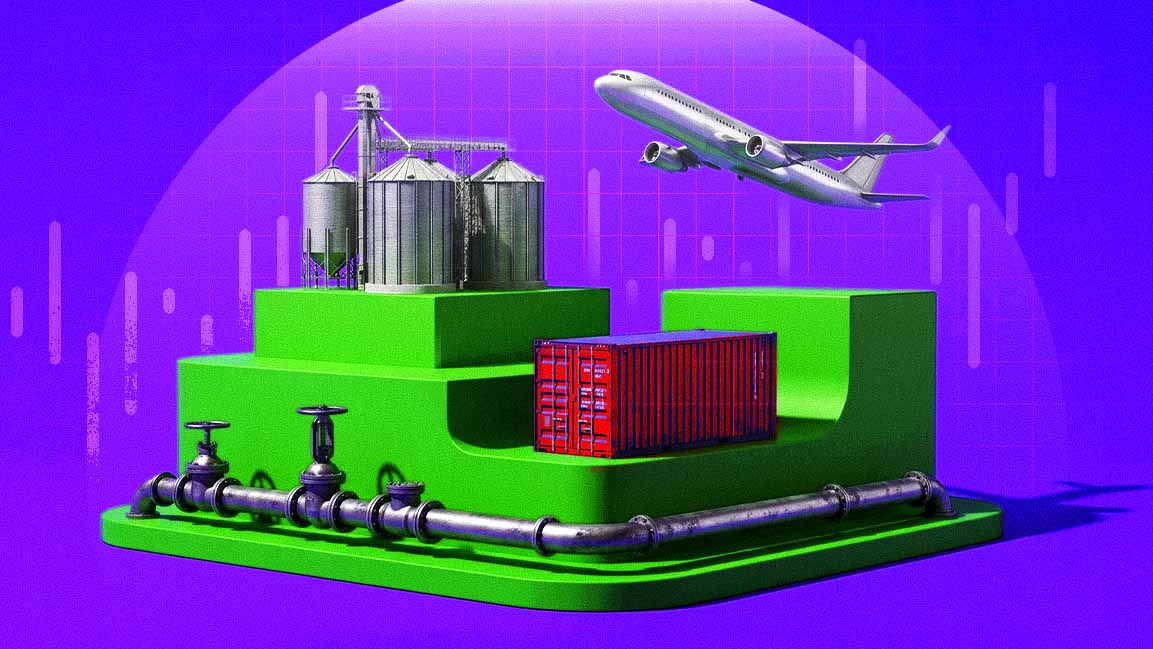


Aviation hubs, pharmaceutical supply chains, and payment networks have something in common: their value becomes particularly apparent when normal business breaks down. If you want to gauge the Gulf economy’s mood during uncertain times, a regional economic forum is a good place to start, even if it’s only part of the picture.
Last week, more than 200 business leaders, investors and senior government officials gathered at the Gateway Gulf Investment Forum in Manama, where the mood was cautiously optimistic.
By the end of the forum, $22.3 billion in partnerships, investments and commercial agreements had been announced, covering financial services, technology, aviation, logistics and energy. More than 110 deals were made.
The message was clear: the Gulf is not abandoning its growth agenda. Policymakers and investors are placing greater weight on the infrastructure, financial systems, and operating capacity that keep an economy moving when trade routes, airspace, and supply chains come under strain.
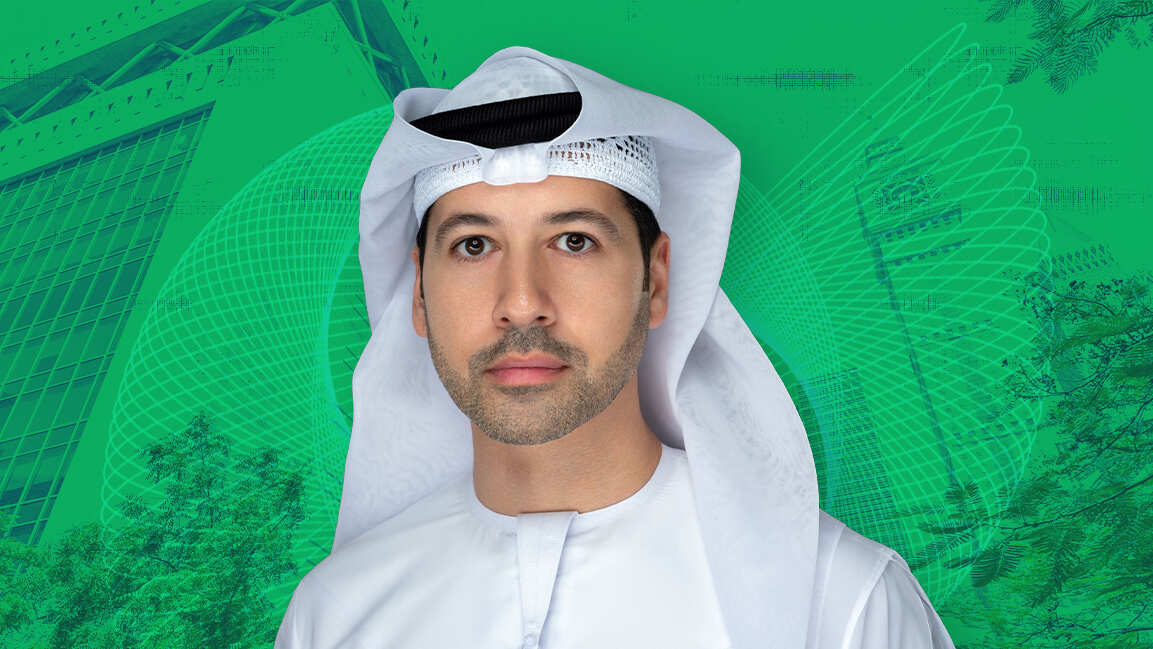
“Our job is now to make sure that we prepare our countries and our people in the best way possible to address crises,” said Noor bint Ali Alkhulaif, Bahrain’s Minister of Sustainable Development and Chief Executive of Bahrain Economic Development Board. “Having those fundamentals is going to carry us through.”
LONGSTANDING AMBITIONS TAKE NEW MOMENTUM
That means building those capacities closer to home. Food security and pharmaceutical supply chains have moved higher on the agenda, along with a greater focus on essential commodities.
These are not new target sectors for the Gulf, but rather “reinforcing existing priorities” that build resilience and deeper regional integration.
“Several sectors were already priorities before 2026, but recent events have accelerated those discussions,” Alkhulaif said.
Bahrain’s aviation ambitions are a good example of that test. Last November, the kingdom signed a letter of intent with AirAsia’s parent company, Capital A, to establish a regional hub supported by cargo, logistics and aircraft maintenance operations.
Cargo services began in February and are now expanding with larger freighter aircraft. Passenger flights, delayed by the conflict, are expected to begin in March 2027.
“Preparing for that launch has given us additional routes and capacity to work with,” Alkhulaif said. “It is a great model of bringing in an international player, and we are using the same value proposition with others.”
For Bahrain, the appeal extends beyond passenger routes to the businesses that can grow around them. The government projects that the partnership with AirAsia could support more than 100,000 jobs across aviation and related services by 2030, while drawing more visitors and trade from Asia following a regional slowdown in tourist numbers.
AirAsia, meanwhile, sees Bahrain and the wider Middle East as an important base for taking its low-cost model beyond Asia.
“It’s an established market, but there’s an opportunity to serve secondary and tertiary cities,” said Tony Fernandes, Capital A’s Chief Executive Officer and adviser to AirAsia Group. “Many airports here are underutilized. That’s the opportunity.”
INVESTING THROUGH UNCERTAINTY
The Gulf’s changing priorities are also trickling down to its sovereign wealth funds, influencing where they invest.
Governments are seeking private capital for projects that strengthen supply chains, expand industrial capacity and reduce dependence on shipping through the Strait of Hormuz.
Allianz Research estimates that new infrastructure and defense spending could create around $160 billion in opportunities for private and foreign investors through 2030.
For private investors, that opens a market that generates steady returns.
Investcorp, the Bahrain-based asset manager, is exploring several potential Gulf infrastructure acquisitions. Chief Investment Officer, Rishi Kapoor, described the renewed emphasis on essential infrastructure as one of the region’s most compelling investment themes.
“It ultimately goes back to having a decent exposure to yielding hard assets that are inflation-protected. They are not going to disappear based on some disruptive force,” Kapoor said during a panel discussion.
The Bahrain-based asset manager has already recorded $11.1 billion in fundraising, capital deployment and exits during the first nine months of 2026 and said the firm could consider raising another infrastructure fund within the next one to two years as it looks to expand its regional dealmaking.
FINANCIAL INFRASTRUCTURE IS PART OF THE EQUATION
The need for reliable payments through disruption is strengthening the case for investment in fintech.
Financial services and technology are taking up a larger share of Gulf sovereign wealth funds’ portfolios. Allocations have risen from 22% to 27% and from 12% to 14%, respectively, while real estate’s share has declined, according to Global SWF’s latest MENA Playbook, released last month.
Bob Diamond, founder and Chief Executive of Atlas Merchant Capital and former Chief Executive Officer of Barclays, believes Gulf banks are well placed to compete for that business. “A lot of the technology being developed in financial services is an area where the GCC can be a leader,” Diamond said, citing stablecoins, tokenization and blockchain.
GCC banks have moved ahead of their US and European counterparts in adoption, Diamond argued. They understand the technology and can afford to invest. At the same time, their smaller size and local focus allow them to be more agile and adopt new systems faster than their international rivals.
Even when it comes to tokenization, which is still in its early stages, the UAE specifically is far ahead of many markets. “To give you a very American baseball analogy, they are in the first inning of adoption, probably at the top of that first inning,” he said.
Diamond, who led Barclays until 2012, has watched Gulf economies develop since he began working with the region’s sovereign investors in the early 2000s. What were then emerging markets have become “real economies,” he said. “The big change is that they are expanding across the region rather than just within their domestic markets,” Diamond said.
“The opportunities for GCC banks are right here in the GCC,” he continued, citing recent events that have proven the region’s resilience and how integrated its economies have become.
The International Monetary Fund is also betting on that resilience. It forecasts a 9.1% rebound in Gulf economies in 2027 as energy exports recover, provided regional conditions stabilize. A prolonged conflict, it warns, could derail that recovery.
Diamond nevertheless remains confident. Asked whether he still held confidence in the Gulf, he replied: “Hugely. Probably more so.”
“When I look down the road, I see this as a real stress test of leadership, culture and economies in the GCC,” he said. “And by that measure, they’re passing with flying colors.”
The Gulf’s next investment test is therefore less about announcing new priorities than delivering on existing ones: bringing facilities into service, securing customers, and demonstrating that essential systems can keep working when conditions deteriorate.