The AI boom was built around Jensen Huang. What happens now?
Nvidia’s former CEO created a sprawling web of investments and partnerships that helped fuel the AI gold rush. His departure could reveal how precarious it all is.


Jensen Huang is out, and the repercussions are just beginning
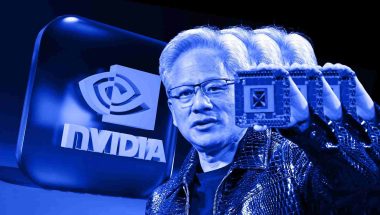
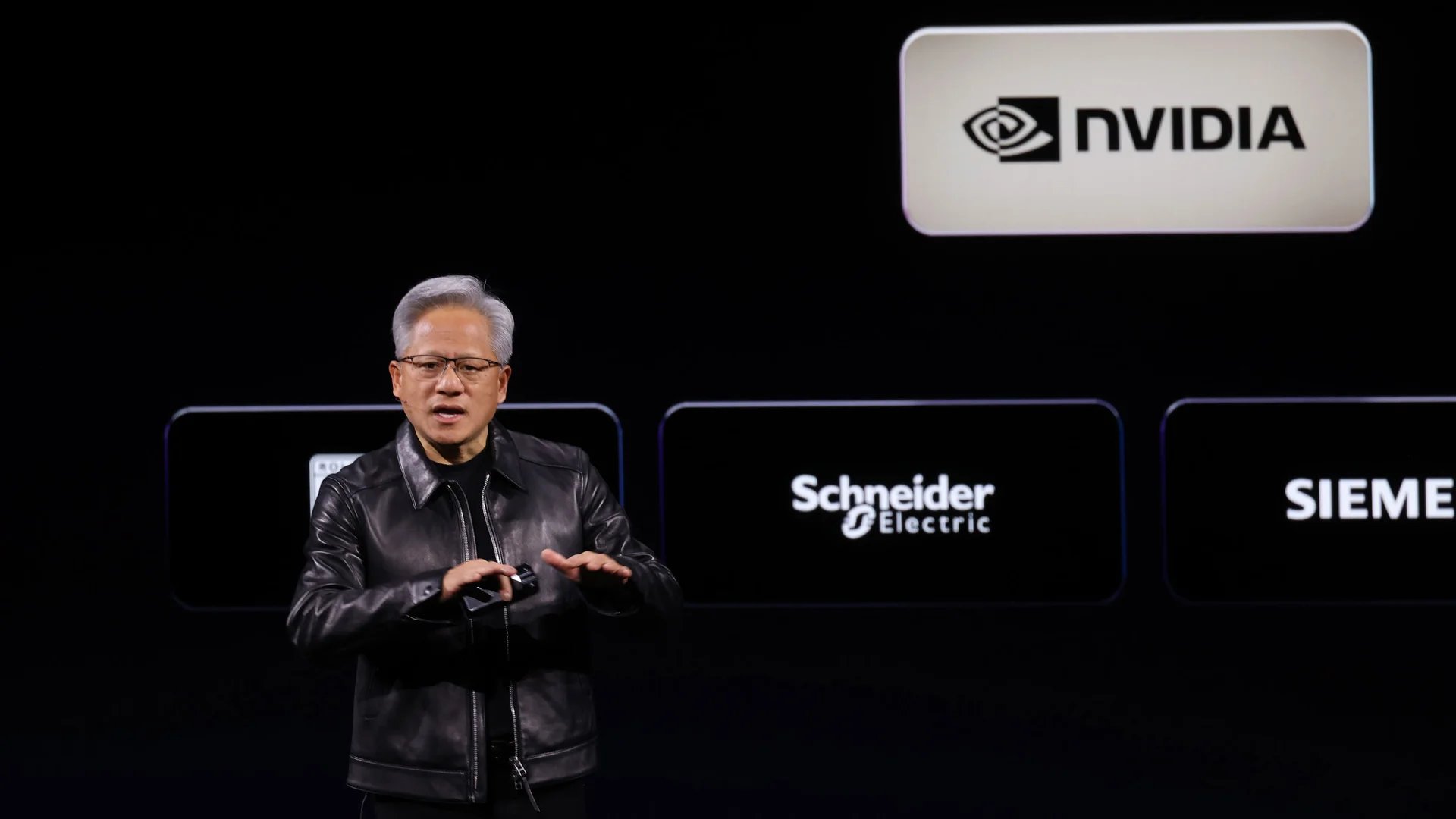
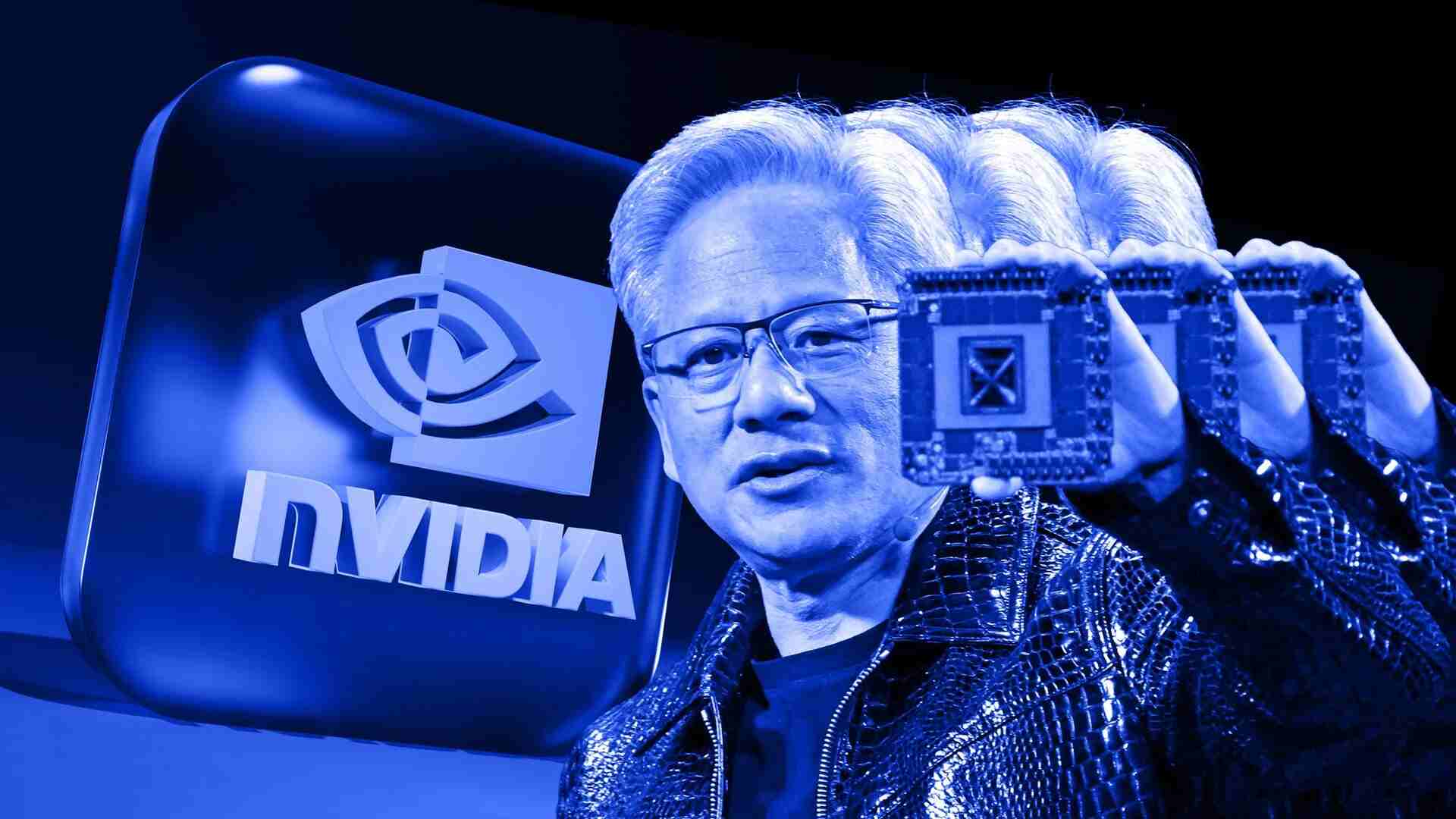
Who would have expected the AI Bubble to pop like this? Over an infidelity scandal. Jensen Huang, who resigned as Nvidia CEO Thursday, built the company that supplied the chips that made the AI boom possible. He had the foresight to see the AI revolution coming, and formed the strategy to lock AI researchers and enterprises into his company’s CUDA software stack.
Huang also used Nvidia’s growing chip sales windfall to prop up the growing AI industry in a dangerous way, bankrolling a webwork of AI startups, suppliers, infrastructure players, and other chip customers. Now, with a crisis of confidence in the chip company at the center, the whole AI buildout could come under considerable strain and potentially unravel.
With all this at stake, one might wonder why Nvidia’s board and other stakeholders would want Huang to resign. But Jensen Huang’s affairs were more than marital transgressions. At least one of them had national security and geopolitical dimensions–Huang’s relationship with a Singapore-based tech executive who goes by the name Alice Huang. Not only was she a suspected Chinese spy but her company, Megaspeed, was suspected by the Commerce Department of helping funnel restricted Nvidia chips to China, the U.S.’s main rival in the AI race.
A New York Times investigation last year found that Megaspeed’s offices in Singapore and Malaysia were largely empty, and Commerce Department officials who spoke to The Times said they found boxes of restricted Nvidia chips in a Megaspeed facility in Malaysia. It’s long been the policy of the U.S. government to reserve the fastest AI chips, most of them made by Nvidia, for U.S. and U.S.-friendly AI labs.
Alice Huang had Chinese “honeypot” written all over her, but Jensen Huang never caught on, or chose not to.
The second extramarital relationship to come to light is less harmful to Nvidia but establishes a pattern of infidelity that may go further than we currently know. It involved Kimberly Powell, an Nvidia VP who led Nvidia’s health industry business. That relationship, which had for months been discussed within Nvidia, was reported this week by the New York Times after reporters spoke to Nvidia employees. Nvidia’s code of conduct warns against employees “personal relationships” that might “create conflict.”
It all seems so sudden. After months of hand wringing about the reality of the AI boom and the stability of the enormous amounts of investment money now being plowed into building out the infrastructure needed for AI, suddenly the man at the center of it all is gone, his 33 years of leading Nvidia over. And as Creative Strategies CEO Tim Bajarin told me, there’s nobody in the world with better field vision in the AI industry than Jensen Huang.
“For much of the last decade he was the industry’s main spokesperson, explaining to customers, partners, governments and investors where computing was going and why,” says Bajarin, a long-time Silicon Valley analyst who knows Huang. “Few executives in technology have played that role . . . that is a real loss, for NVIDIA and for the ecosystem around it.”
“Still, no one is irreplaceable, and the loss of a visionary is not the same as a change in strategy,” Bajarin says. “The vision Jensen laid out is already built into NVIDIA’s roadmap, its supply chain and its people, so we do not think his departure changes where the company is going.”
Possible successors to Huang may have some pieces of the picture, but none have vision into the human relationships and deep structural dependencies that have pushed it all forward. “His right-hand man and the one who executed Jensen’s strategy is Ian Buck,” Bajarin offers. Bajarin believes Buck could be a strong candidate to succeed Huang permanently.
Still, Huang’s affairs and subsequent resignation have already destroyed some confidence in the enormous investment being made in the AI build out. Nvidia’s stock is already off 13%. But the industry, public, and governmental reaction to Huang’s departure may be just beginning, like the first ripples of a very large stone dropped into a pond.
The real reasons Anthropic is IPO’ing first, and OpenAI later
Anthropic and OpenAI will be the first two pure-play AI companies to tap the public markets through an initial public offering. Anthropic will likely list its stock (ticker symbol: “ANT”) first, potentially on November 19, while analysts expect OpenAI, which filed its own IPO paperwork confidentially in June, to wait until early next year.
The timing of these IPOs matters a lot because both companies operate in an extremely expensive business, and they’re competing for capital from the same pool of retail and institutional investors. Both are trying to raise money at valuations well above a trillion dollars amid growing concerns about rising interest rates, volatility in technology stocks, heightened scrutiny of AI company valuations, and a decidedly negative political environment.
All about compute
Still, no artificial intelligence bubble has popped—yet—so Anthropic and OpenAI may want to go public while conditions are (relatively) good. Harrison Rolfes, an analyst at PitchBook, says it may also be a question of necessity. Both companies remain focused on buying, leasing, or building as much computing capacity as they can, even decades into the future. For a long time, they’ve relied on venture capital money and debt to cover those costs, but as private capital becomes harder to come by, they need to tap the public markets.
That may be a more urgent issue for Anthropic than for OpenAI. “The compute bills come due in December,” Rolfes tells Fast Company. Anthropic has shown impressive revenue growth during 2026, putting some real numbers behind the $1.2 trillion to $1.3 trillion valuation the company has proposed. “By being at this current valuation at this current time they can retain the interest and then run the momentum into the IPO,” Rolfes says.
OpenAI likely bought itself some time with the sizable capital it raised in the private markets this year, Rolfes believes. In March, the company raised $122 billion, and a recent Reuters report says OpenAI is trying to raise additional capital at a valuation of more than $1.4 trillion, locking down commitments before the Anthropic IPO. OpenAI also has a broader range of revenue sources than Anthropic, including consumer subscriptions, a growing advertising business, and licensing agreements with partners like Microsoft. OpenAI’s revenue reportedly grew more than 50% to over $10 billion in the third quarter.
A straight story
OpenAI will have to tell a clear and compelling story when it goes public—one that can withstand the scrutiny of the public markets. In fact, earlier this year, OpenAI’s CFO, Sara Friar, reportedly cited the lack of such a story as one reason her company wouldn’t be ready for a 2026 IPO.
“OpenAI’s timeline is different, and that makes sense given the company it’s building,” Jyoti Bansal, AI investor and founder of the software delivery platform Harness, tells Fast Company. “It has a different structure and a much broader business to run, spanning consumer, enterprise, infrastructure, and hardware.” OpenAI will have to clarify whether it’s primarily a consumer AI or an enterprise AI company, or how focusing equally on both could enhance and not limit overall growth in the future.
Anthropic, on the other hand, may have a slightly easier story to tell. “The business leans toward enterprise, and enterprise revenue is the kind public investors tend to value: recurring, tied to usage, and connected to real workflows,” Bansal says. “When customers are running your models in production, for coding, support and internal agents, you have a story that holds up under public-market scrutiny.”
First-mover advantage
Anthropic could see real benefits from going public first. It could set the terms by which public investors evaluate frontier AI company stocks, establishing a pricing benchmark and common metrics for measuring short- and long-term success.
This could put OpenAI in an uncomfortable position. “The $1.25 trillion that they are asking for will be compared to whatever Anthropic trades at,” Rolfes says. “So that’s the issue that OpenAI is going to face because now you have a comparable and if they can’t match that then it’s only going to cause them to get a larger discount on their value.” If OpenAI wants to command a higher valuation than Anthropic and raise more money, it will have to clearly explain to investors why it should be valued or measured differently.
OpenAI, remember, was seen as “the leading AI company” for years after the arrival of ChatGPT in late 2022. Much of that first-mover mojo is gone, but not all—it matters that millions of consumers had their first experience with AI through ChatGPT. Still, OpenAI could lose a little more mojo if it has to follow Anthropic to market.
“It puts them at a disadvantage in terms of listing first and capturing the mind share of people,” Rolfes says. “They used to be the go-to, but now if the name switches from OpenAI over to Anthropic, then it’s like, OK, maybe [Anthropic] will start to creep into the consumer mind share.”
The timing of an IPO doesn’t decide a company’s fate. In the long run, investors care more about quarter-to-quarter profitability and predictability. But pure-play AI companies are something new, and the timing of their IPOs may matter more. They have to spend unheard-of amounts of capital, some of it raised from the public markets, on infrastructure to stay competitive in the breakneck race to build state-of-the-art models. Any hiccup in plans to raise enough money for compute could leave an AI company behind in a race where catching up is exceedingly difficult. Meanwhile, its revenue opportunities—and potential shareholder returns—could shrink.
Anthropic’s new model built an operating system from an empty folder
In other Anthropic news, on Monday the AI giant released Claude Fable 5.2 and Claude Mythos 5.2, the same underlying model with different safeguards. In prerelease testing, the company says, an engineer asked Fable 5.2 to build a prototype operating system from an empty folder; it coordinated more than 1,000 subagents for eight days and produced one that boots on a laptop, with drivers, file storage, windows, a login screen, and an installer. Given a one-paragraph prompt, it also designed three working electronic devices—a voice-assistant hub, a USB speakerphone, and a handheld virtual pet—with circuit boards ready to manufacture in under a day.
Netflix is calling its recommendations AI
Netflix began rolling out AI Discover, its first consumer feature branded as AI-powered, to a limited number of U.S. subscribers on supported smart TVs, Variety reported. Subscribers can choose from preset themes such as “Something Light,” “Scare Me,” and “Family Movie Night.” A “Tune Your Recommendations” button lets viewers keep a suggestion or block it from appearing again. The content is not available on kids’ profiles. Netflix has used machine learning to recommend content for years; now it’s using it to generate content.
OpenAI’s quarterly revenue crossed $10 billion
OpenAI’s quarterly revenue topped $10 billion for the first time, Bloomberg reported, a jump of roughly 50% from $6.7 billion in the second quarter, and the company’s adjusted operating margin narrowed from negative 150% to negative 109%. OpenAI’s annual revenue run rate now stands at $50 billion. Anthropic reported third-quarter revenue of $17 billion and said this week its run rate had reached $81 billion as of the end of October. (Note: the two companies calculate revenues differently: Anthropic counts the total spend on Claude models through cloud partner distributors, while OpenAI reports only its piece of the revenue-share).