Rail’s digital future is a leadership challenge
At Autodesk’s Rail Summit, executives argued that better infrastructure depends on decisions about project data and accountability made long before a railway opens.
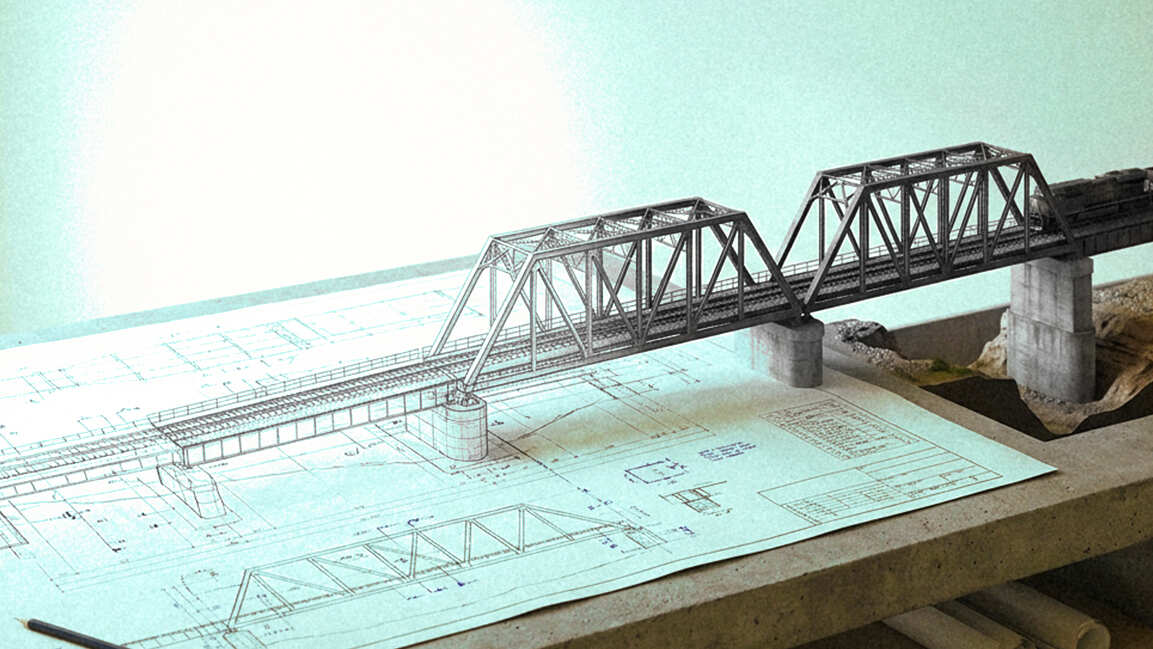


For Gulf rail developers, some of the most consequential procurement decisions concern information: what contractors must record, how they share it, and whether the eventual operator can use it.
Those decisions can be difficult to revisit once contracts are signed and teams have established their ways of working. A project may use sophisticated digital models throughout construction, yet leave maintenance teams with files they must check or rebuild before they can use them.
That is the problem Daniela Becker, Vice President, EMEA Enterprise Business at Autodesk, wants rail leaders to address earlier.
“Data that was good enough to build from is often unusable by handover, so the value stops where the project phase ends,” she says.
Her assessment, alongside Chief Trust Officer Sebastian Goodwin’s account of AI governance, puts a management question at the center of rail’s digital development: Who remains responsible for information as it moves between organizations and, increasingly, through automated systems?
Fast Company Middle East was the only media outlet from the region invited to attend Autodesk’s Rail Summit 2026 in Rome. Held on November 10–11 under the theme “Delivering the Next Era of Rail Infrastructure,” the summit covered digital project delivery, interoperability, and AI, with technical tracks examining data platforms, rail systems, and structures.
Both executives describe the challenge from a technology provider’s perspective. Their proposals place obligations on customers, but also raise questions about what software companies must make visible and verifiable.
PUT THE OPERATOR INTO THE BRIEF
Becker sees progress in design coordination and construction planning. Building information modeling, or BIM, helps teams work with shared digital representations of infrastructure. Reality capture records existing conditions, while geographic information systems place designs within their surroundings.
The difficulty, she says, is preserving those benefits as responsibility changes hands. “A signaling contractor needs the track designer’s decisions, and a maintenance team needs an accurate record of every bridge it will keep in service for decades.”
Her proposed starting point is to agree on information requirements before design begins, maintain a shared source for the current version, and plan the handover from day one.
For Middle Eastern developers, she sees an opportunity to incorporate those requirements early, drawing on established networks’ experience of maintaining infrastructure over decades. The procurement implication is straightforward: the operator’s needs should help determine what designers and contractors deliver. Completing a construction model is a different assignment from producing information that will remain useful throughout an asset’s life.
Software compatibility belongs in that discussion, too.
“Customers shouldn’t have to choose between a connected platform and the tools they already use,” Becker says, pointing to open standards and openBIM initiatives.
For buyers, the practical test is whether information can move between their teams’ systems without losing the detail needed for the next task.
AI INHERITS THE INFORMATION PROBLEM
Becker sees opportunities for AI to automate repetitive work, help engineers explore options, and make project information easier to retrieve. But she rejects the idea that it can compensate for poorly managed records.
“It’s overpromised when it’s sold as a replacement for engineering judgment, or as a fix for fragmented data,” she says. “If your information isn’t standardized, AI just finds the wrong answer faster.”
Goodwin approaches the same issue through the lens of data integrity. Protecting a design involves more than keeping it confidential. Teams also need to know whether someone has altered it, deliberately or inadvertently.
AI agents introduce another participant into that chain. Goodwin says Autodesk is developing more detailed activity records so customers can distinguish a person’s actions from changes an assistant makes to their instructions. “Customers will want to know what an AI agent accessed, what it changed, and who authorized those changes,” he says.
Those records could help investigate an error and establish how it entered a project. They would not, on their own, prove that a design decision was correct. Professional review and technical validation would remain necessary.
AUTOMATE THE PREPARATION, RETAIN THE JUDGMENT
Goodwin sees an immediate role for agents in the documentation surrounding infrastructure projects. A tender can involve thousands of pages of specifications and records from previous work. An agent could locate and organize relevant material, giving engineers more time to assess it.
But assembling information is different from approving a consequential engineering decision.
“The professionals using our tools remain responsible for review, approval, and final decisions,” he says. Autodesk, he adds, must develop its AI with appropriate testing and safeguards and explain its limitations. That position describes the intended division of work; it does not settle how liability would be allocated in a particular dispute.
Goodwin’s remit includes enterprise and product security, data privacy, AI governance, and cloud resilience. At the summit’s media roundtable, he also described the customer’s responsibilities: Autodesk protects the underlying infrastructure it controls, while customers manage matters such as user accounts and project permissions. On a project involving numerous contractors, those permissions need continued attention as people join, change roles, or leave.
KNOW WHAT THE CONTROLS ACTUALLY CONTROL
Trust also depends on understanding how project information may be used to develop AI. Goodwin says Autodesk trains its features using synthetic, licensed, open-source, and internal data. For certain features, datasets also contain aggregated and de-identified elements of customer content, which the company describes as common, industry-standard, or otherwise nonsensitive.
Autodesk distinguishes between Standard AI and Advanced AI. Its published administrator guidance describes controls for disabling Advanced AI at supported hub or project levels, preventing content within that scope from being used for future Advanced AI training.
The limits matter. The setting does not affect Standard AI, undo previous training, or offer a separate option to retain Advanced AI features while blocking that future training use.
The company’s AI Transparency Cards explain individual features, data sources, and safeguards. Customers need that level of detail to assess whether a capability fits a project’s requirements. A general assurance about security cannot answer every question about data use.
MEASURE WHAT REMAINS USEFUL
Becker says customers’ questions have shifted. “Three years ago, the conversations were about which tools to buy,” she says. “Now customers are asking how they can get more from the people they have, and how to keep project information useful long after handover.”
Faster drafting and easier document searches are useful gains. They do not, by themselves, demonstrate lower maintenance costs or more reliable infrastructure. The harder test comes later, when the construction team has moved on, and an operator needs to understand why a decision was made.
“We’ll measure ourselves by whether customers can see that value across the whole project lifecycle,” Becker says.
For rail owners, that means specifying what useful information looks like before commissioning the systems meant to deliver it. The maintenance team should not have to reconstruct the project’s history to make its next decision.