
- | 10:30 am
Inside DIFC’s plans to become the world’s first AI-native financial center
The Dubai International Financial Center is embedding AI across its legal, regulatory, talent, and physical systems in a $350 million push to reshape global financial competition


No financial regulator has attempted this before. The Dubai International Financial Center (DIFC) is developing a legal framework that allows an AI agent to register as a recognized jurisdictional participant, on par with a bank or an asset manager. Not as a tool within a firm, but as an entity with formal standing in the system.
That shift signals the scale of what is being built. This is not incremental adoption of artificial intelligence. It is the redesign of a financial center around AI at a structural and legal level.
The Dubai International Financial Center has outlined plans to become the world’s first “AI-native” financial center, embedding artificial intelligence across its legal frameworks, regulatory systems, business environment, and physical infrastructure.
The center has committed $350 million to the initiative, with a projected economic value of $3.5 billion and the creation of around 25,000 jobs. It also aims to export AI governance frameworks, software, and talent to emerging markets, particularly across the Global South.
“This is not about experimenting with AI at the edges. It is about embedding AI into our legal frameworks, regulatory systems, talent development, and the physical infrastructure of the financial center,” says H.E. Arif Amiri, CEO, DIFC Authority.
At the regulatory level, DIFC plans to introduce systems that recognize humans, AI agents, and robotics as participants in financial activity. This includes real-time compliance mechanisms, AI-enabled licensing, and frameworks for liability, dispute resolution, and trusted data exchange.
AI will be embedded across enterprise workflows and financial services delivery, enabling automation at scale while maintaining regulatory oversight. The center also plans to deploy a sovereign AI utility that will provide regulated firms with access to shared large language model infrastructure.
The strategy incorporates agentic AI into financial regulation, alongside predictive risk modeling to enhance supervision and decision-making capabilities.
DIFC’s talent strategy focuses on scaling human-AI collaboration through certifications, executive education, and technical training programs, supported by partnerships across academia and industry. The center aims to position itself as a global destination for AI-driven financial firms, with ambitions to compete with hubs such as Singapore and London.
At the ecosystem level, DIFC plans to expand its innovation platforms, venture-building capabilities, and global partnerships to support startups, research institutions, and financial firms operating at the intersection of AI and finance.
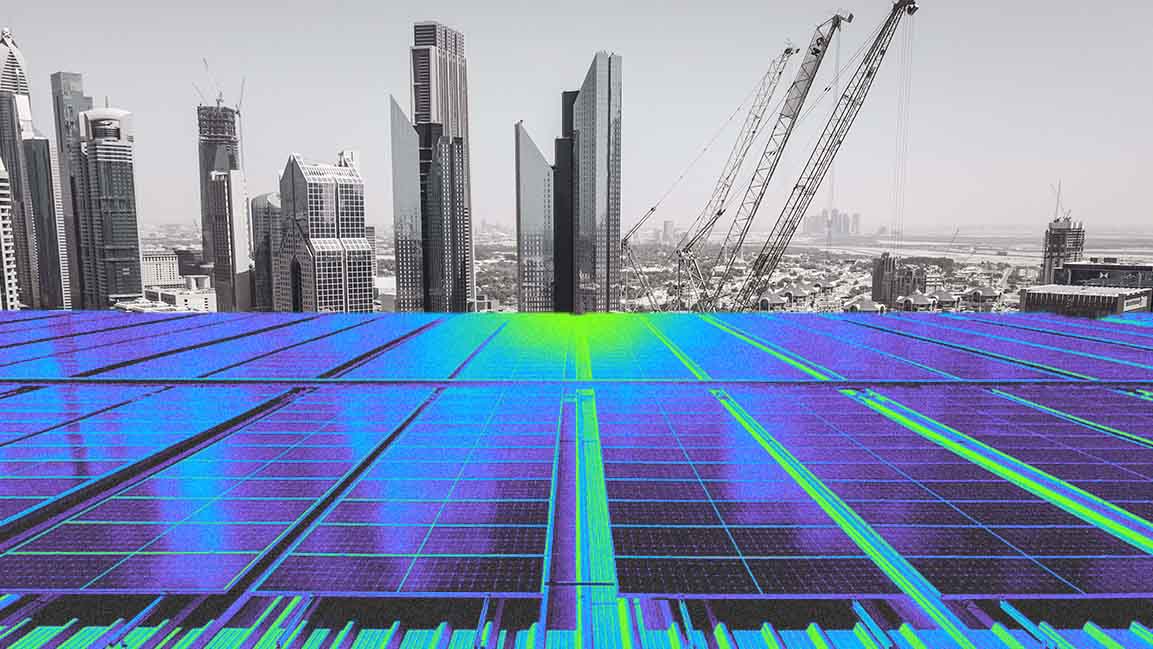
Infrastructure development is a central component of the initiative. By 2030, DIFC aims to operate as a fully integrated smart district featuring AI-managed buildings, autonomous mobility systems, service robotics, and digital twin technologies. These systems are expected to improve operational efficiency, enable predictive maintenance, and reduce energy consumption across the district.
The strategy is organized around five pillars that define how this transformation will take shape.
1. Legal and regulatory frameworks
At the core of the plan is a new regulatory model that formally recognizes humans, AI agents, and robotics as participants in financial activity. This includes frameworks for liability, dispute resolution, trusted data exchange, and real-time compliance systems. DIFC is also developing an AI Agent Registration System, cross-border regulatory recognition mechanisms, and governance tools that can be exported to other jurisdictions. The ambition is to position DIFC among the top global jurisdictions for AI-ready financial regulation.
2. Business operations
Across DIFC institutions, including DIFCA, DFSA, DIFC Investments, and DIFC Courts, AI will be embedded into core operations. Routine processes will increasingly be handled by AI systems, while human teams focus on oversight and decision-making. A sovereign AI utility will provide shared large language model infrastructure for all regulated firms in the center. This means that firms of all sizes, from startups to global banks, will have access to the same foundational AI capabilities within DIFC’s ecosystem.
3. Talent development
The DIFC AI Campus is designed to become a regional hub for AI skills in financial services and government. Its focus includes executive education, technical certifications, regulatory training, and programs designed for human-AI collaboration. A dedicated Emirati AI talent pipeline forms part of the model, alongside partnerships with global academic institutions and industry players. DIFC also aims to support talent mobility between the UAE and emerging markets, particularly across the Global South.
4. Ecosystem infrastructure
The Innovation Hub and AI Campus will serve as the central platform for startups, scaleups, corporates, and research institutions working at the intersection of AI and finance. Plans include an AI-focused venture capital fund, accelerator programs, global research partnerships, and structured support for intellectual property creation. The objective is to strengthen DIFC’s position as a leading destination for AI-driven financial innovation, alongside established hubs such as Singapore and London.
5. Physical infrastructure
By 2030, DIFC aims to operate as a fully integrated smart district. This includes AI-managed buildings, autonomous mobility systems, service robotics, and a digital twin of the expanded DIFC Zabeel district. Operations across the district will increasingly rely on sensor networks, predictive maintenance systems, and intelligent energy management. Robotics will support select security and maintenance functions, while the overall system is designed to improve efficiency and reduce energy consumption.
The initiative builds on earlier phases of DIFC’s innovation agenda, including FinTech Hive, launched in 2017, the Innovation Hub in 2021, and its AI strategy introduced in 2023. Future milestones include expanding the Dubai AI Campus and developing a dedicated AI district in Zabeel.
The announcement aligns with Dubai’s wider strategy to strengthen its position as a global hub for artificial intelligence and advanced technologies, while reinforcing DIFC’s role as a leading financial center across the Middle East, Africa, and South Asia.

Featured Videos
Today's Top Stories:
More Top Stories:





FROM OUR PARTNERS