
- | 10:00 am
The Galaxy S26 Ultra has a trick no other phone can do
Samsung’s flagship feels less like a product and more like an argument, one that privacy and intelligence can coexist in a single device
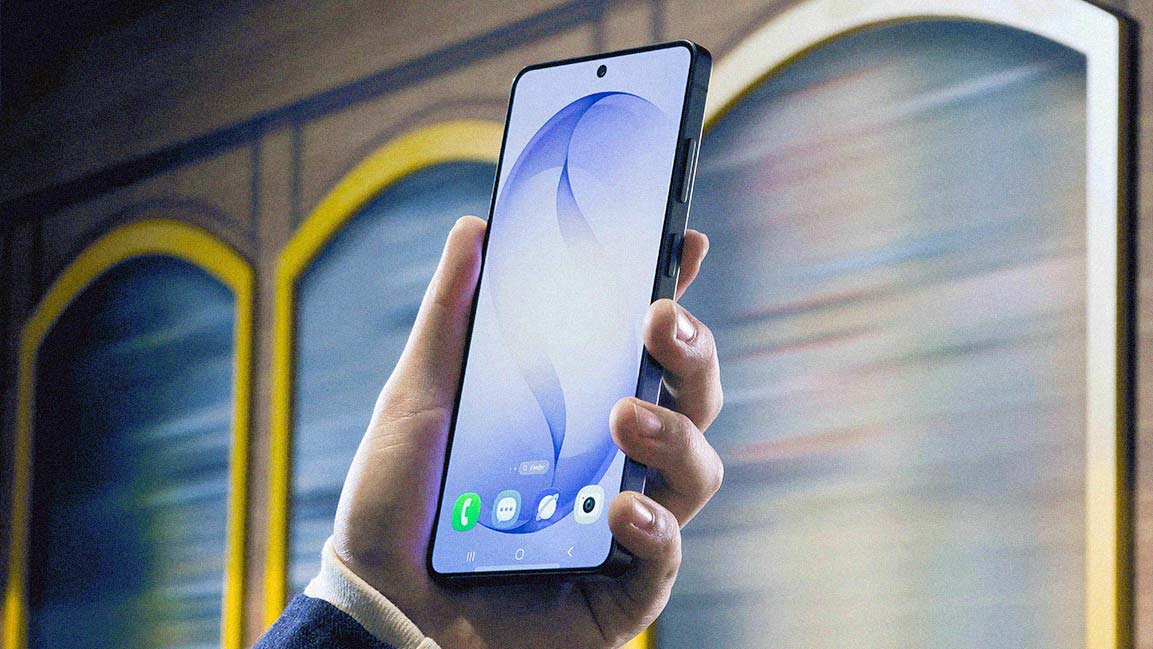


There comes a point in every smartphone cycle when progress begins to feel incremental, when the latest flagship is only a marginal upgrade on what you already own. The Galaxy S26 Ultra shifts that pattern, not by overhauling everything, but by introducing one feature that meaningfully changes how the device is used.
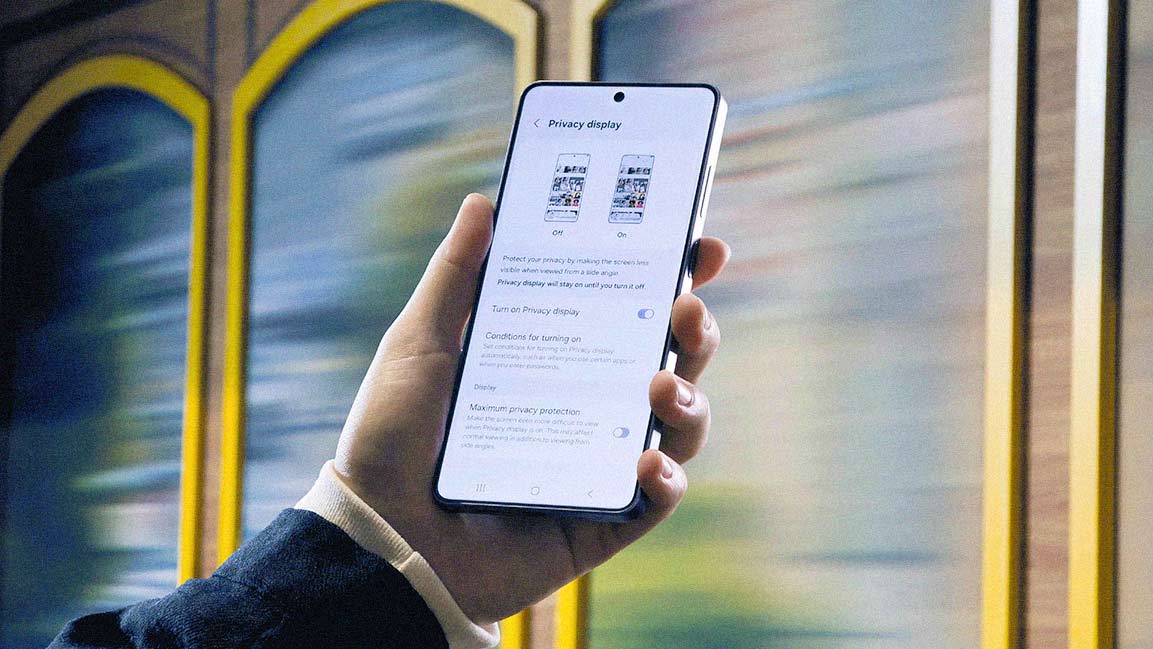
That feature is the Privacy Display.
With a single tap, the screen becomes visible only to the person holding it, while anyone nearby sees a dim, unreadable surface. It may sound like a novelty, but in practice it quickly proves otherwise. Used across airport lounges, open offices, and crowded cafés, it stands out as one of the few genuinely new display behaviors in recent years. Once accustomed to it, using other phones can feel unexpectedly exposed.
THINNER, ROUNDER, AND COMFORTABLE
Samsung has spent three generations making the Ultra series feel like a slab of cold ambition, impressive to hold but exhausting to use one-handed. The S26 Ultra quietly fixes this. Rounded corners return for the first time since the S21 Ultra era, shaving just enough aggression from the silhouette to make the 214g chassis feel lighter than it is. It is still a large phone. It is no longer a punishing one.
At 7.9mm thin, it slides into a pocket easily. The new Armor Aluminum 2 frame catches light differently than its predecessor: less mirror, more matte. And the six colorways, especially the online-exclusive Silver Shadow, look less like product renders and more like objects someone actually considered.
The camera island, however, remains a structural overcorrection. It protrudes enough to wobble on flat surfaces and catch on pocket linings. It is a problem that stands out more the more you admire the rest of the device. In 2026, this should be solved. It is not.
PRIVATE BY DESIGN
The base panel delivers what you would expect from Samsung: a 6.9-inch Dynamic LTPO AMOLED 2X, 1440×3120, with a 120Hz adaptive refresh rate and peak brightness of 2,600 nits. It is excellent in direct sunlight and equally strong in low light. But the display story this year is not about specs. It is about the Privacy Display layer built beneath the glass.
Activate it via the quick settings toggle, and the screen shifts to a polarized state that requires a viewing angle of roughly 35 degrees to resolve. Bystanders see a dim, grey surface. You see everything at full brightness and full color. Samsung has managed this without introducing visible grain or color shift at direct angles, a level of execution that competitors have not matched. The practical value for anyone who has ever shielded their screen on a plane, in a meeting, or at a café is immediate and lasting. Once you have used it, the absence on other phones feels like a missing feature that should have always been there.
LOW LIGHT, DONE RIGHT
The S26 Ultra carries over the same quad-camera configuration as its predecessor on paper: a 200MP main, 50MP ultrawide, and dual telephotos at 10MP (3x) and 50MP (5x). Two key aperture upgrades, however, change what those cameras actually do. Wider apertures on the main sensor and the 5x telephoto mean significantly more light reaches the sensor in challenging conditions, and Samsung’s reworked night processing takes a more measured approach than its earlier tendency to brighten everything.
In practice, shots taken in candlelit restaurants and unlit streets look tonally honest. Shadow detail is recovered without the washed-out haze of aggressive AI brightening. The 5x telephoto at night is now genuinely usable as a creative tool, not just a zoom lens that degrades after sunset.
Video gains Horizontal Lock, a stabilization mode that keeps the footage level regardless of how the phone tilts. Shoot while walking, gesturing, or handing the phone between people, and the horizon stays fixed. It is the kind of feature that makes you realize how much you had been subconsciously compensating before.
AGENTIC AI THAT EARNS THE WORD “AGENT”
“Agentic AI” has become one of tech’s most overused phrases. Most features that carry the label are either reactive layers on existing capabilities or automation so blunt that it requires constant correction. Samsung’s Now Nudge is more considered.
Rather than waiting for input, it monitors context across apps and surfaces suggestions based on what is actually happening: a reminder to leave for a meeting based on current traffic, a draft reply tied to a calendar event, or a follow-up prompted by an ignored email thread. The suggestions appear in a peripheral layer that does not interrupt. You can act on them or dismiss them without breaking your flow.
It is not flawless. It misfires often enough that you notice a pattern. But it is accurate often enough to feel assistive rather than presumptuous, and that is a bar most similar features have not cleared. More importantly, it signals a shift in intent. This is Samsung building a phone that pays attention, not just one that responds.
Seven years of Android updates, with support through 2033, reinforces the phone’s long-term positioning. At this price, that is expected. But it is still worth stating.
FAST ENOUGH, LONG ENOUGH
Super Fast Charging 3.0 brings wired speeds up to 60W, with wireless charging now at 25W. A full charge from flat takes just over an hour with a compatible PDP charger, a noticeable improvement over last year. The 5,000mAh battery, combined with the efficiency gains of the Snapdragon 8 Elite Gen 5 (3nm) and a larger vapor chamber for thermal management, delivers a full day under moderate use with margin to spare.
The caveat is structural rather than practical. Competitors, particularly from China, are shipping 6,000mAh silicon-carbon cells in similarly sized devices. Samsung’s decision to stay with lithium-ion is defensible, as silicon-carbon comes with its own thermal tradeoffs, but it is now a choice that needs explaining rather than a default. For most users, the S26 Ultra’s battery is more than sufficient. For heavy users, expectations have moved ahead.
MOST CONFIDENT ULTRA YET?
The S26 Ultra costs $1,299, unchanged from last year, at a time when the flagship market has become intensely competitive. Chinese manufacturers are pushing silicon-carbon batteries, aggressive pricing, and hardware that demands attention. Samsung’s response is not to match them spec-for-spec. Instead, it is focusing on experiences that cannot be reduced to numbers on a comparison chart.
The Privacy Display has no clear equivalent at any price. Now, Nudge is more contextually aware than most proactive AI features currently available on consumer devices. Horizontal Lock makes video look more stable and deliberate, even in casual use.
For years, the Ultra series has answered the question of what the best Android phone is. The S26 Ultra shifts that framing. It is not trying to be the best Android phone. It is trying to be the phone you might design if you were not constrained by what smartphones have traditionally done.
Whether that ambition fully lands depends on how much weight you place on software that is still evolving and a camera bump that remains unresolved. But the direction is clear, and for the first time in a while, the category feels like it is moving forward again.