
- | 9:00 am
Can GCC’s next phase of growth survive a water crisis?
Experts say that while the region already relies heavily on desalination and other alternative water sources, rising industrial demand is adding more pressure on water use.
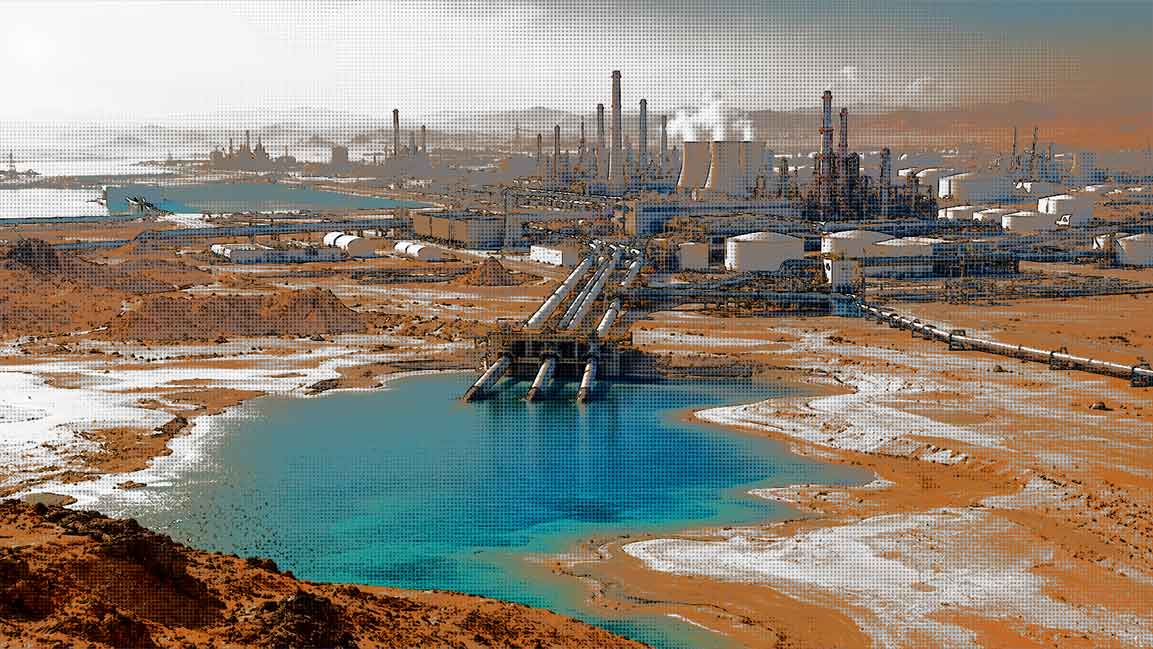


The Gulf Cooperation Council (GCC) countries have plenty of oil and gas, but they lack water resources. The United Nations classifies the GCC as facing “acute scarcity” of water.
Yet it is in this water-stressed region that countries are betting on water-guzzling industries such as data centers, semiconductor manufacturing, nuclear energy, and pharmaceuticals to power their next phase of economic growth.
Will the rapid growth of these tech industries severely worsen water stress?
“The GCC’s next phase of growth will increasingly test the relationship between economic development and water availability,” says Mohammed Mahmoud, a leading policy expert on climate adaptation and water security.
Although the region has already robustly integrated desalination and other non-conventional supplies, Mahmoud says “growing industrial and urban demand introduces another layer of water use pressure.”
Emphasizing this problem might compound, Arnaud Delamare, Partner, Energy and Natural Resources at Oliver Wyman – India, Middle East, and Africa, says, “Water demand will certainly increase as the GCC expands water-intensive industries such as AI data centers, semiconductor manufacturing, and pharmaceuticals. A gigawatt of AI data-center capacity, for example, can require several thousand cubic meters of water per day to operate, primarily for cooling.”
INTENSE WATER-GUZZLERS
AI data centers are the most intense water-guzzlers. Thousands of servers process complex algorithms, consume massive amounts of electricity, and generate intense heat. To keep them from crashing, many facilities rely on evaporative cooling systems, where water absorbs the heat and evaporates into the atmosphere. The scale of this consumption is staggering.
Meanwhile, as electricity demand grows and nuclear energy becomes more popular, countries are evaluating nuclear power projects that need large volumes of water to keep reactors operating safely, especially for cooling and steam production. Did you know that reactors require 720 gallons of water per megawatt-hour of electricity they produce?
Although at the moment, the Barakah Nuclear Energy Plant in the UAE is the only fully operational civil nuclear power station in the region, Saudi Arabia, which recently signed a 30-year nuclear deal with the US to help the kingdom develop a civilian nuclear program, is actively planning to build its first large-scale nuclear power plant.
This dependency on water is also visible in the pharmaceutical sector, where GCC countries are investing heavily to diversify their economies and achieve supply chain self-sufficiency. Saudi Arabia and the UAE are the GCC’s leading life sciences manufacturing hubs, while other Gulf countries are also expanding their capabilities. Abu Dhabi is developing as a biotechnology hub; Saudi Arabia is expanding its pharmaceutical industry to manufacture 40% of its medical needs domestically by 2030, and Oman is expanding pharmaceutical manufacturing, with 18 production facilities under construction.
In this sector, highly purified water is mandatory, serving as a base ingredient for life-saving medicines, vaccines, and injectables, as well as a sterilization agent for heavy equipment. This industry often consumes 200 to 500 kiloliters of water per ton of drugs produced.
Earlier this year, Saudi Arabia launched a $1 billion National Semiconductor Program to build a local microchip design and manufacturing industry as part of its economic diversification plans. In 2024, reports said that major chip makers like Taiwan Semiconductor Manufacturing Co. and Samsung Electronics were in talks with the UAE about building megafactories there.
Currently, no semiconductor factories are being built in the UAE or Saudi Arabia, but when they are, they will use a lot of water. Making the tiny chips for devices like smartphones and AI hardware takes millions of gallons of water. The industry uses ultrapure water, which is much cleaner than drinking water, to rinse silicon wafers at every step. A modern chip factory can use up to 10 million gallons of ultrapure water each day.
INDUSTRIAL GROWTH AND WATER SECURITY
Water has always been a vital economic resource in the Gulf. According to the WRI Aqueduct index, all six GCC countries are among the 25 most water-stressed nations in the world, each using over 80% of its available renewable water every year. Because of this, desalination has been essential for the region’s urban growth and economic progress, providing a steady supply of water to make up for the lack of natural freshwater.
But desalination also poses a problem. “Desalination discharges roughly 1.5 liters of brine per liter of freshwater produced, and peer-reviewed modeling published in Scientific Reports documents measurable basin-scale salinity rise in the Persian Gulf from cumulative discharge,” says Walid Saleh, a water resources management specialist.
Saleh adds, “Rising ambient salinity raises everyone’s intake salinity, which raises everyone’s energy cost per cubic meter. That is a slow, collective-action problem with no current governing institution, and it is the one water risk that could genuinely become structural rather than merely expensive.”
Experts say that as the GCC moves into its next phase of industrial growth, water security will also become more important. “Advanced industries such as data centers, semiconductor manufacturing, and pharmaceuticals require not just sufficient volumes of water, but a highly reliable supply. As these technologies improve and production costs continue to decline, the GCC is well positioned to manage growing demand, provided water is treated as a core element of long-term economic and industrial planning,” says Delamare.
Saleh says, at a system level, water is unlikely to be the most significant constraint. Citing the UAE as an example, Saleh says, “The most-cited projection for the UAE AI-sector water consumption is about 61 billion liters a year by 2030 — roughly 167,000 m³ a day. The UAE already produces over 7 million m³ a day. The entire AI buildout, at its 2030 peak, lands at something near 2% of existing desalination output.”
The more immediate challenge, therefore, Delamare says, is ensuring that infrastructure keeps pace with demand. “While water is unlikely to become the GCC’s biggest constraint on the growth of these industries, it will remain an important infrastructure and resilience consideration that needs to be factored into investment decisions from the outset.”
The question is not whether the GCC can produce more water, “but whether it can continue expanding economically while managing water demand sustainably and maintaining resilience against disruption to water reliability,” says Mahmoud.
A reliable water supply is fundamental to whether new industries can operate at the scale envisioned, he adds. The GCC’s experience shows that water security is actually more than having sufficient production capacity. It also depends on water resilience indicators such as infrastructure reliability, use efficiency, and diversified sources.
“As GCC economies become more industrialized and water-intensive, these resilience factors will increasingly influence investment decisions and the long-term viability of major development and industrial projects,” says Mahmoud.
INTEGRATE WATER INTO INDUSTRIAL POLICY
Each of these industries represents a strategic priority for the GCC’s economic future. Yet, there is a hard truth to brace for. Reliable water supplies will ultimately dictate how effectively they can operate and whether industrial ambitions will thrive.
Saleh says, “Fewer than a quarter of Gulf organizations track water-specific metrics at all, and no major operator — Microsoft, G42, HUMAIN, AWS, Google — has published a water-per-megawatt figure for its Gulf facilities. That opacity is a risk in itself.”
For this reason, integrating water management into industrial policy involves pricing water more rationally, reducing water use, strengthening enforcement against pollution, expanding wastewater recycling, and ensuring that new investments are aligned with water availability.
“Integration into industrial policy is the structural fix, and it is genuinely missing,” says Saleh.
“Water must be considered as part of industrial development rather than a later-stage input to be addressed after policy decisions have already been made,” says Mahmoud. “To do so, water has to be recognized as an economic input with a real opportunity cost, rather than being treated as an unlimited utility. That requires understanding where water creates the greatest economic value, and where demand can be reduced or substituted through alternative supply sources and efficiency improvements.”
Across the region, water considerations are increasingly embedded in national strategies, with a growing focus on demand management, pollution control, wastewater reuse, and more efficient allocation of water across sectors. The UAE is a good example, says Delamare. “Its Water Security Strategy 2036 targets a 95% reuse rate for treated water and a 21% reduction in total water demand, while emirates such as Abu Dhabi already reuse a substantial share of treated wastewater.”
But enforcement is the weakest link, says Saleh, “and the gap is on discharge rather than allocation. Saudi Arabia introduced fines up to SAR 200,000 in March 2025, including for industrial water footprint allocation violations. But that governs how much you take, not what you return. I could not identify a single documented industrial pollution enforcement action with a penalty attached in either country. The regulatory architecture exists; the track record does not. “
As petrochemical, pharmaceutical, and eventually semiconductor activity expands, Saleh says, “discharge quality becomes the exposure — and PFAS and process chemistry in a shared enclosed sea is precisely the kind of problem that is cheap to prevent and extremely expensive to remediate.”
Access to water has become critical to most industries, and surviving this bottleneck requires an overhaul of water policy.
Saleh says, “Water will not stop the Gulf’s industrial ambitions, but water policy is where the Gulf is quietly deciding how expensive those ambitions will be.”
In the next few years, the region’s success will depend less on the number of microchips it makes or the data its centers handle, and more on how well it manages its most valuable resource —water.