
- | 9:00 am
The UAE is becoming a test bed for medical AI. But the real test begins after the pilot
From detecting prostate cancer to predicting dementia, AI is moving deeper into UAE healthcare. Now hospitals face the harder challenge of proving it can work reliably at scale.
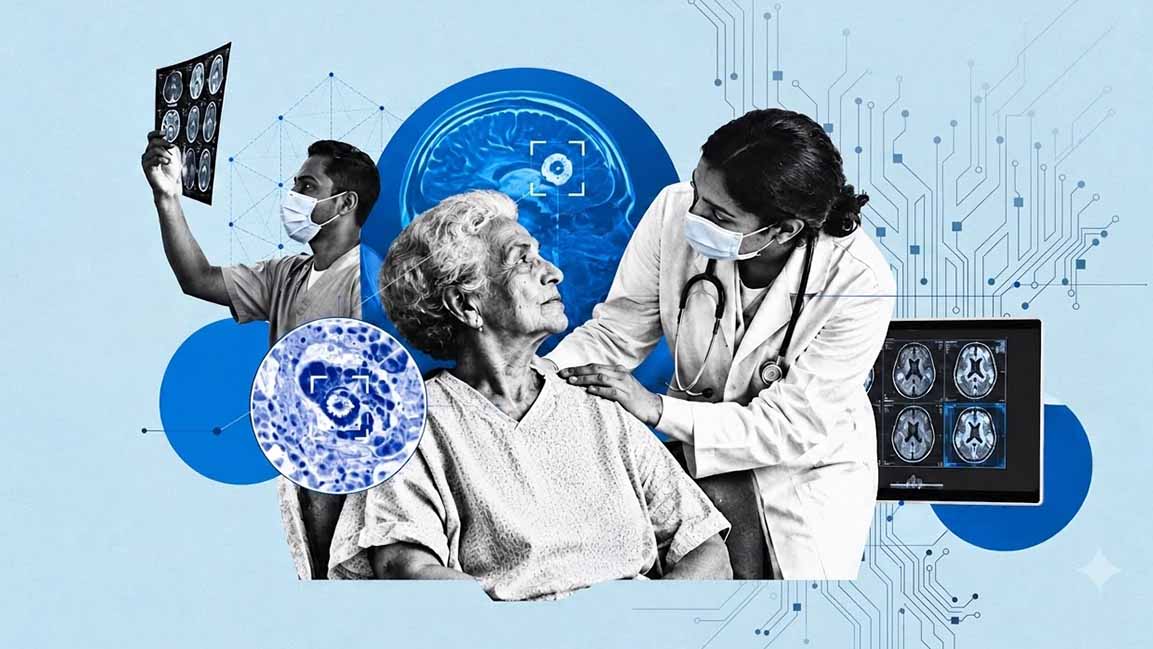


Across the United Arab Emirates, medical AI is moving from research labs into clinical care, promising earlier disease detection, faster diagnoses and more precise treatment. But proving these tools work reliably outside controlled research settings and at scale remains a much harder test.
Researchers at Mohamed bin Zayed University of Artificial Intelligence (MBZUAI), for example, explored whether AI could predict dementia up to two decades before symptoms emerged. The research was relatively straightforward. It took existing brain scans and health information from people at different stages of dementia, and the model learned to recognize changes linked to how the disease progresses — patterns that can be difficult for the human eye to track over time. Tested on data from 1,702 people, it outperformed MRI-based methods and other predictive AI models. The harder part is doing the same thing in the real world. Building that kind of dataset would require collecting detailed health information from patients for years — a process that remains not only difficult, but expensive.
Other UAE-based studies have also shown how AI can make an impact on healthcare, from flagging autism earlier in children and detecting abnormalities in fetal scans to identifying early signs of heart failure. While many struggle to move beyond pilot testing, the work reflects a push to transform the Emirate into a hub for medical AI as hospitals and tech companies race to apply artificial intelligence to some of medicine’s most stubborn problems.
However, not every tool gets stuck at that stage. Some of the clearest progress in medical AI as of yet can be found in cancer diagnosis. In Abu Dhabi, M42’s National Reference Laboratory is working with digital pathology company Qritive on an AI-powered tool for prostate cancer, the second most commonly diagnosed cancer among men in the Middle East.
The technology analyzes digitized tissue samples and flags suspicious areas for closer examination, supporting pathologists in a diagnostic process that has traditionally involved manually reviewing biopsy samples under microscope. The technology has potential to transform how prostate cancer is detected, largely because early detection is hard. The idea isn’t to replace pathologists, but for the technology to work alongside them as an extra set of eyes. “That’s where AI can act as a kind of lighthouse, a support system for pathologists across all experience to ensure consistency across the entire hospital network,” said Bruno Occhipinti, CEO of Qritive.
Since 2024, Qritive’s system has gone through advanced testing at Cleveland Clinic Abu Dhabi. During its pilot phases, it detected nine in 10 cancer cases and could spot tumors that made up less than 5% of a tissue sample, according to results provided by Qritive. At another medical institution where the technology is already in use, Qritive said the system flagged 14 cases previously classified as negative that were later confirmed as positive. Yet despite those results and securing regulatory approval from Abu Dhabi’s Department of Health, getting the technology into routine clinical use across a hospital is not that simple.
“Once hospitals move toward digital pathology, they also need to have a certain architecture in place,” said Occhipinti. This includes deploying correct scanners, training staff on certain staining methods and tissue-cutting techniques which can affect what AI picks up.
There is also the question of trust. Qritive’s system is deliberately tuned toward high sensitivity to reduce the chances of missing a cancer. But that can come at the expense of specificity, increasing the risk of false positives and potentially unnecessary follow-up testing. It is one reason researchers have called for more real-world evidence to understand how that balance plays out in clinical practice.
And despite NRL integrating Qritive’s tool into its diagnostic workflow at Cleveland Clinic Abu Dhabi in June 2026, Occhipinti said scaling it across the hospital was still being held back by the local cloud infrastructure, as UAE law requires patient data to remain within the country.
AI’S “PILOT DILEMMA” AND WHY IT FAILS TO SCALE
Qritive is hardly alone. Across medical AI, the gap between a promising pilot and a tool that becomes part of everyday patient care and at scale remains wide.
Cedric Notredame, Professor of Computational Biology, Biological and Life Sciences Division, MBZUAI boils it down to the technology itself.
“A model can perform very well at the hospital where it was developed and then drop in performance at another site with different scanners, operators or patient populations, “ Notredame said. “This is where models fail.”
It is a familiar problem in AI. Models learn from the data they are given, but moving to a new hospital can expose them to patients, equipment and practices they have seen little of before.
In healthcare, closing that gap is particularly difficult. Patient data is heavily protected and difficult to access, making it harder to train models on the range of people and settings they may eventually encounter. “If training data does not represent the people a tool will serve, it can quietly underperform for exactly the groups who need it most,” said Mohammad Yaqub, Associate Professor of Computer Vision, Division of Computing and Mathematical Sciences at MBZUAI.
While more diverse data can make models more reliable in new settings, it does not solve the scaling problem entirely. “Tools must be validated locally and monitored once deployed, because hospitals change over time and the model has to keep up,” Yaqub noted.
There is also variation in how the technology is used. The same test can be performed differently from one hospital, or even one clinician, to another, changing the quality of the information an AI system receives and potentially affecting its accuracy. “Ultrasound is especially exposed to this because image quality depends so much on who is scanning,” Yaqub said.
HOSPITALS ARE STILL BETTING ON AI
The difficulties have not dampened hospitals’ appetite for the technology. At Burjeel Holdings, spending on AI has grown roughly 30% to 40% over the past year, as the group expands its use across intensive care units, emergency departments, radiology, pathology and operating rooms.
One of its latest investments is a newly launched AI-powered cath lab, where the technology analyzes live images and gives physicians clearer views of complex anatomy and real-time guidance during complex cardiovascular procedures.
For Dr. Mujtaba Ali Khan, Chief Executive Officer of Burjeel Medical City and Group Chief Clinical Innovation Officer at Burjeel Holdings, the direction of UAE hospitals are shifting from reactive care towards predictive, data-led systems, where technology becomes part of the infrastructure itself.
“AI is going to be like the water pipes running behind the walls. That’s what a smart hospital will be. Khan said.”
“The whole system of the hospital will be so integrated. AI will come to a point where you won’t even notice AI is doing it,” he added.
But that does not mean adopting every new tool. As AI becomes more deeply embedded in clinical care, Khan said hospitals need to be deliberate about where it is used and what value it adds. “We have to be very mindful and vigilant of how we’re implementing these tools because it can have an adverse impact, but it can have an extremely powerful impact if it’s implemented responsibly.”
For Khan, investments are being looked at across the patient journey, with Burjeel’s prime focus to deploy AI tools that improve clinical outcomes, enhance efficiency and enable more predictive and personalized treatments.
That push toward predictive care is also moving beyond hospital walls. Much of healthcare still begins when a patient develops symptoms and seeks medical attention. For conditions such as cancer, that can mean the disease has already had time to progress.
Burjeel is now looking at whether the continuous stream of health data collected by wearables can help doctors intervene earlier. Changes in sleep patterns, for example, could prompt an evaluation for sleep apnea, while an unusual heart rhythm could trigger a referral to a cardiologist. Khan said the group is looking to work with wearable companies to bring those signals into patient care.
“Over the years, hospitals have been too focused on ‘sick care’ and how to make people well once they are already sick,” he said. “That mindset is shifting.”
The shift is also being backed by billions of dollars in government-led plans. Dubai’s newly established Longevity Authority is targeting annual sector growth of around 31%, with a goal of contributing more than $9.5 billion to the emirate’s economy over the next decade. Its mandate stretches from research and clinical trials to manufacturing and commercialization, with a focus on longevity, wellness and advanced healthcare.
Abu Dhabi is pursuing a similar strategy on a larger scale. Its Health, Endurance, Longevity and Medicine, or HELM, cluster is expected to attract $11.5 billion in investment and contribute $25.6 billion to the emirate’s economy by 2045.
Khan sees that combination of government backing, technology and healthcare infrastructure as critical to making the transition possible.
“It’s proactive, and I think that’s the power of AI,” he said. “That’s the power of having an amazing country that facilitates it. And when both things come together, it makes it much more possible to achieve this.”
For Occhipinti, the readiness and maturity of the UAE when it comes to implementing and scaling Medical AI was one of the reasons that drew him to the country.
“The good thing about the UAE is that they have taken a very aggressive direction towards the digitization of healthcare and the use of AI at scale. You have political leaders that are really instrumental in driving that agenda, and you don’t see that in many parts of the world,” Occhipinti said. “Going forward, the UAE should be an important market for us in terms of regional prioritization,” he concluded.