
- | 9:00 am
Big tech claims it can fix loneliness, but can it really?
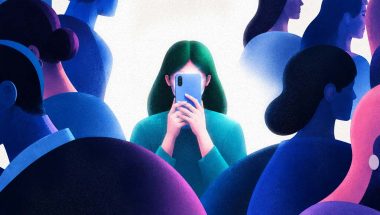
Experts are of the view that digital platforms designed to keep us scrolling, along with the rise of AI companions, can take time and energy away from the real relationships that support us


Feelings of loneliness and isolation are at an all-time high. Abu Dhabi’s Quality of Life Survey has raised concerns about technology’s psychological effects and called for more in-person contact. The survey also found that young people report the highest levels of loneliness.
The prescription is connection. And social media, dating apps, and AI-powered digital goods have found a way to exploit the vulnerability of lonely people eager to escape their predicament. But even for tech firms generally known for doing outlandish things for profit, it felt like someone had thrown a switch and things had gone to a whole new level.
Now, Meta’s chief executive, Mark Zuckerberg, says that AI companions can help fill what he sees as a friendship gap. Sam Altman, the chief executive of OpenAI, is developing an AI “companion” that will live with users and, the company claims, can sense their surroundings.
But is this kind of connection the solution, or the problem? Are social media, dating apps, and AI companions alleviating loneliness or making it worse by giving people a way to avoid their loneliness? Or are digital players creating a loneliness loop to keep making money?
In August, in a paper published by France’s Fondation Jean Jaurès think tank, essayist and author of Contre la Brutalisation de nos Existences, Paul Klotz, says how Google, Apple, Facebook, Amazon, and Microsoft have contributed to creating isolation among individuals to sell products and services designed to alleviate the very loneliness their platforms help generate. Klotz calls it “capitalism of solitude,” an economic system in which solitude has become a resource that is deliberately sought out and exploited.
REMOVING REAL-WORLD TOUCHPOINTS
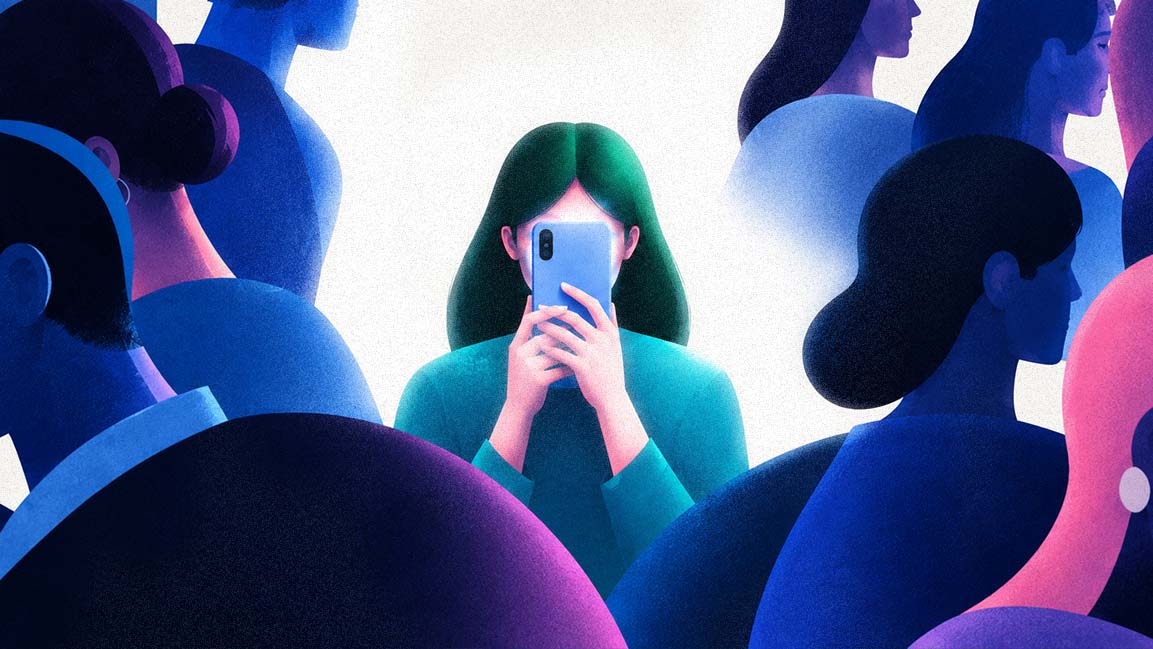
Experts are of the view that digital platforms designed to keep us scrolling and the rise of AI companions, where millions of people are forming close connections with chatbots and simulated AI partners, can take time and energy away from the real relationships that support us.
“What is interesting—and slightly uncomfortable—is what happens next: a whole market emerges to sell connections back to us, through apps, communities, subscriptions and AI companions,” says Dr. Lama Tarsissi, Associate Professor in Mathematics, Sciences and Engineering Department, at Sorbonne University Abu Dhabi. “That tension matters because it raises important questions about responsibility, not just commercial opportunity.”
Unlike human-to-human contact, which involves vulnerability, disappointment, negotiation, and potential rejection, the AI-powered digital goods and services give you what you want, how you want it, when you want it.
But these digital goods, services, and AI companions don’t make loneliness go away. They just create a distraction, and eventually that creates isolation from others. It creates a loneliness loop.
Many technology business models profit by keeping us scrolling, comparing, and returning, says Anne Jackson, founder of One Life Coaching ME. “When attention, insecurity, and dependency generate revenue so successfully, isolation becomes commercially useful, even if it was never consciously engineered as the original objective.”
Reenita Das, Founder and Managing Director of NXT Horizon, adds that advertising-based platforms make money from attention, not well-being. “Facebook’s founding president, Sean Parker, admitted the app was designed to exploit psychological vulnerability to keep people scrolling. That’s a real conflict of interest.”
While tech companies create, maintain, and profit from loneliness—especially through social media and AI—we’ve also built our lives around convenience, and that comes with consequences.
“Look at banking, your regular Noon/talabat/Careem orders, dating apps – and accidentally stripped out casual daily contact. By removing real-world touchpoints, tech created an isolating loop. When we feel that disconnect, we instinctively reach back for our screens,” says Jocquine Charbel, a behavioral strategist.
Social changes that weaken community life began long ago. “We work long hours, move frequently, have fewer shared community spaces, and have gradually become less available for the small, unplanned interactions through which familiarity and belonging often develop,” says Dr. Rita Figueiredo, Founder, Managing Director, and Clinical Psychologist at Peninsula Psychology. “Technology entered this already changing social world and made a more private, convenient, and self-contained way of living possible.”
Amira Zidan, a Dubai-based holistic health coach, questions how we arrived at the point where so much of our time, attention, and engagement is dedicated or directed towards platforms, while many of us still feel we are seeking the connection we are. “Perhaps the issue is not whether technology connects or isolates us, but what we are choosing to do with the access it has given us.”
CAN TECHNOLOGY REALLY SOLVE LONELINESS?
Experts say that while technology can help people feel less alone by connecting those who might never meet, it’s a mistake to confuse access to interaction with a real connection.
Dr. Figueiredo says technology can help people form close relationships with others around the world who share similar interests, identities, or life experiences. “This can matter enormously for people who live far from their families, belong to a minority, have limited mobility, or simply struggle to find people around them who understand their experience.”
“A look, a touch, the tone of someone’s voice or even a silence shared in the same room can help us feel safe and connected,” Dr. Figueiredo adds. “Technology can carry part of that experience, although it cannot yet reproduce all of it. This may be why someone can have meaningful relationships online, speak to people throughout the day, and still feel that something is missing.”
Bringing in another perspective, Dr. Tarsissi says, “If technology becomes easier than calling a friend, joining a community, or tolerating the messiness of real relationships, “then it may soothe loneliness without really resolving it. Over time, that distinction matters more than we realize.”
Sure, technology can reduce barriers to connection, but it does not, by itself, solve loneliness simply by delivering more interaction, says Jackson. “Loneliness is not a shortage of notifications; it is a shortage of meaningful, reciprocal connection. Technology helps when it acts as a bridge to deeper relationships, but only harms when it becomes a substitute designed to keep us online and apart.”
DOES DESIGN DRIVE ISOLATION?
When asked whether technology can solve loneliness if its design encourages isolation, Das says it depends on what the product is meant to do. “A dating app succeeds when you leave, which is probably why dating-app revenue fell for the first time in 2025. A feed succeeds when you stay. Most mental health apps face the same problem: Calm, Headspace, even most CBT tools treat loneliness as something you manage alone, not something you fix socially.”
Das also says, “AI companion apps take this further. Character.AI just settled a lawsuit after a chatbot posing as a therapist was linked to a teen’s suicide. Technology can solve loneliness, but only when it’s designed to connect you to real people, not just to itself.”
Technology works fine as a facilitator, but the trouble starts when conversational AI becomes the relationship itself. Charbel says, “Chatbots listen at 2 AM, remember details, and never judge. While they may feel remarkably human, their availability and agreeability are inhuman. Simulation isn’t reality, but it does act as a digital painkiller. An app might take the edge off your discomfort at night, but it leaves the root cause untouched. Real human connection demands friction, vulnerability, and effort, all of which are things no software can replicate.”
“What do you value more, highly articulate words from a sycophantic ‘yes’ person or raw, rough-around-the-edges, honest feedback from a friend?”
Zidan points out that digital communication gives us something many people want: control. “We decide when to respond, how much to reveal, how carefully to formulate what we say, and when to leave. With that control, however, we can lose some of the spontaneity and vulnerability of being with another person.”
“A simple test is this: how comfortable are you picking up the phone and calling a friend without prior notice?”
WILL LONELINESS REMAIN CONTINUOUSLY MONETIZED?
Turning loneliness into a business and treating a universal human condition like a medical issue creates a market for products and services that can keep people stuck in a cycle of loneliness. But what if this loneliness economy relies on the problem never being fully solved, so it can keep making money?
“The loneliness economy is growing because loneliness itself has become a market,” says Dr.Tarsissi. “We now have products, platforms, and services built around people’s need for connection, companionship, and belonging. That is not necessarily negative, but it raises an important question: are these solutions designed to help people move beyond loneliness, or simply to make loneliness more manageable? If loneliness becomes a recurring source of demand, there is a real risk that solving it completely is no longer the commercial incentive.”
Emphasizing it, Dr. Figueiredo says that the real issue is a business model that profits from keeping people constantly engaged, even if that engagement only creates “the feeling of social contact without consistently creating a deeper sense of belonging.”
In the past, services helped people move beyond the product and return to real life. Now, Charbel says, platforms do the opposite and make the software the end goal. “You log on, get instant validation, and feel temporary relief. However, as soon as that wears off, you are back on the app. The loneliness economy doesn’t need to solve the problem to profit; it thrives because the underlying cause remains unaddressed.”
No doubt, the promise of companionship will likely bring big profits to companies. But when you turn off your device, you’re still alone. No technology can change what it means to be human, no matter what tech companies claim.