Could being bored save your creative career?
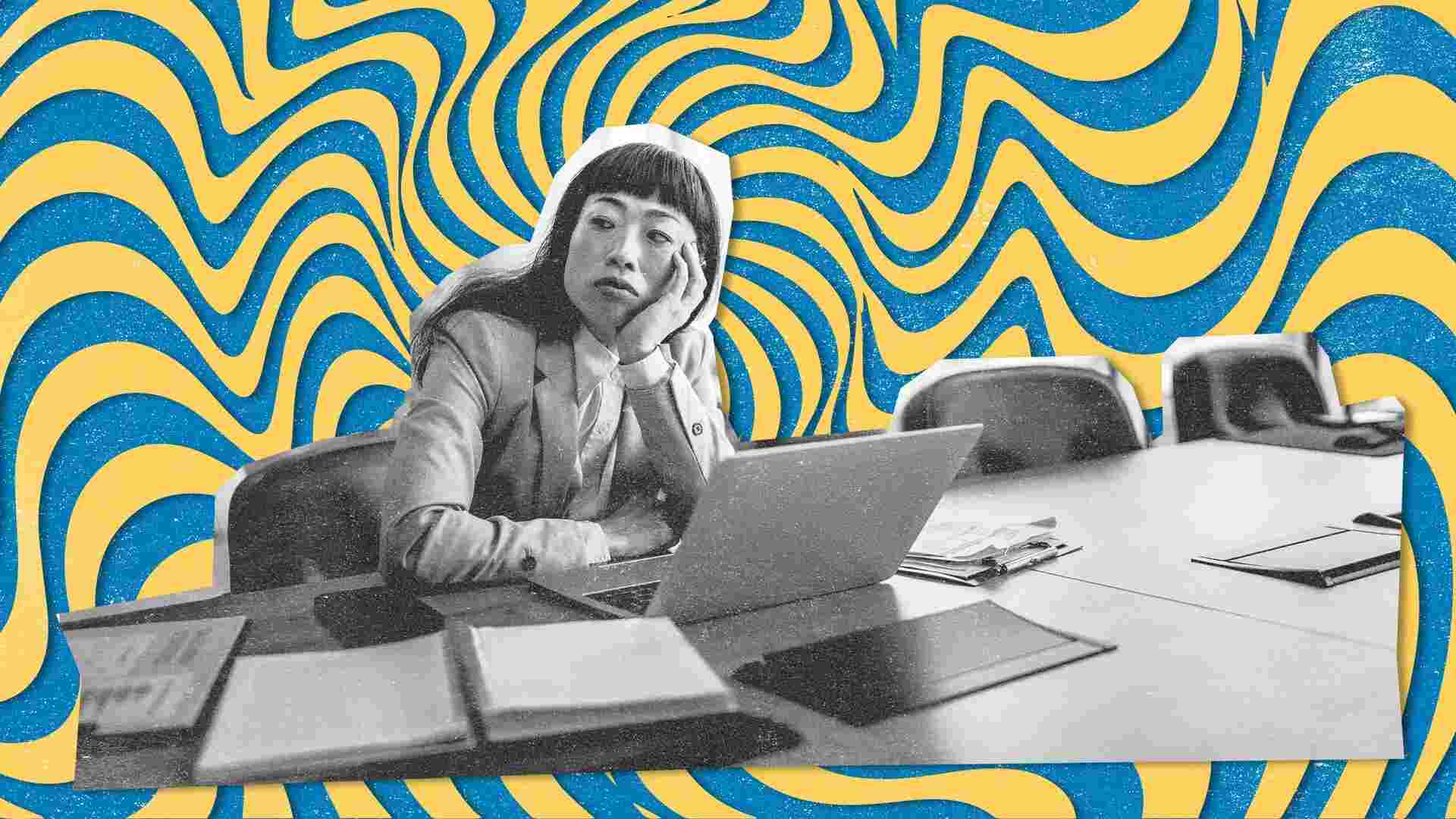
When the world is obsessed with optimizing everything, maybe the most valuable thing designers can do is absolutely nothing.


A couple of weeks ago, it was my 43rd birthday, and I spent a good few days doing absolutely nothing. My wife, Kate, knows me really well, and freed up my long weekend so I could mooch around as I pleased.
I went for long walks by myself, we went for short walks together, we ate, danced, cuddled on the sofa a little with our son . . . you know, the good stuff. A younger version of me might have thought that sounded incredibly boring.
These days, it’s exactly how I want to spend my time.
And it’s got me thinking about that b-word: boredom.
I believe this particular b-word has a bad reputation. Especially in the world of business, freelance, and entrepreneurship, where we are continuously being encouraged to hustle and fill all of our waking time with moneymaking activities. Keep learning, keep posting, just so you can keep the lights on.
Today, we’re surrounded by more creative tools, access to inspiration, and potential new opportunities than at any other point in history, but I wonder whether all this stimulation is coming at a cost.
And the more I think about this, the more I wonder whether we are becoming so good at distracting ourselves that we’re forgetting how to think for ourselves.
Have we become allergic to doing nothing?
I often find myself in random little moments trying to fill the empty space.
Waiting for a bus? Pick up your phone.
Standing in a queue? Pick up your phone.
Going to the bathroom? Best take your phone.
As a species of humans, we’ve become incredibly good at filling every available second with . . . something. And it’s not all our fault. We have these little machines with incredibly distracting toys on them that have been built to make distraction convenient.
Perhaps more so than many others, the creative industry is among the most susceptible to the stimulation machine. Jobs and roles rely on us being inspired and on top of trends and other fluffery.
We design and create for others, and need to check and develop with devices and humans in mind. I don’t know the stats, but I would hazard a guess that due to our industry, we tend to use the tools, apps, and devices more on a daily basis than anyone else. I would hate to think how long I personally spend looking at a screen of one sort or another every day.
But something happens when you spend your time looking at a device that continuously shares the thoughts and opinions of others. You start to think the same, envy what you don’t have yet, and struggle to think for yourself.
Over my 20 years in this industry, I’ve learned that the most important part of being a designer isn’t how quickly I can make something, although the bros on the internet seem rather adamant that I’m soon to be cooked.
It’s the deliberate nature of how I think about what I’m making.
Thinking requires something we’re becoming increasingly uncomfortable with.
Silence.
What did our brains do before smartphones?
When I work, I often sit in silence.
When I drive, I often sit in silence.
When I go for a walk, sometimes for four, five, or even eight hours, I like silence. And when I’m on a train, I sit and stare out of the window, usually looking at all the other people looking at their phones.
I am an exciting chap, I know.
But I find these quiet moments immensely valuable.
A few years ago, I came across the work of Harvard professor Arthur C. Brooks, who got me intrigued about what happens when we give our brains a little extra room to do their own thing.
There’s some fascinating, geeky neuroscience behind this stuff that I’ve enjoyed learning about.
Scientists have identified something called the default mode network, or DMN. It’s a collection of interconnected brain regions associated with internally directed thinking—you know, remembering things, imagining possible futures, reflecting on your past experiences, daydreaming, and all that stuff you do in the shower.
Sounds a little like Narnia, doesn’t it?
Interestingly, the DMN can only switch on when you’re not focused on external tasks.
A 2024 study published in the journal Brain provided further evidence that this network plays an important role in creative thinking. Researchers recorded brain activity during spontaneous and divergent thinking tasks, finding evidence that the default mode network contributes to creative idea generation.
Now, that doesn’t mean sitting around doing nothing will magically turn you into a creative genius. If only that were true. But it does suggest that some of the mental processes involved in creativity happen when we allow our attention to move away from the task directly in front of us.
Maybe there is a weird little irony in the fact that sometimes the best way to think about something is to stop actively thinking about it.
Maybe there is actual science behind ‘I get my ideas in the shower’
Surely we have all heard someone say this at least once. I know Albert Einstein was famous for figuring out complex problems on the long walks he took daily.
Monotonous tasks like washing the dishes, walking the dog, doing the laundry, or even mowing the lawn have all sparked brilliant business ideas for people. So while doing a little more digging, I learned about a study involving something called creative incubation.
Participants in the study were given a set of creative problems. Then they were given different activities to do before returning to those problems.
A funny thing occurred.
The people who took a break to do something simple came back with better ideas. They even outperformed those who had taken a full-on rest or spent their break doing something more demanding. The researchers concluded that giving our minds a chance to wander could actually help us think more creatively.
Also, Stanford researchers have found that walking increases creative output by an average of 60% compared with sitting. The meaningless movement or task is what allows our DMN to perform for us. Essentially, when we wander our minds are free to wonder.
Perhaps doing nothing is exactly what we need to do
I think there’s something here for all of us, somewhat hidden among the shower thoughts and hum of boredom. Whether we’re designers, artists, entrepreneurs, business owners, or whatever we choose to call ourselves, we now participate in a world that’s continuously telling us to do more, share more, make more, and be more productive. It’s conditioned us to see every empty moment as another opportunity to fill our brains with stuff.
But perhaps it’s a trap.
Maybe the long walks without headphones, the train journeys without our smartphones, and the quiet weekends with our families are exactly what we need more of. The nothingness. The meandering. The pensive stimulation of being ever-present in any particular moment.
In our rush to be productive, we’re actually limiting our brain’s capacity; we’re getting in the way of it doing its much-needed “hoovering”: to daydream, reflect, question things, and imagine what could be one day.
Now, I am no creative genius, but I wonder whether the lack of originality we see in the creative industry today has something to do with how much time we spend consuming other people’s thoughts, on a little black device, rather than giving ourselves the opportunity to develop our own.
Maybe boredom will help you think about your next move.
Maybe it will help you reflect on how awesome you actually are.
And maybe, just maybe, that next long walk in silence will change your life.

Featured Videos
Today's Top Stories:
More Top Stories:


FROM OUR PARTNERS