
- | 9:00 am
What will it take for the GCC economies to bounce back?
Experts say it is still unclear whether GCC states will change their economic models, but the ongoing war could push them to adopt new strategies.


Whatever the outcome of the ongoing Iran crisis, it has already delivered a lesson we cannot afford to ignore.
The global economy is facing ever more tangible strains from the shock triggered by the Iran war, as factories grapple with soaring production costs and activity weakens even in the services sectors.
The UAE’s departure from OPEC, a club of oil-producing countries it joined in 1967, highlights regional tensions over how to manage the fallout from the Iran war.
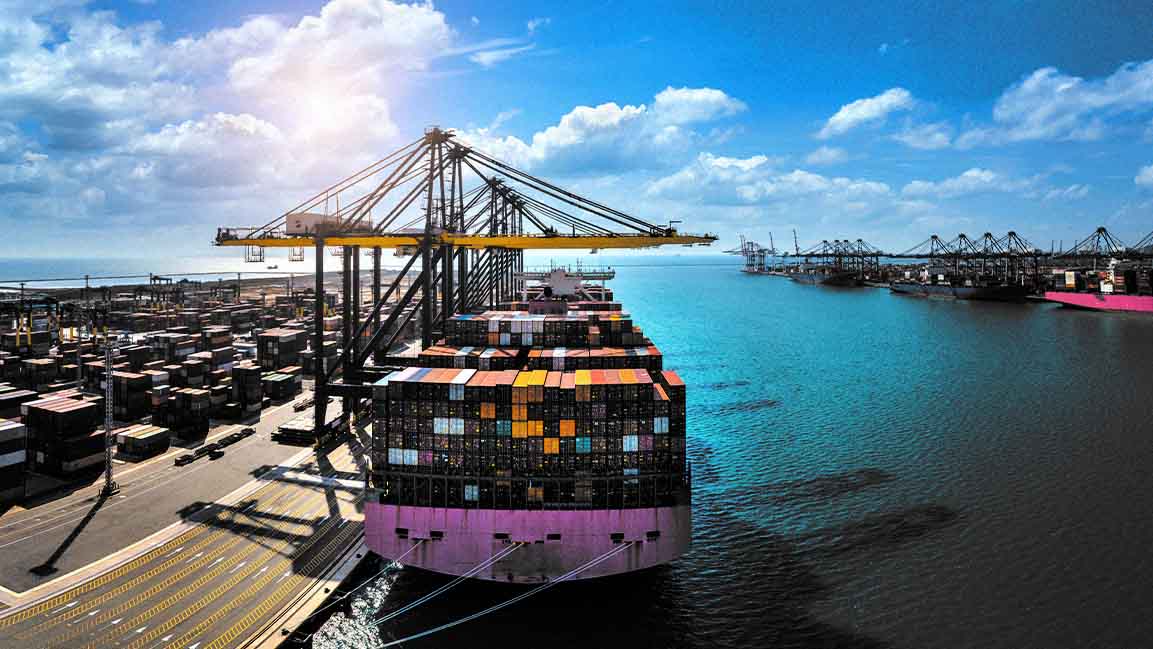
The near-closure of the Strait of Hormuz has choked off the region’s energy exports, hammering the UAE and its Gulf neighbors.
The blockade has not just caused the world’s worst energy crisis. Fertilizers that farmers need, helium for making semiconductors, and petrochemical feedstocks for manufacturing are all affected.
In the GCC countries, drone and missile attacks have hit cloud networks, energy systems, and water supplies.
Over the past two months, strikes at Amazon Web Services (AWS) data centers in the UAE and Bahrain have caused banking apps to time out, payment systems to fail, and delivery platforms to go offline. This has affected banks like Emirates NBD and Bank ABC, as well as services such as Careem. Strikes have also hit refineries and LNG facilities.
The conflict has hurt the non-oil sector, where GCC countries play a key global role, especially in aviation and logistics. Tourism has also suffered.
All these bled into the economy. And the risk of sustained conflict across the region outweighs the optimism of a ceasefire.
GROWTH FORECAST
According to Joseph Kechichian, a senior fellow at the King Faisal Center for Research and Islamic Studies in Riyadh, the war that directly affects the GCC countries will have devastating consequences for the entire Middle East.
“Clearly, the economic model that GCC states painstakingly erected in the post oil-boom era has shown its vulnerabilities as every member-state witnessed their respective gains challenged by Iran.”
“Whether GCC states will now upgrade their economic model remains to be determined, but this war may well compel them to adopt fresh strategies,” adds Kechichian.
Not unsurprisingly, then the International Monetary Fund (IMF) said that, overall, the Middle East and North Africa region is expected to record much slower expansion this year, with real GDP growth now forecast at 1.1%, which is 2.8 percentage points lower than the pre-war projection, before a recovery in 2027.
Growth in the six-member GCC is projected to slow significantly to 2% in 2026 from 4.3% forecast in October, with big variations between the economies, the IMF said.
In March, JPMorgan trimmed its outlook for non-oil growth across the Gulf region this year, warning of the risk of larger revisions ahead.
“Risks are elevated across multiple fronts and will depend heavily on the conflict’s outcomes,” JPMorgan analysts told Reuters.
The Wall Street bank cut non-oil growth by 0.3 percentage points across the bloc, with Bahrain and the UAE seeing the biggest reductions, at 0.5 and 0.4 percentage points, respectively.
What will the region need to recover from these economic challenges?
As the crisis drags on, two messages sit side by side. The first is bleak: GCC growth this year has been slashed to 2% after the economic shock of the Iran war. The second is optimistic: For the Gulf states, the sentiment has been one of resilience, prompting targeted stimulus, such as Dubai’s $270 million relief plan to support sectors like tourism and logistics, and the UAE’s Ministry of Industry and Advanced Technology securing $4.9 billion in financing from national banks to boost manufacturing and strengthen supply chains.
Countries are exploring ways to harden facilities, restructure trade routes, and reinforce logistics resilience, increasing local manufacturing and competitive business environments.
The region’s strengths, such as strong leadership, investment capacity, reliable energy, and diverse international partnerships, provide a foundation that few other regions have.
STIMULUS MEASURES
However, the ongoing crisis has seeped deeper into the GCC economies, challenging governments’ ability to manage the knock-on effects of the conflict, which are pushing up inflation, raising concerns about food supplies, and prompting downgrades to economic growth forecasts.
In such circumstances, how important is targeted stimulus in maintaining investor confidence and ensuring business continuity?
Borko Handjiski, a partner at Oliver Wyman, explains that stimulus measures matter most when business losses start to affect the wider economy.
He points out that in the GCC, these risks can show up in different ways. For example, if key industries like real estate struggle with liquidity, it could affect the banking sector. There is also a risk that companies might move away due to long-term demand declines and not return, leading to lasting economic losses. Finally, if investors and skilled workers lose confidence, they may delay or cancel their investments in the region.
“There are several key sectors that are dominated by government-related entities, which benefit from implicit state backing, reducing the immediate need for formal stimulus in some cases. In terms of timing, the current phase of the crisis still falls within a window where many companies are able to rely on existing cash buffers to meet operational expenses, including salaries.”
However, as the situation persists, Handjiski adds, liquidity pressures are likely to intensify, particularly for smaller, independent firms with limited cash reserves, compared to larger multinational companies that typically have stronger balance sheets.
“This is where targeted government intervention becomes critical. The effectiveness of stimulus depends largely on two design elements: timing and targeting. Timing requires acting early enough to influence business decisions and sustain operations, while targeting ensures that support is directed toward sectors with the greatest economic spillover effects, and to the firms within those sectors that are most in need. This approach maximizes both impact and efficiency.”
INVESTORS’ CONFIDENCE
The Gulf countries’ “Vision” strategies rely on using their oil wealth and growing domestic markets to attract foreign investment, reduce dependence on oil exports, and develop knowledge-based economies. However, these plans depended on the perception of stability, which the current crisis has weakened.
There’s a risk of an abrupt adjustment in sentiment, and investors may now cool on a region that saw foreign direct investment more than quadruple to $83 billion in the decade to 2024. Stock markets are under pressure as investors weigh an uncertain outlook following stalled diplomatic progress.
According to Kechichian, the “rising oil prices have significant repercussions on regional stability, which foreign investors seek.”
The bigger strategic issue worrying financiers, who have flocked en masse to the Gulf for years, and Western corporations with a big presence in the region, is what sort of Iran emerges next.
While it is too early to draw definitive conclusions about the full impact of the current environment, Anders Nilsson, Middle East Managing Partner at Reed Smith, says, “What we are seeing on the ground is nuanced. Inbound transactions involving foreign investors have entered a ‘wait and see’ mode.”
At the same time, Nilsson adds, local and regional transactions are continuing. “Timelines may have been nudged, but the fundamentals that made the GCC attractive before the current disruption — competitive tax regimes, deep pools of sovereign capital, ambitious national transformation agendas — remain firmly in place. And smart investors know it.”
CHANGES TO THE ECONOMIC MODEL
While the fundamentals remain intact for the wider Gulf economy—governments are highly centralized and can execute quickly once decisions are made, supported by trillions of dollars in sovereign wealth—experts say the conflict will accelerate structural changes across the GCC.
According to Dr. Florian Meier, Head of Department for Accountancy, Economics and Finance at Heriot-Watt University Dubai, economic diversification will shift from a developmental objective to a strategic imperative. He says, “Heavy reliance on hydrocarbons, combined with the growing trend towards renewable energy, makes such an environment increasingly costly.”
Dr. Meier adds that food and water security would firmly move into the national security domain. “The vulnerability of food imports will likely lead to increased government backing for agriculture, including agritech and vertical farming. Over time, local production will become more deeply embedded in the GCC’s economic model, reducing the heavy reliance on imports.”
Capital flows might change as well. “While foreign direct investment becomes more selective and demands higher risk premiums, the GCC’s sovereign wealth funds might allocate more capital to domestic investments to support the changes in economic priorities,” says Dr. Meier, adding that sectors linked to resilience and security—defense, cybersecurity, logistics infrastructure, and food security— may attract growing public and private investment, particularly for domestic firms.
WHAT WILL POST-CONFLICT RECOVERY DEPEND ON?
While current conditions could continue to weigh on sentiment, potentially capping near-term upside, post-conflict recovery in the GCC will hinge on three interlinked pillars: energy logistics, investor confidence, and fiscal realities, Dr. Meier says. “Recovery paths will vary across countries, reflecting differences in exposure, fiscal buffers, and economic structure.”
The most immediate constraint will be restoring the Strait of Hormuz as a trade route. “Disruptions create bottlenecks that persist beyond the conflict itself. Countries able to bypass the Strait are better positioned to resume exports quickly, while others may face delays clearing inventory backlogs, challenges ramping up curtailed output, or repairing infrastructure before cash flows normalize, producing uneven recovery across the region,” he adds.
Beyond infrastructure, confidence will be decisive. If market participants view the conflict as paused rather than resolved, Dr. Meier says that trade costs will remain elevated and energy exports will be constrained. “Non-oil sectors, particularly tourism, aviation, and logistics, are sensitive to residual risk premiums and perceptions of instability.”
Fiscal dynamics will further differentiate outcomes. Countries that maintain exports will retain greater policy flexibility, while others may face wider deficits and tighter spending choices. Ultimately, Dr. Meier says, “Durable recovery will depend on channeling fiscal buffers into productivity-enhancing investment and diversification, rather than short-term stimulus that risks undermining long-term growth.”
Looking ahead, Handjiski says, GCC governments are likely to move beyond immediate stimulus measures toward broader efforts to rebuild investor confidence and reduce any risk premium associated with the current environment. “This may include further enhancing the business climate, launching new flagship projects to stimulate demand, and reinforcing the region’s positioning as a competitive destination for global investors and talent.”
While a prolonged disruption of the energy market at this scale will undoubtedly have economic consequences, Nilsson says, the GCC economies will bounce back.
“Over the past two decades, many of these businesses have navigated the 2008 global financial crisis, the oil price collapse of 2014-2016, and a global pandemic. Not only did they survive, but in many cases they came back stronger,” says Nilsson.
There’s optimism that strong local fundamentals and a resilient business community will help keep development steady, potentially helping the region return to previous growth levels.
The GCC’s structural advantages have not changed, its leadership continues to deliver stability and confidence, and its business community has proven time and again that it knows how to navigate uncertainty. “For investors and operators willing to look past the noise, this remains one of the most compelling markets in the world,” Nilsson adds.