

- | 9:00 am
The bonus gap is where pay inequality hides
Here’s how to fix it.
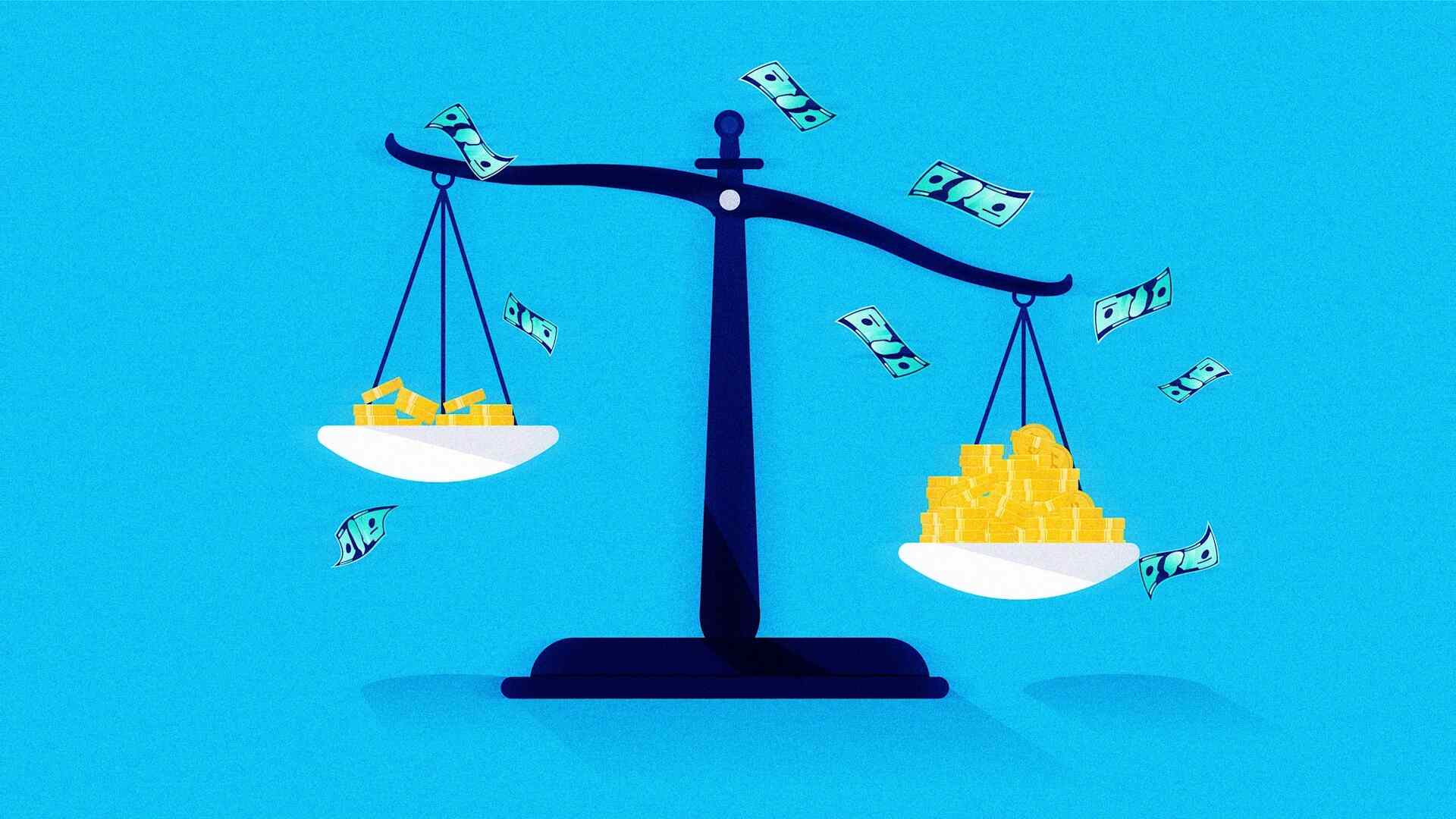


Pay transparency is having a moment. Across Europe and beyond, new regulations are pushing organizations to disclose salary bands, justify pay differences, and confront longstanding inequities. It is a necessary shift and it’s long overdue. But there is a risk that, in focusing exclusively on base salary, companies miss a more elusive and equally consequential driver of inequality: the bonus gap.
Bonuses, incentives, and variable pay are often treated as secondary components of compensation. They are not. In many roles, they represent a substantial share of total earnings. More importantly, they are where discretion thrives and bias follows.
I learned this early. In my first internship, at a software company, I discovered almost by accident that the male intern who had preceded me—same role and duration—had received a higher bonus. The justification was vague. That was my introduction to how variable pay works in practice.
If organizations are serious about closing gender pay gaps, they must go beyond salary grids and confront how bonuses are actually distributed. That requires rethinking not just compensation policies, but the everyday managerial decisions that shape outcomes. Here are four ways to get started.
1. Audit opportunity allocation, not just outcomes
Most companies measure pay gaps at the end of the process: who earned what, and why. But when it comes to bonuses, inequality often originates much earlier.
In performance-based roles, bonuses depend on access to opportunity—key accounts, high-potential clients, strategic territories. These assignments are rarely neutral. They are shaped by informal networks, managerial trust, and perceived “fit.” And they tend to favor those who already resemble incumbents. Two employees may have identical targets and commission rates, yet vastly different chances of achieving them.
I experienced this firsthand in one of my very first jobs when I was selling IT services to businesses. My assigned list of prospects was, to put it charitably, the leftovers, small accounts, cold leads, companies that had already said no. At the end of the year, I did not hit my targets. I walked away with my base salary, a thin one, and a lesson about how inequality starts long before anyone picks up the phone.
To address the bonus gap, organizations must start auditing how opportunities are distributed. Who gets the most lucrative accounts? Who is assigned to high-growth markets? Who inherits established client relationships?
This requires making the invisible visible. Companies should track the revenue potential of assigned portfolios, not just individual performance. They should compare distributions across gender and other dimensions, and treat disparities as seriously as pay gaps themselves. Equal pay cannot exist without equal access to opportunity.
2. Formalize the criteria behind bonuses
Unlike salaries, which are typically governed by structured pay bands, bonuses often rely on loosely defined criteria: “performance,” “impact,” “leadership,” or “potential.” These categories sound objective, but in practice they are highly subject to individual interpretation.
When evaluation criteria are vague, decision-makers tend to default to mental shortcuts, stereotypes, affinity bias, or subjective impressions. In other words, the less formalized the system, the more room there is for inequality to creep in. Yet in many organizations, bonus decisions are still made with limited documentation and little traceability.
Fixing this does not require eliminating managerial judgment, but it does require framing it. Companies need to define clear, measurable indicators for performance-related bonuses, and ensure that these indicators are consistently applied. Where qualitative assessments are necessary, they should be anchored in observable behaviors, not abstract traits.
Decisions should also be documented to create accountability.
3. Make bonus decisions more transparent
Transparency transforms salary conversations. It can do the same for bonuses, but only if organizations are willing to extend it. Many employees have little visibility into how bonuses are determined. They may know their own targets, but not how their performance is evaluated relative to peers. This opacity creates fertile ground for mistrust, and for inequality.
Introducing transparency means clarifying the process. What percentage of bonuses is tied to individual versus team performance? How are targets set? How are exceptional contributions recognized? What checks are in place to ensure consistency across managers?
Some organizations go further by making sure bonus decisions are reviewed collectively, which helps create a shared standard of fairness. Transparency also shifts the burden of explanation. Instead of employees having to question disparities, managers must be able to justify them.
4. Train managers to correct bias
Many managers are not trained to make equitable compensation decisions. They are promoted for operational performance, not for their ability to assess others objectively. Too often they fall back on gut feeling, and on the assumption that their gut is a reliable instrument, which it rarely is.
Identical behaviors are often interpreted differently depending on who exhibits them. Assertiveness may be rewarded in one employee and penalized in another. Availability and visibility—both key drivers of bonus outcomes—are themselves shaped by unequal constraints, particularly for caregivers. Think of the parent rushing out at 5pm to pick up a child from daycare, while her colleagues stay behind for that drink with clients that somehow always matters at year-end review.
Training managers to recognize these dynamics is essential. But training alone is insufficient if it can remain abstract. It must be tied to concrete practices: how to evaluate performance against predefined criteria, how to document decisions, how to challenge one’s own assumptions.
Bias may not be eliminated entirely. But it can be managed, acknowledged and measured better.
From policy to practice
Workplace inequality does not primarily reside in formal rules, but in their execution. Companies can have perfectly equitable salary grids and still produce unequal outcomes.
Fighting the bonus gap therefore is not a marginal issue. Over time, differences in bonuses compound, affecting career progression, wealth accumulation, and perceived legitimacy within organizations.
There is one more dimension that rarely makes it into these conversations: maternity leave. In France where I live, women on maternity leave are compensated at their normal salary level—which sounds great, until you realize that bonuses and variable pay are typically excluded. For American readers, even this may sound generous. But for me, watching a significant share of my income disappear felt like a clear signal that caregiving is penalized.
The good news is that the levers for change are within reach.