
- | 9:00 am
Does the UAE’s meal plan boom have a packaging problem?
Social media and a hustle culture lifestyle have fuelled the growth of meal subscription plans in the UAE. But is the waste issue too big to ignore?
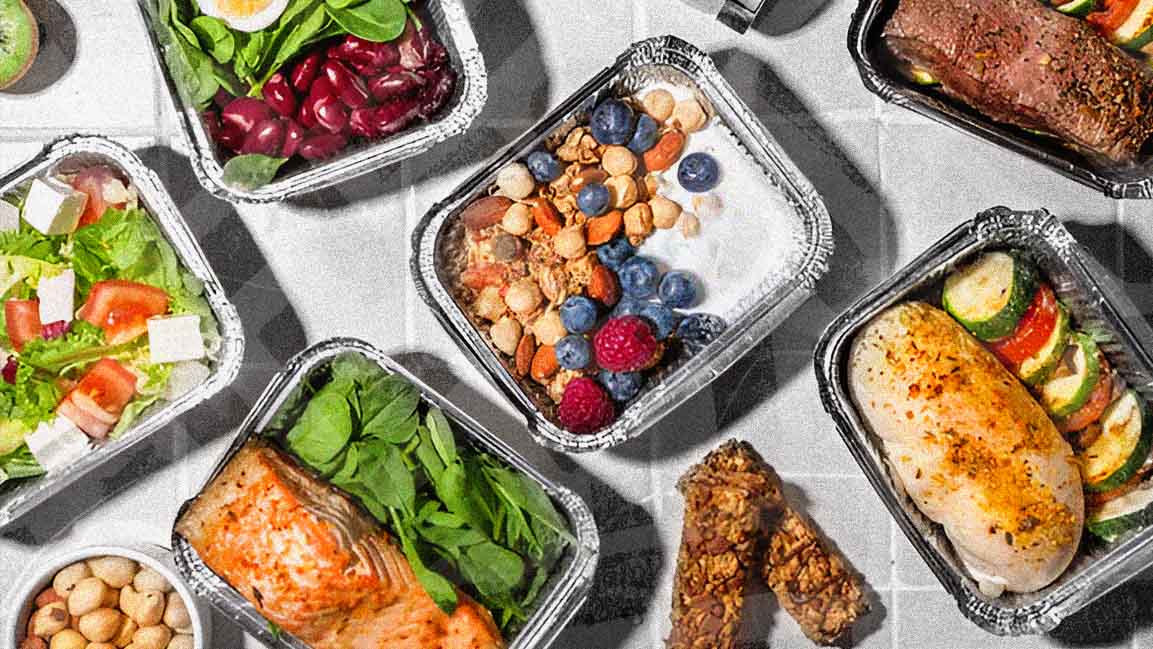


Meal plans are becoming more popular among working people in the UAE. Many are choosing them for health reasons, convenience, and to avoid spending time scrolling through food apps.
Is it time to take a closer look at packaging innovation for climate impact? The answer is not as simple as just swapping plastic for paper. There are many other things to consider.
Much of the debate around meal plans tends to focus on what is easiest to see: stacks of containers, cutlery kits, and delivery bags. Yet, the visible packaging is often only a small part of the environmental footprint.
“Where they’re well designed, they can be slightly lower-carbon than equivalent supermarket or restaurant meals, mainly because they cut food waste and some transport inefficiencies,” says Dr. Aseel Takshe, Acting Dean at the School of Health Sciences and Psychology, Canadian University Dubai.
“Multiple packaging life cycle assessments (LCAs) suggest that for most packaged foods, packaging typically accounts for only around 3–3.5% of the product’s total climate impact, with the food itself responsible for the overwhelming majority,” Dr. Takshe adds.
Meal plan companies often defend their packaging footprint with a simple argument: portion control reduces food waste. And that, in turn, lowers emissions.
But how packaging is recycled in the UAE is also a major issue.
THE HIDDEN INGREDIENTS IN MEAL PLANS
Most meal plan websites will specify in great detail everything needed to maintain a greener image.
A closer look at meal plan packaging, however, unearths significant amounts of often non-recyclable waste. These include insulating foam, plastic films, and, more importantly, gel ice packs, which often contain a gel made from sodium polyacrylate, which isn’t biodegradable.
Going further back to transit, there are insulation materials and corrugated boxes for external protection. They also use void-fill paper, bubble bags, and cushioning to protect fragile ingredients, such as eggs, from shock and vibration.
Within the meal plan industry, some deliver ready-to-eat meals, while others deliver those that come “ready-to-cook”. The LDPE-based protective liners and plastic packets separating individual ingredients make matters worse. Low-density polyethylene can easily jam recycling machines.
This adds up to expensive recycling equipment or, alternatively, to cutting corners on food safety.
REUSABLE IS NOT ALWAYS BETTER
Even packaging solutions that seem environmentally obvious can carry hidden costs.
Mike Cheetam, Group Chief Sustainability & Corporate Affairs Officer at Hotpack, recalls a food delivery experience that arrived in large reusable plastic containers designed to eliminate single-use packaging.
At first glance, the concept appears both practical and environmentally sound. However, this leads to further complications, such as reduced space for delivery bags, resulting in more delivery trips and often requiring returns to the hotel to collect the containers.
The reverse logistics don’t end there, Cheetam points out.
“They then have to be returned to industrial washing centers, where they are cleaned at 80 degrees, often for up to one and a half hours using detergents that can enter the environment, along with the associated energy costs.”
THE PLASTIC PARADOX
Even the materials themselves are not as straightforward as consumers often assume.
Hotpack, which manufactures both circular polymer-based and plant-based packaging, has seen the industry rethink its assumptions over the past decade.
“There was a time at Hotpack, perhaps eight or 10 years ago, where we thought we might not buy another plastic-based manufacturing machine,” Cheetham says.
However, over the past 5 years, evidence-based scientific assessments complicated that view.
“Science started to tell a different story. In many cases, paper, plant-based biodegradable options are clearly a great choice. But in other cases, the good, recyclable plastics are by far the better option, sometimes three to five times more efficient in reducing carbon footprint.”
“The energy used in recycling a good plastic is significantly lower than that of a delivery driver transporting a reusable box, where they may need to make up to eight times as many journeys.”
CAN BUSINESS BOTTOM LINES SURVIVE SUSTAINABILITY?
For meal plan companies themselves, sustainability decisions rarely revolve around packaging alone.
Steve Delpino, who works with the UAE meal subscription company Meals on Me, says operational realities often dictate packaging choices. Even as Delpino aims to prioritize sustainability, most meal plan companies operate out of cloud kitchens, which pose logistical hurdles.
“At Meals on Me, we use a unique shelving system. It’s foldable, extends, and retracts, and so we had to really maximize the spaces in order to store all these products. If we complete our beta testing on schedule, we’ll need to increase our kitchen storage capacity by about 30%. The only way to do that, really, is to use the kitchen from the ceiling to the top of your head,” he explains.
Food safety becomes a prime issue in smaller spaces, too, as sterilized boxes cannot be placed in areas with fryers and grease. The ecosystem, as it stands today, lends itself to disposable packaging, which can be easily stored in warehouses and accessed as needed.
Those constraints highlight the broader tension between sustainability goals and operational practicality.
AN INFRASTRUCTURE GAP
That complexity becomes even more pronounced when the conversation turns to what happens after the container is thrown away.
Many meal plan boxes are labeled recyclable or compostable. But the UAE’s waste infrastructure does not always match those labels.
“Packaging labeled ‘recyclable’ or ‘compostable’ sometimes lacks a matching high-performance municipal system. Realistically, a large fraction of such materials is still likely to end up in landfill or low-value disposal unless a business runs its own dedicated take-back or partners with specialized recyclers,” says Dr.Takshe.
The UAE has made several decisive moves towards tackling the issue.
The introduction of the Circular Packaging Association, and more notably the Extended Producer Responsibility pilot that placed the onus of post-consumer waste squarely on manufacturers and brand owners, is anticipated to create greener waves in the country.
Ultimately, however, the sustainability of meal plans may depend less on the containers and more on the food inside them.
As Dr.Takshe says, “In practice, the highest impact improvements tend to be menu shifts away from high-emission ingredients, verified waste reduction throughout the chain, and low-carbon energy for storage and cooking.”
Is there anything consumers can do? As younger generations navigate fast-paced cities like Dubai, where convenience often trumps eco-consciousness, verifying and demanding transparency can further boost accountability.
Essentially, this would mean looking for third-party eco-labels such as ISO 14001, examining packaging codes, assessing supplier transparency, and reviewing LCA data, among others.
Packaging still matters. But it is rarely the whole story. The greener meal may not be the one with the compostable box, but one with fewer emissions on the plate.