
- | 8:00 am
This startup wants to turn your water heater into a smart thermal battery
Reservoir’s ultra-efficient water heater can save you money by running when electricity is cheap—and help the grid make better use of renewable energy.
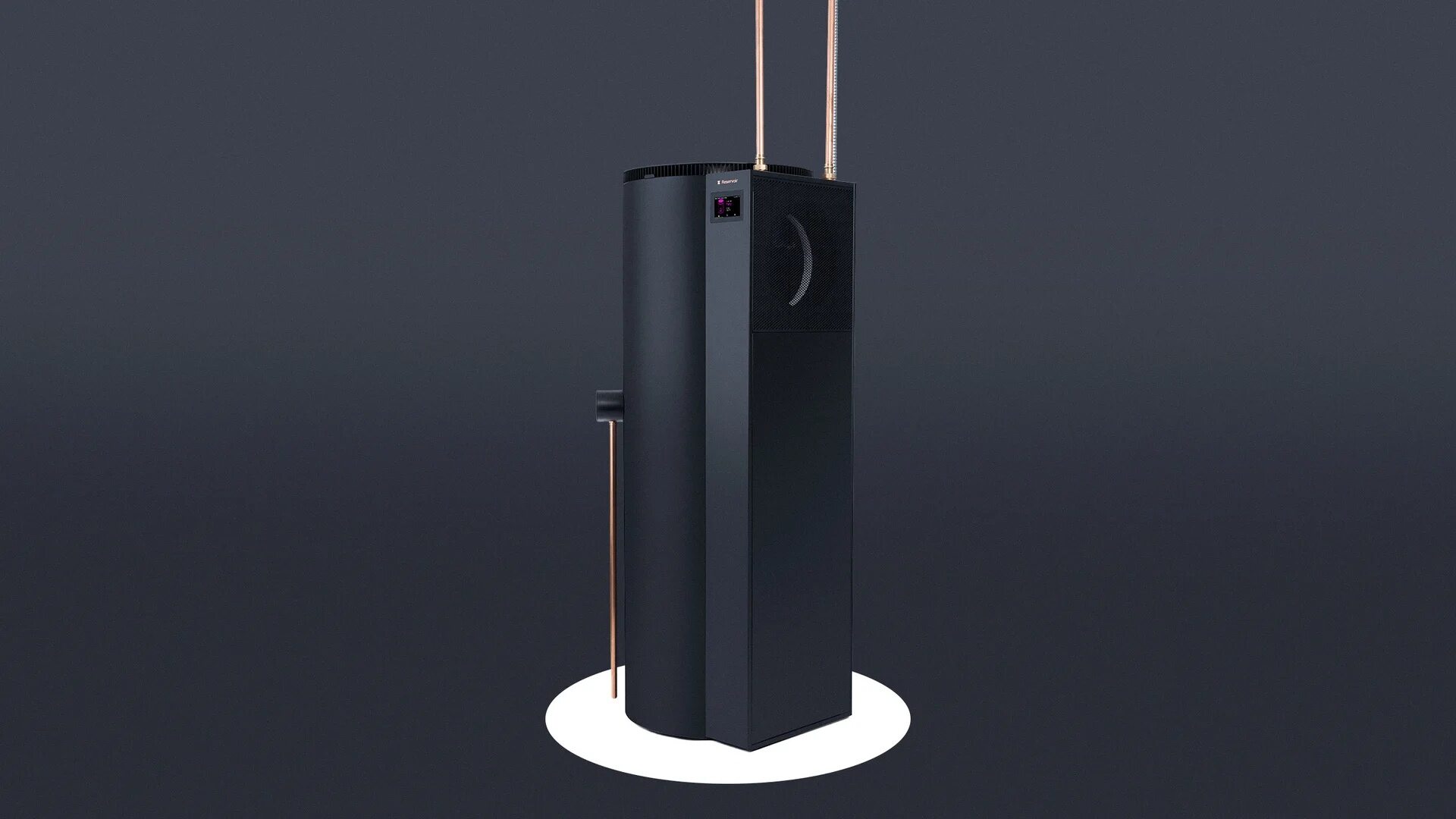


Unless your shower turns cold, you probably don’t give much thought to your water heater. But it’s a major energy user in the home, and unlike solar panels or heat pumps, it’s gotten relatively little attention as a piece of smart home tech. A new startup is trying to change that.
The company, called Reservoir, designed a heat pump water heater that predicts when you’ll need hot water and heats up in advance, when electricity is cheapest. The upfront cost is comparable to other water heaters, but over the course of a year, it can save as much as $800 on energy bills.
Cofounder and CEO Luke Winston-Almanzar was inspired to launch the startup after beginning to electrify his own home a few years ago. He’d been overlooking the amount of energy used by a typical water heater. “I realized I was using more energy to heat my water than it took to drive my electric vehicle,” he tells Fast Company.
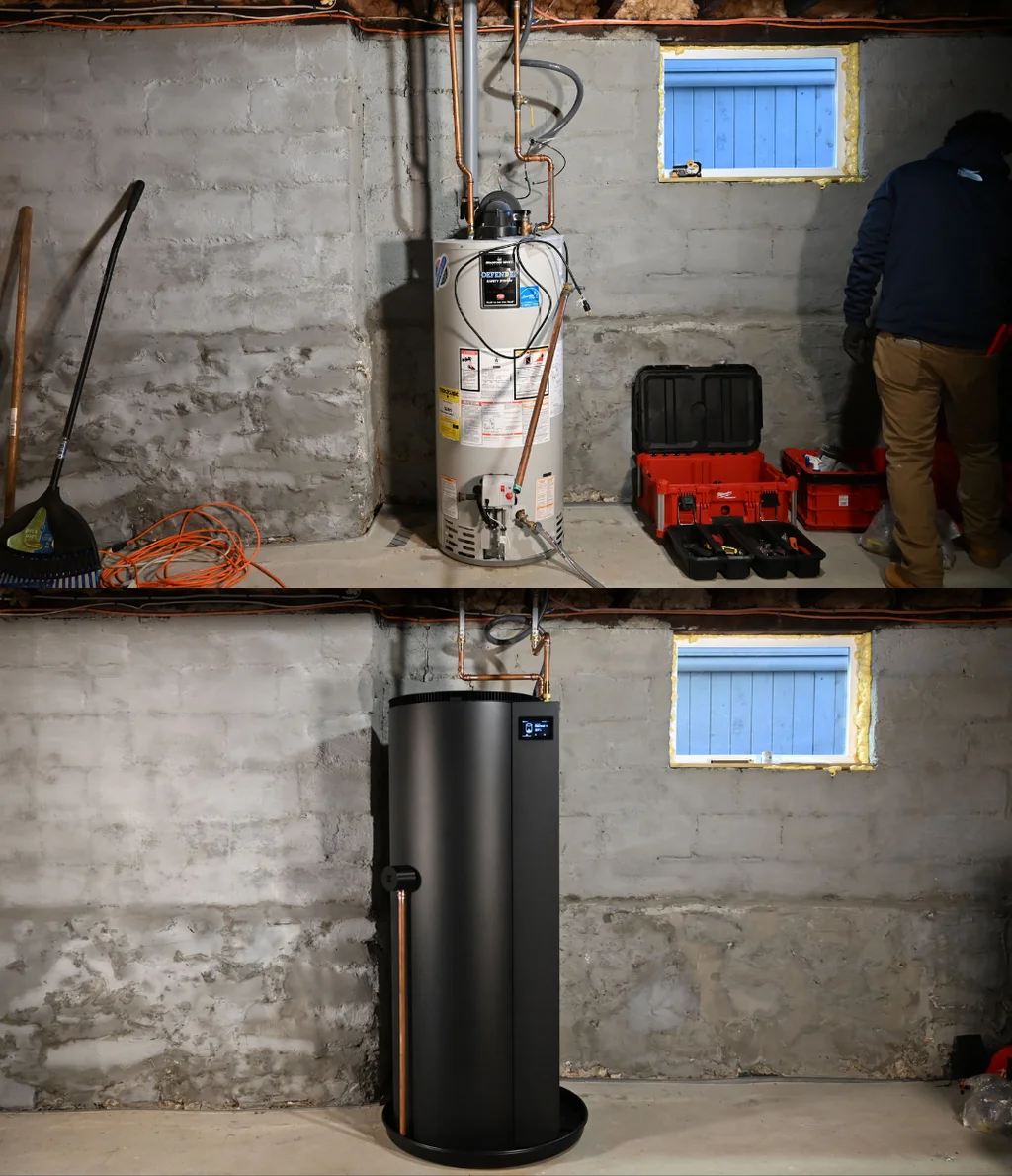
He bought a different heat pump water heater, knowing that the basic design would work efficiently by pulling heat from the air. But he quickly realized that existing products on the market had challenges. The device he’d bought took hours to warm up, and the water wasn’t always hot when he wanted to take a shower. The software was clunky. The heater was loud, like an outdated refrigerator.
Winston-Almanzar, who was previously chief business officer at the 3D-printing company Formlabs, set about creating a better product himself. He partnered with Gabriel Parisi-Amon, who previously worked at Apple and cofounded the shower startup Nebia, and Jake Felser, who built rocket engines at Blue Origin.
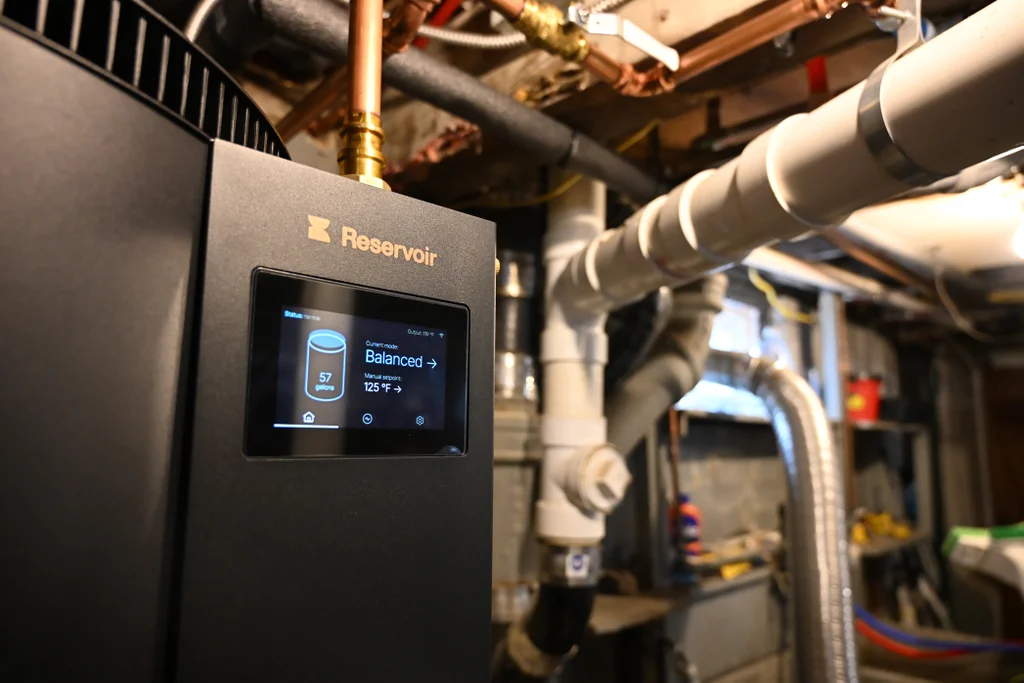
First, they wanted to make a product that was truly smart. “To put it in perspective, my air fryer is smarter than the typical water heater,” Winston-Almanzar says. Reservoir’s new design starts by understanding your habits, so it can predict the times that you’ll need hot water. Then it compares that to your utility’s electric rates, so it can heat up at the optimal point. In some cases, the rates for using electricity at off-peak hours are dramatically lower. In the Boston suburb of Groton, for example, the off-peak energy rate is five cents a kilowatt-hour. At peak times, it’s 50 cents per kilowatt-hour.
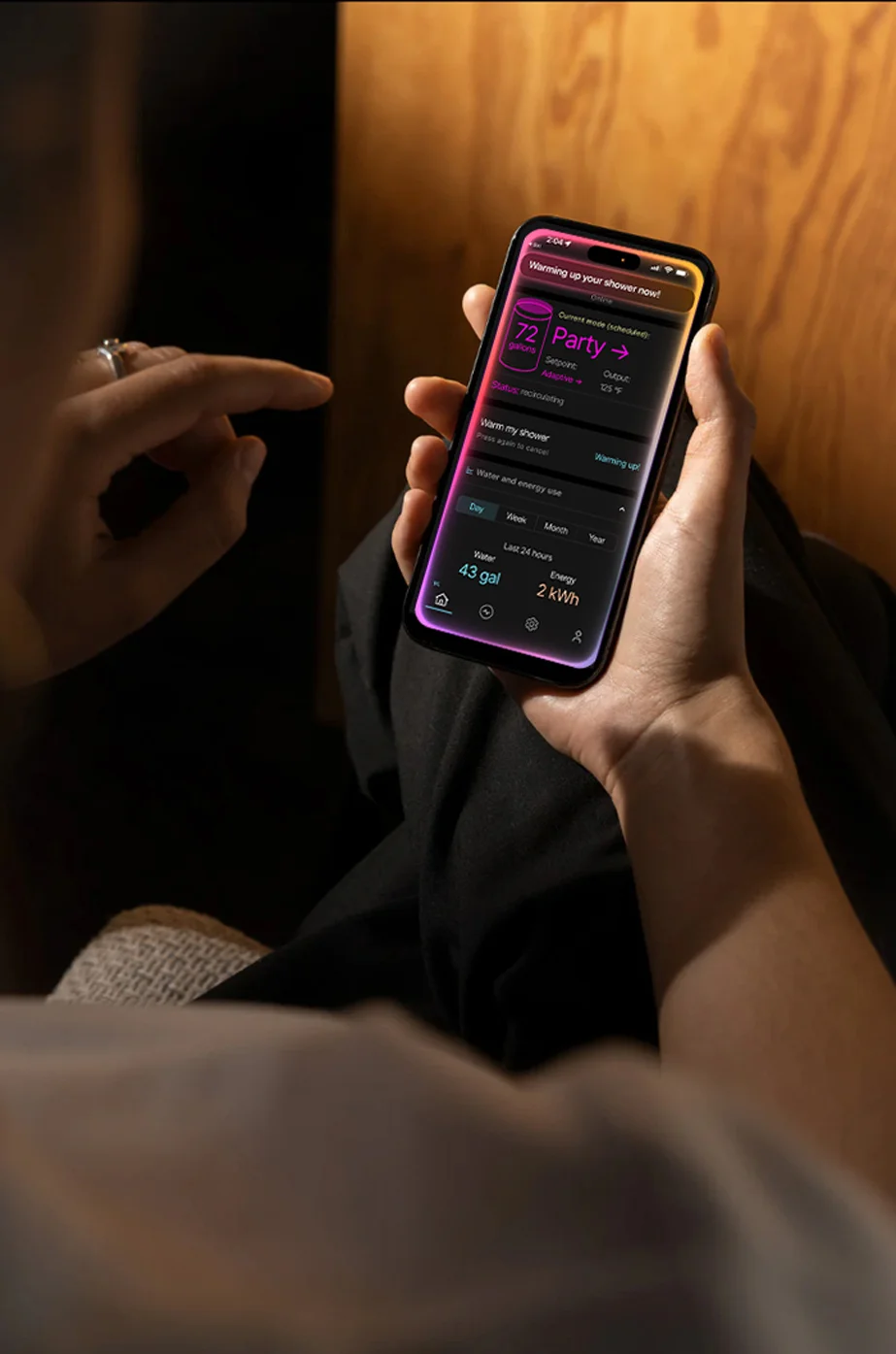
“The average person doesn’t care when we heat your water,” he says. “We can heat at three in the morning. We can at four in the afternoon. What you care about is when you get in the shower.” If someone has solar panels, the water heater can also run when the sun is shining and you’re generating solar power.
At the grid scale, a network of millions of water heaters can also act like a thermal battery, storing excess renewable energy produced in the middle of the day. That helps avoid strain on the grid at times of peak demand, so utilities can avoid using polluting gas “peaker” plants. (Unlike a smart thermostat that might turn up your temperature at times of peak AC demand, it also doesn’t affect comfort, since your shower will still be hot when you need it.)
“We can even shift load at the neighborhood transformer level where only 5-10 houses are connected and avoid local brownouts or infrastructure costs,” says Winston-Almanzar. “But there are 120 million homes with a water heater, so the potential is enormous. If every water heater in the Boston Metro alone were intelligent and grid connected, we would have the capacity of a nuclear scale power plant, without building a nuclear scale power plant.”
The company announced today that it raised $8 million in seed funding led by Asymmetric Capital Partners, which it will use to grow in Boston and begin expanding to other cities.
Reducing the cost “across the board”
The design also goes farther to outperform typical water heaters. When it anticipates that you’ll be getting in the shower, it uses a recirculation pump to warm up your pipes beforehand, so you don’t have to turn on the hot water tap and wait. The recirculation technology can also take samples of your cold water—so if you’re out of town in the winter and your pipes are on the verge of freezing, it can pump warm water through them.
It can detect leaks both in the water heater itself and in your pipes. An ultrasonic flow meter tracks how water flows, and a pressure sensor detects if a faucet is dripping or a leak has started. It also knows if your water pressure is too high and needs an adjustment to stop damaging your pipes. It also cleans itself to prevent the risk of legionella bacteria that can build up in water heaters at certain temperatures.
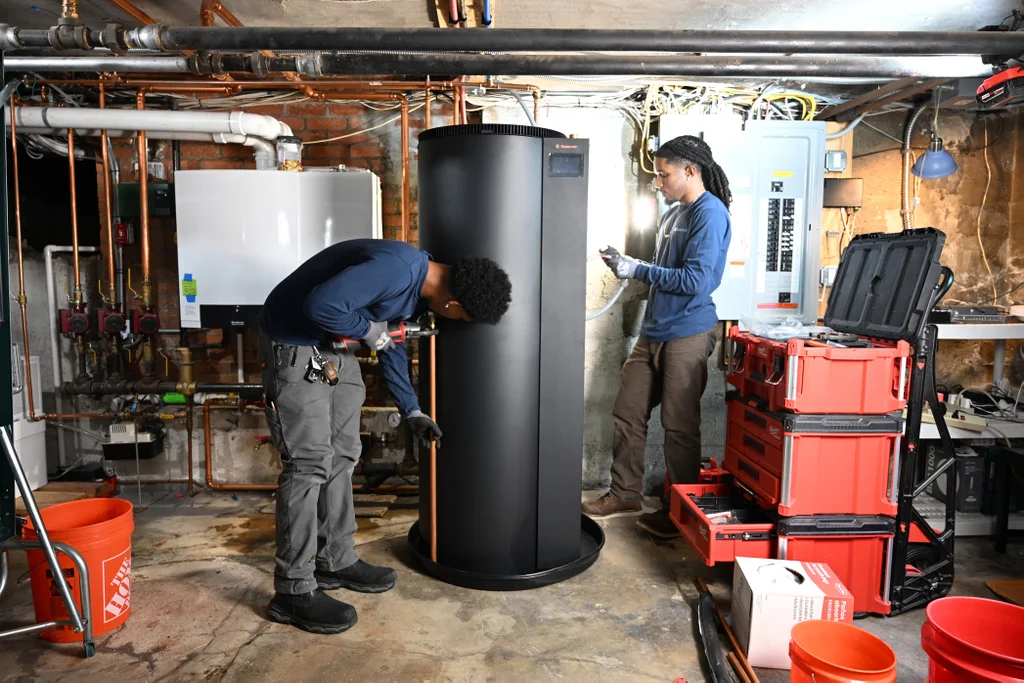
In Boston, where the startup is launching first, the starting cost is less than $4,000 including installation, after state incentives. That’s less than other heat pump water heaters, and more affordable than many gas water heaters. The company handles its own installation to help with cost, a step that it says it can do more efficiently. (The technology is also helping attract some younger workers: the company’s master plumber is 25 in a field where the average worker is in their 60s.)
“The upfront cost, I think, is one of the biggest barriers to homeowners proactively adopting the new and best technology,” says Winston-Almanzar. “And so we’re aiming to reduce the cost across the board.”