- | 10:00 am
Samsung Galaxy Z Fold 8: A foldable finally worth the fuss
After weeks of living with Samsung’s Galaxy Z Fold 8, the case for the format finally feels settled.
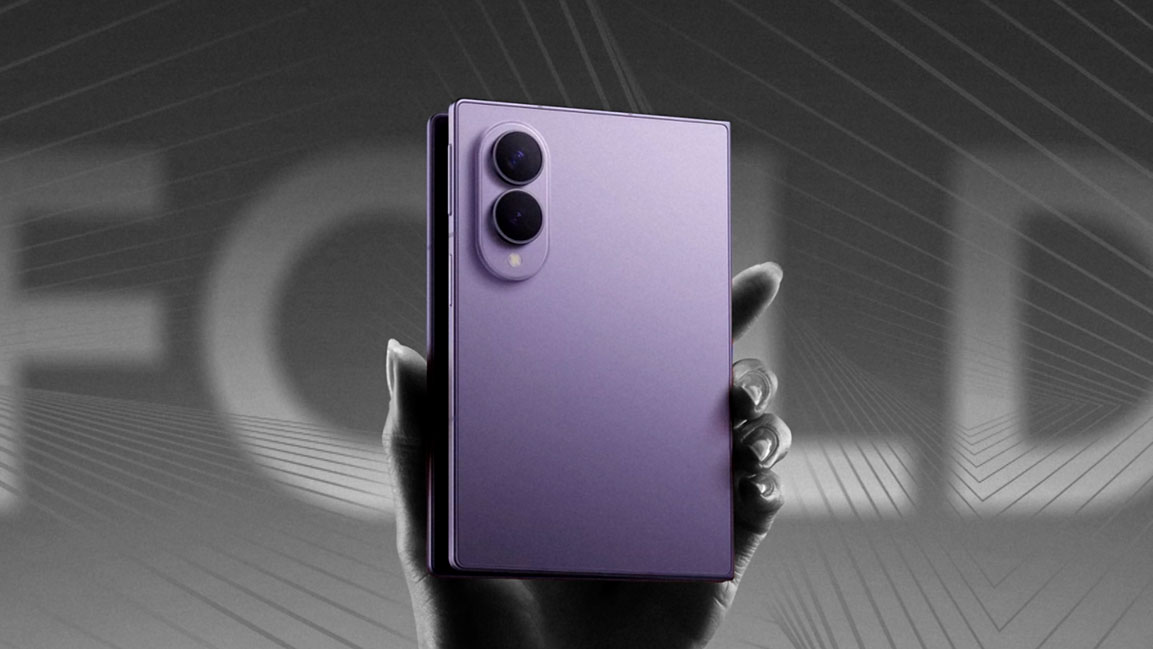


I spent the better part of a month living with Samsung’s new Galaxy Z Fold 8, and I confess I’m still puzzling over why it took Samsung this long to arrive here. This is not, however, a conventional successor to the Fold 7: Samsung has repositioned that design as the Fold 8 Ultra, while the Fold 8 introduces a shorter, wider form factor.
Having used several rival foldables, I can say with near certainty that Samsung has outdone them in nearly every meaningful respect. The Z Fold 8 is lighter, slimmer, and more considered in its execution—a device that manages to feel effortless without ever sacrificing raw processing muscle.
The matte metal chassis lends the phone an unmistakably premium air, and its featherlight build—at 201 grams, the lightest Fold Samsung has ever shipped—borders on the implausible; more than once I found myself checking that I hadn’t picked up an empty display unit by mistake. It manages something few foldables have pulled off: the utility of a book-style device paired with a shorter, passport-sized footprint—light, compact and thoroughly enjoyable to use on either screen.
I put the phone through the ordinary rhythms of a daily driver: email, messaging, calendar-juggling, the usual administrative churn—none of which, notably, involved much video consumption. That changed quickly. I found myself lured back to the unfolded display again and again, unable to resist the sheer efficiency of its screen real estate.
Compared with rival handsets, and even with its own sibling, the Ultra, the Fold 8 makes a compelling case that bigger doesn’t have to mean clumsier. The inner 7.6-inch panel alone makes it one of the most satisfying devices I’ve used for watching, gaming, reading, and endless scrolling.
LIVING WITH THE UNUSUAL SHAPE
The Fold 8’s unusual proportions do require some adjustment. When closed, its short body makes reaching the top of the display with one hand surprisingly easy, although its 81.9 mm width makes it more difficult to wrap your fingers around than a conventional phone. It slips comfortably into a jacket pocket and sits lower in a trouser pocket than taller foldables, but the width remains more noticeable than its weight.
The short, wide cover display also changes how you type. Two-thumb typing feels spacious and natural, without the cramped keyboard associated with narrower folding phones; one-handed typing is less comfortable because of the width. For quick replies, searches and navigation, however, I rarely felt compelled to unfold it.
App continuity between the two screens is largely seamless. Most applications reopen in the same place when you move from the cover display to the inner screen, with little of the resizing or reloading friction that once made foldables feel unfinished. Two-app split-screen multitasking feels genuinely useful rather than demonstrative: email beside a document, messages beside a calendar, or a browser beside notes. Three apps can run at once, although the third window works best for something glanceable rather than for another task that demands sustained attention.
Most mainstream apps scale cleanly across the 4:3 panel, but the experience is not universal. Some applications leave conspicuous empty space or enlarge interface elements without using the additional room intelligently. Widescreen video also produces visible letterboxing. The larger panel still delivers a more immersive viewing experience than a conventional phone, but not every inch of the 7.6-inch display is being used.
THE CREASE—OR RATHER, THE NEAR ABSENCE OF ONE
The crease, long the Achilles’ heel of every folding phone, has become dramatically less conspicuous. It’s visible only if you go looking for it, and even then, your fingertips will struggle to register it at all. Samsung has substantially diminished the crease on the inner display compared with prior generations, a change it credits to a new Flex Titanium display structure beneath the panel. It has paired that improvement with a lighter build and a hinge that opens with far less resistance than earlier Fold models.
PERFORMANCE THAT REFUSES TO COMPROMISE
Powering the Fold 8 is Qualcomm’s latest-generation Snapdragon silicon—the same top-tier Snapdragon 8 Elite Gen 5 chipset found across Samsung’s current foldable lineup—and it shows: there’s no hint of hesitation, no perceptible gap between what this “smaller” sibling can do and what the Ultra accomplishes. Whatever demanding task I threw at it—multitasking across split screens, gaming at high settings—the Fold 8 handled with the same unflappable composure as its pricier counterpart.
Longer gaming sessions produced noticeable warmth around the upper half of the chassis, but the phone never became uncomfortable to hold, and I encountered no obvious slowdown. That matters on a device whose larger display encourages longer sessions than most phones ordinarily receive.
SOFTWARE: A GRUDGING APPRECIATION
I’ve never counted myself among the admirers of Samsung’s proprietary software layer. Still, I’ll admit the company has made real strides in getting its software to work with this unusual hardware more fluidly than before. As someone who gravitates toward a near-stock Android experience, I found this an adjustment. In retrospect, the adjustment amounted to little more than the one-time recalibration every newcomer to Samsung’s ecosystem has to make.
On balance, I came away genuinely impressed with most of the preloaded suite. The new Galaxy AI additions are the rare on-device features that survived a month on my home screen: Call Brief, which pulls the relevant details out of a call, earns its place; Now Nudge, which surfaces contextual prompts mid-conversation, is the kind of thing you forget exists until it saves you a beat.
Samsung Internet remains the one holdout I can’t quite justify when Chrome exists and comes preinstalled too—old habits, evidently, die hard on both sides. Samsung is also backing the phone with seven generations of Android OS upgrades and up to seven years of security updates, which quietly does more for its long-term value than any single feature here.
CAMERAS: DEPENDABLE, BUT NOT EXCEPTIONAL
This is where the story turns, however reluctantly I admit it. Samsung has spent the better part of a decade building a reputation as one of the more dependable names in mobile photography, so it’s genuinely jarring to come away from the Fold 8 feeling merely satisfied rather than impressed. The dual 50-megapixel sensors on the rear are perfectly serviceable—daylight shots come out crisp, colors land close enough to true, and there’s nothing here that will actively disappoint you. But “serviceable” is precisely the problem for a brand that has conditioned its users to expect more.
The absence of a dedicated telephoto lens is the most conspicuous gap, and it’s felt often. Push beyond 2x and the software strains to compensate, softening detail in a way that a proper optical system simply wouldn’t. Low light is a similar story: workable, occasionally even good, but never the kind of quietly confident performance Samsung’s flagship line has trained me to expect. It’s not that the Fold 8’s camera is bad—far from it—but it is the clearest compromise on a phone whose engineering priorities lie elsewhere: the hinge, the display and the chassis.
For anyone who leans on their phone as a primary camera, this is worth sitting with before you buy. For most, it’s something you’ll notice, shrug at, and then promptly forget the next time you unfold the screen and lose an hour to it anyway.
ODDS AND ENDS WORTH NOTING
A handful of smaller details rounded out the testing period and are worth mentioning, even if none of them earned their own section. Samsung retains the 10-megapixel punch-hole camera introduced with the Fold 7. The cutout is unobtrusive, and images are noticeably sharper than those produced by Samsung’s older under-display system.
Speakers are loud and reasonably well balanced, though anyone expecting genuine bass will be disappointed, as is true of most phones this thin. Haptics are tight and satisfying; an IP48 rating—meaning water resistance but only limited protection against solid particles, rather than a proper dust seal—offers a welcome bit of reassurance that folding phones have historically lacked.
Battery life, supported by a new 4,800 mAh battery with a silicon-carbon anode, is one of the Fold 8’s practical strengths, comfortably carrying a full day of the mixed use described above. The long-term picture is less straightforward, however. Samsung lists a minimum battery endurance of 1,200 charge cycles before capacity falls to 80%, down from 2,000 cycles for the Fold 7. Heavier video use will still have you reaching for a charger by evening, while wired charging is capped at 45 W and there’s no adapter in the box.
And the price, unsurprisingly, remains difficult to fold down: $1,899.99 for the base 256GB model—$100 less than the Fold 7’s launch price, but still eye-wateringly expensive. The Fold 8 Ultra starts at $2,099.99.
THE QUESTION MARK ON THE HORIZON
It’s difficult to spend a month with the Fold 8 without thinking about the rival foldable rumored to be on the horizon. Reports point to a similar book-style design and a display with a barely perceptible crease. If those reports prove accurate—and if the device reaches the market—Samsung could soon face its most consequential foldable competitor yet.
Samsung has spent years refining hinges, coaxing panel manufacturers towards thinner glass and persuading consumers to pay a premium for a phone that folds in half. Yet that technical head start may matter less against a rival with an ecosystem capable of influencing purchasing decisions before its first foldable has even been tested. That is the uncomfortable truth of consumer technology: being first rarely counts for as much as being everywhere.
None of this diminishes the Fold 8. If anything, it underlines what Samsung has achieved. The engineering has matured to the point where a book-style foldable can serve as an effortless daily driver.
THE BIGGER PICTURE
Taken together, this feels like the generation in which the smaller Fold finally stole the spotlight from its own Ultra sibling. This wider, squatter form factor borrows the best traits of a phone and a small tablet and, in doing so, delivers a folding phone experience that feels both fresh and mature at once. It’s the rare device that still draws unprompted admiration from strangers on the street, a novelty most smartphones lost years ago.
None of this is to say the Fold 8 is beyond reproach. Its price remains steep, and dust protection still trails a standard flagship, on top of the camera limitations already noted. But as a piece of engineering—and as a statement of where folding phones are headed—the Galaxy Z Fold 8 feels less like an incremental update and more like Samsung finally getting out of its own way.