
- | 10:00 am
Masdar City on why the cities that will lead the future are the ones preparing for it now
Inside the systems shaping the next era of climate-ready cities
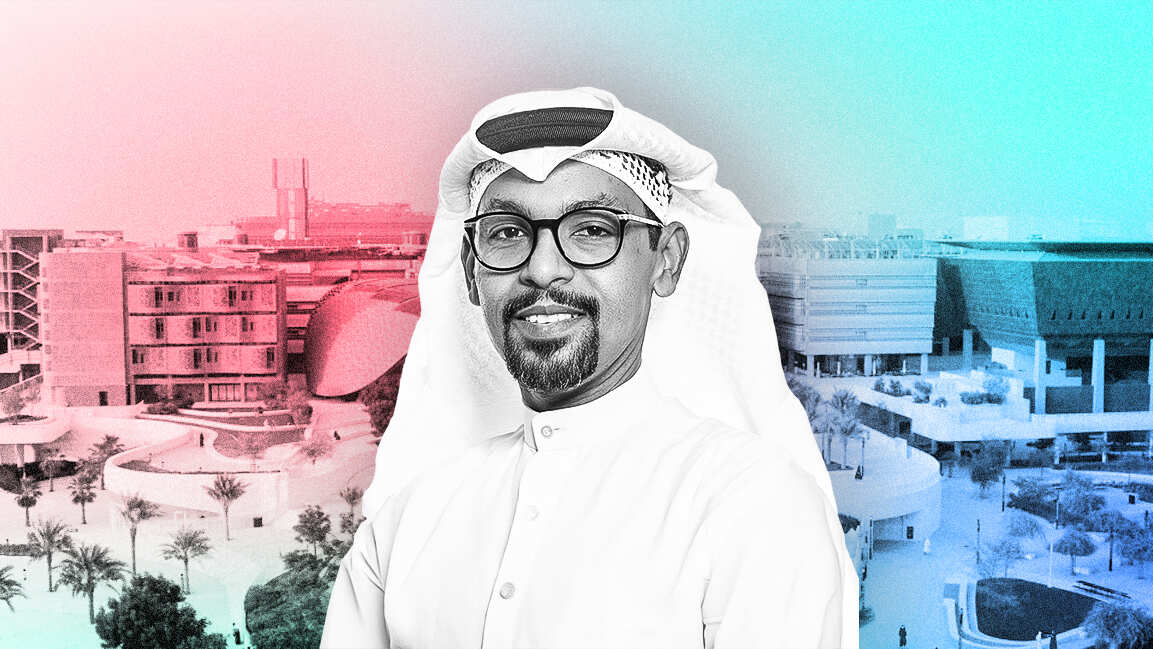


Cities are under growing pressure to do more with less. They must house rising populations, manage accelerating demand for energy and water, adapt to a changing climate, and absorb the infrastructure requirements of artificial intelligence and advanced technology. Building cities that remain resilient, livable, and economically competitive decades from now demands a fundamentally different approach to urban planning.
Few places have spent as long testing those ideas as Masdar City.
What began as an ambitious vision for sustainable urban development has evolved into a hub of cross-sector innovation, from clean energy and agritech to autonomous mobility and AI. As governments across the Gulf invest heavily in future-ready infrastructure, Masdar City offers a glimpse into how urban development could evolve in a region shaped by both environmental constraints and economic opportunity.
Dr. Mohamed Al Breiki, Executive Director of Masdar City, believes the standards proven here are already shaping how cities beyond the region think about climate resilience, resource management, and sustainable growth, and that the Gulf’s broader development pipeline still has significant ground to cover.
THE CITY THAT WENT FIRST
Masdar City was “never purely an experiment,” says Al Breiki, but rather a city built to standards that the wider industry had not yet embraced. Nearly two decades on, it has grown into a fully operational urban community, home to more than 15,000 people and over 2,000 organizations from more than 90 countries. It has functioned as a complete live, work, and play environment, with its performance continuously measured and refined over time.
According to Al Breiki, what has changed most is not Masdar City itself, but the way the world views sustainability. When construction began, sustainability was still “a niche conversation.” Today, as climate resilience rises to the top of government agendas, many of the principles that shaped Masdar City from the beginning, including passive design, net-zero energy, active mobility, and human-centered public spaces, have become priorities for urban planners worldwide.
He describes Masdar City’s current role as a “green-print,” a model that can be replicated and adapted by cities looking to advance both climate resilience and human wellbeing. Global interest has grown significantly and, as he puts it, the discussion has shifted from asking “whether this model works” to determining “how quickly it can be replicated.” The priority now, he says, is to ensure that the strategies and approaches proven in Masdar City are adopted more widely and more quickly.
On the debate between advanced technology and good design in sustainable urban development, Al Breiki is unambiguous. “The majority of Masdar City’s energy performance gains were determined before a single building was constructed. Orientation, massing, and shading are where the work happens.” At Masdar City, streets are oriented to channel north-west prevailing winds through shaded corridors between buildings designed to block direct sun, producing an environment that can feel up to 10 degrees cooler than the surrounding Abu Dhabi, without any technology doing the work.
The results are measurable: the city’s latest office development, M19 A&B, achieved a 63 percent reduction in cooling load and a 56 percent reduction in heat insulation gain through passive design and building orientation alone.
Technology, he is careful to note, has its place, but a defined one. Real-time air quality sensors, smart energy management systems, and digital monitoring platforms enable a city to understand its performance and adapt continuously. “They amplify good design,” he says. “But they cannot replace it.” The principle Masdar City has operated by is straightforward: address the load before you manage it.
Passive design and natural ventilation come first. Technology is deployed to optimize what remains. The alternative, relying on mechanical systems to compensate for poor design, carries a compounding cost: “higher operating costs, higher emissions, and buildings that are significantly harder to improve as standards evolve.”
HEAT, SPACE, AND SCARCITY
For Al Breiki, shade is the defining factor in whether public spaces are used in the Gulf’s climate. “It is the condition that makes outdoor life possible,” he says, arguing that shading should be treated as essential infrastructure rather than an optional feature.
At Masdar City, 92% of pedestrian walkways are shaded, and 94.4% of public open spaces are covered. According to Al Breiki, these outcomes were not achieved by adding shade structures later, but by incorporating building orientation, massing, and canopy integration into the master planning process from the start. The result is evident in how public spaces function, with active streets, frequently used walkways, and outdoor environments that remain thermally comfortable for much of the day.
He believes that walkability in the region depends first on addressing thermal comfort. Cities aiming to create people-centered urban environments need to apply the same level of planning and investment to shading as they do to roads and utilities. “It is a system, not an amenity,” he says, adding that it must be planned, funded, and delivered as an integrated part of urban infrastructure.
As an example, he points to Masdar City’s Falaj Plaza, which combines traditional cooling principles with shaded canopies, wind sensors, and a water feature inspired by Abu Dhabi’s historic Falaj system. The public space has achieved Exemplar status under Abu Dhabi’s Estidama Public Realm Rating System, the highest designation available. For Al Breiki, the benchmark already exists. The challenge now is ensuring that such standards are applied more consistently across development projects throughout the region.
With the UAE co-hosting the 2026 UN Water Conference, Al Breiki is emphatic that water security begins at the building level. “The consumption patterns that drive national resource pressure originate at the building and district level, and that is where they need to be resolved.” At Masdar City, every building is required to achieve a minimum 44 percent reduction in water consumption against Estidama benchmarks.
In 2024 alone, the city saved the equivalent of 12.4 Olympic swimming pools’ worth of potable water through smart fixtures, sensor-driven controls, and systems designed to eliminate consumption before it becomes waste. “These are not exceptional results,” he says. “They are what a mandatory water efficiency standard, applied consistently, delivers.”
Beyond the building scale, Masdar City’s Agri-Tech cluster, aligned with Abu Dhabi’s AgriFood Growth and Water Abundance program, is developing technologies such as vertical farming, hydroponics, and algae cultivation that yield significantly more while using a fraction of the water required by conventional agriculture. Connect Park’s agrivoltaic system extends that logic further, generating 70 percent of the park’s power while supporting cultivation with minimal water use.
For Al Breiki, the 2026 conference is an opportunity to reframe the conversation entirely. “Water security is not exclusively a policy challenge at the national level. It is built into every building standard, every planning decision, and every technology a city chooses to develop and scale. Sustainable cities that treat water as the scarce resource it is in this region are not peripheral to that agenda. They are central to it.”
POWER, COOLING, AND MOTION
Al Breiki says the UAE’s ambition to become a global leader in AI by 2031, with AI expected to contribute AED 335 billion to the economy, creates a significant energy challenge. How cities respond, he argues, will determine whether digital transformation and climate goals can advance together or come into conflict.
“The first thing cities need to do is plan clean energy generation and digital infrastructure together, not separately,” he says. As data centers expand and AI institutions grow, both place increasing demands on the power grid. If that energy is not generated from clean sources, cities risk undermining their Net Zero commitments. At Masdar City, energy demand is paired with clean energy generation, producing 17,500 MWh of clean electricity annually through on-site solar infrastructure across three completed net-zero energy buildings. Institutions such as MBZUAI and G42 operate within this framework because the clean energy capacity was developed alongside the facilities that require it.
Building on the same principle of anticipating demand rather than reacting to it, Al Breiki stresses that a second priority is investing in cooling infrastructure before it becomes a constraint. Data centers, he notes, consume significant energy not only to operate but also to cool their systems, a factor many cities still overlook at the planning stage. He points to G2COOL, the Gulf’s first geothermal cooling plant in Masdar City, which delivers district cooling at a fraction of the energy cost of conventional systems. “Cities serious about hosting AI infrastructure need to plan for cooling from the start, not retrofit it later,” he says, adding that the technology already exists and has been proven to work at scale in the region.
Extending this forward-looking approach to urban systems more broadly, Al Breiki believes autonomous and shared mobility will fundamentally reshape how cities are designed over the next decade. Today’s urban environments, he says, are still largely built around car dependency, but that is set to change as new mobility technologies mature. “Expect cities to progressively reclaim road and parking infrastructure for public space, housing, and active mobility,” he says, adding that public transport will become increasingly on-demand and autonomous. In his view, the cities that will lead this transition are those preparing for it today.
To enable that shift, Masdar City is home to the Smart and Autonomous Vehicle Industries cluster, established by the Abu Dhabi Department of Economic Development and ADIO. The cluster provides the infrastructure, regulatory framework, and ecosystem needed for global manufacturers to pilot, certify, and commercialize autonomous technologies across air, land, and sea. Within this environment, Masdar City has already operated the world’s first on-demand autonomous electric transit system since 2010, transporting more than three million passengers without incident, while Level 4 autonomous vehicles are currently being tested on a live 2.4-kilometer urban route.
Looking ahead, the next milestone is the Abu Dhabi Autonomous Vehicle Test Hub, being developed in partnership with the ITC, Space42, and Emirates Driving Company. The facility will be the first dedicated autonomous vehicle testing and certification hub in the Middle East and North Africa, with phase one expected to be completed by the end of 2026. “The infrastructure is built, the regulatory framework is established, and the testing program is operational,” says Al Breiki. For manufacturers looking to develop and deploy autonomous mobility solutions in the region, he believes Masdar City has positioned itself as a key starting point.
AGRITECH’S UNTAPPED POTENTIAL
Al Breiki says all six clusters at Masdar City: AI, Agritech, Life Sciences, Energy, Smart Mobility, and Space Technology—have strong potential and are intentionally designed to be interconnected within the ecosystem. However, he identifies Agritech as the region’s most significant untapped opportunity over the next five years.
He attributes this to structural conditions in the UAE, including high dependence on food imports, persistent water scarcity, and tightening climate regulations. Technologies such as vertical farming, hydroponics, algae cultivation, and precision agriculture are already commercially proven, and he notes that these solutions become even more compelling at scale in the UAE context due to their ability to deliver higher efficiency in constrained environments.
Masdar City’s Agri-Tech cluster, aligned with Abu Dhabi’s AgriFood Growth and Water Abundance program (AGWA) led by ADIO, is designed for commercial deployment. It focuses on alternative proteins, resource-efficient food production, and water-smart agricultural systems.
He adds that the cluster’s strength lies in its integration within a broader ecosystem. MBZUAI contributes AI research capability, the life sciences cluster supports data infrastructure, and the energy cluster provides clean power systems required by resource-intensive agricultural models. “These clusters reinforce each other, and agritech draws on all of them,” he notes.
Al Breiki highlights how machine learning and real-time data systems are transforming crop yield optimization, water-use efficiency, and supply chain management. In this context, he says, a vertical farm in Masdar City functions not only as an agricultural asset but also as an AI application, a water management system, and a clean-energy user. This convergence, he adds, is where the integrated ecosystem delivers its strongest advantage.
SUSTAINABILITY AS STRATEGY
Al Breiki dismisses the idea that sustainability and commercial competitiveness are in tension. “They are increasingly the same thing,” he says, “and the market is reflecting that consistently.” The Masdar City Free Zone is where that alignment is most visible. Over 2,000 organizations from more than 90 countries have chosen to base themselves there, drawn by 100 percent foreign ownership, zero import tariffs, and standardized licensing, in an environment that combines advanced infrastructure with the region’s highest sustainability standards.
“The sustainability credentials are not separate from the commercial value proposition,” he explains. “They are part of what makes the address credible and the ecosystem worth investing in.”
He points to performance metrics that reinforce this view. This year, M19 A&B became the first commercial development in the UAE to achieve Estidama 5 Pearl, the highest rating achievable, while simultaneously targeting LEED Platinum and WELL Gold. For Al Breiki, this is not an environmental milestone in isolation but a commercial signal, indicating a building that will cost less to operate, perform better for its occupants, and retain value as standards evolve. “That is what certification frameworks deliver when they are treated as design standards rather than compliance exercises.”
He adds that The Catalyst, a joint venture with BP, extends this model by scaling cleantech solutions developed and validated within Masdar City’s ecosystem. The 346 international delegations that visited in 2024 came specifically to understand how the model works. “The volume and caliber of those delegations,” he says, “is itself a measure of how seriously the model is being taken globally.”
Al Breiki then shifts to resilience, noting that urban infrastructure has a long lifespan and high correction costs, making early-stage planning critical. “Everything after that is remediation,” he says, emphasizing that foundational decisions determine long-term outcomes.
The first urgent change he highlights is elevating sustainability standards from optional or premium features to mandatory requirements. Certifications, in his view, should function as baseline benchmarks rather than exceptional achievements. He points to Masdar City Phase 1 as the first development in Abu Dhabi to achieve LEED v4.1 Communities Platinum, a community-wide certification that evaluates integrated systems across energy, water, mobility, and public space.
A second priority is investment in nature-based infrastructure. In 2024, Masdar City contributed to the planting of 7,000 mangrove trees across Abu Dhabi and integrated dense native plantings in its parks to reduce urban heat and improve air quality. He notes these are long-term resilience measures that remain underutilized across many Gulf cities.
Finally, he stresses the importance of measuring and publishing performance data at the community level, not just at the building level. Masdar City’s ESG outcomes are independently verified annually, which he says creates accountability and builds confidence among investors, occupiers, and governments.
THE MEASURE OF INFLUENCE
For Al Breiki, the measure of success a decade from now has nothing to do with occupancy rates or investment figures. “The measure of influence is not what Masdar City has built. It is what others build differently because of it,” he says. That influence, he explains, would be visible in updated building codes, certification frameworks becoming mandatory rather than aspirational, and master plans in other cities being reoriented around walkability, thermal comfort, and preventive health infrastructure, driven by evidence from Masdar City.
Within the region, he says the stakes are already substantial. Abu Dhabi has committed AED 240 billion to infrastructure investment over the next decade, and success would mean that this capital is guided by what has already been proven, rather than repeating approaches that are less efficient, less resilient, and less livable. The principles Masdar City has applied and measured over nearly two decades, including passive design, net-zero energy, active mobility, and community-centered public space, should, in his view, become the baseline for how that capital is deployed, not reserved for exceptional projects.
Beyond the region, he sees success in the same discipline being adopted elsewhere, at different scales and in different contexts. He is careful to clarify that the model is not about identical replication. “It is about the framework behind it,” he says, referring to designing to the highest standard from inception, using certifications as genuine design drivers, measuring performance, and publishing results. “That is what a green print is designed to do,” he adds. “Not to be replicated identically, but to provide a proven, tested framework that others can adapt and build from. That has been the purpose of Masdar City from the beginning.”

Featured Videos
Today's Top Stories:
More Top Stories:

FROM OUR PARTNERS